Katmai National Park and Preserve is a place of unparalleled resources. It’s studded with over a dozen active volcanoes and protects the site of the largest volcanic eruption of the twentieth century. Its lakes and rivers are swarmed annually by millions of salmon. Abundant food and an undeveloped landscape provides habitat for over 2,000 brown bears, more than any other national park. For 9,000 years people have made it their home, adapting to the landscape’s constant change and challenges.

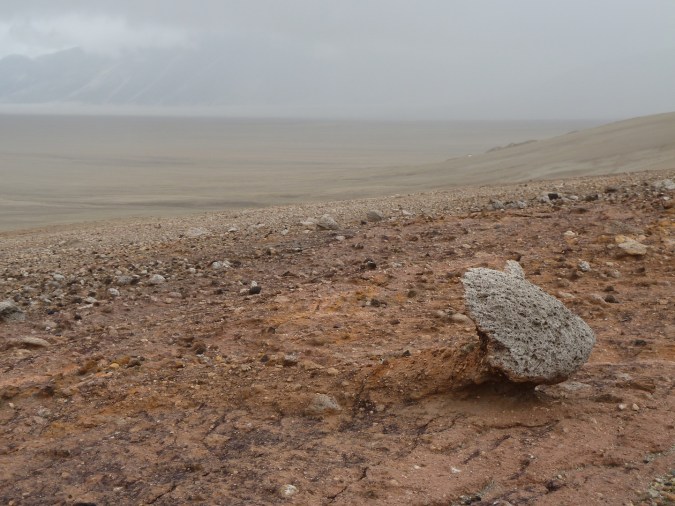
Mount Griggs towers behind Baked Mountain in the Valley of Ten Thousand Smokes.
As a park, it’s very remote and expensive to experience. Its coastline, measuring over 400 miles, and almost all of the rest of the 4.1 million-acre park remain roadless. For nearly a century after its establishment, Katmai was only accessible to people who could afford to visit and were physically capable of doing so. Webcams (bearcams) changed that.
Webcams allowed Katmai National Park to democratize itself, providing audiences all over the world with meaningful opportunities to connect with the park, especially its bears, and build stewards on a global scale. Survey results* indicate watching the bearcams increased viewer interest in Katmai and wildlife conservation, and viewers’ interest in national parks and wildlife conservation is on par with on-site visitors. Essentially, webcams can inspire stewardship on the same level as a physical visit to a park. They are powerful interpretive tools with great potential to increase awareness, understanding, and stewardship of wildlife and conservation areas. Yet, national parks rarely utilize webcams to their full potential and online audiences are either ignored or deemed secondary to on-site visitors. This needs to change.

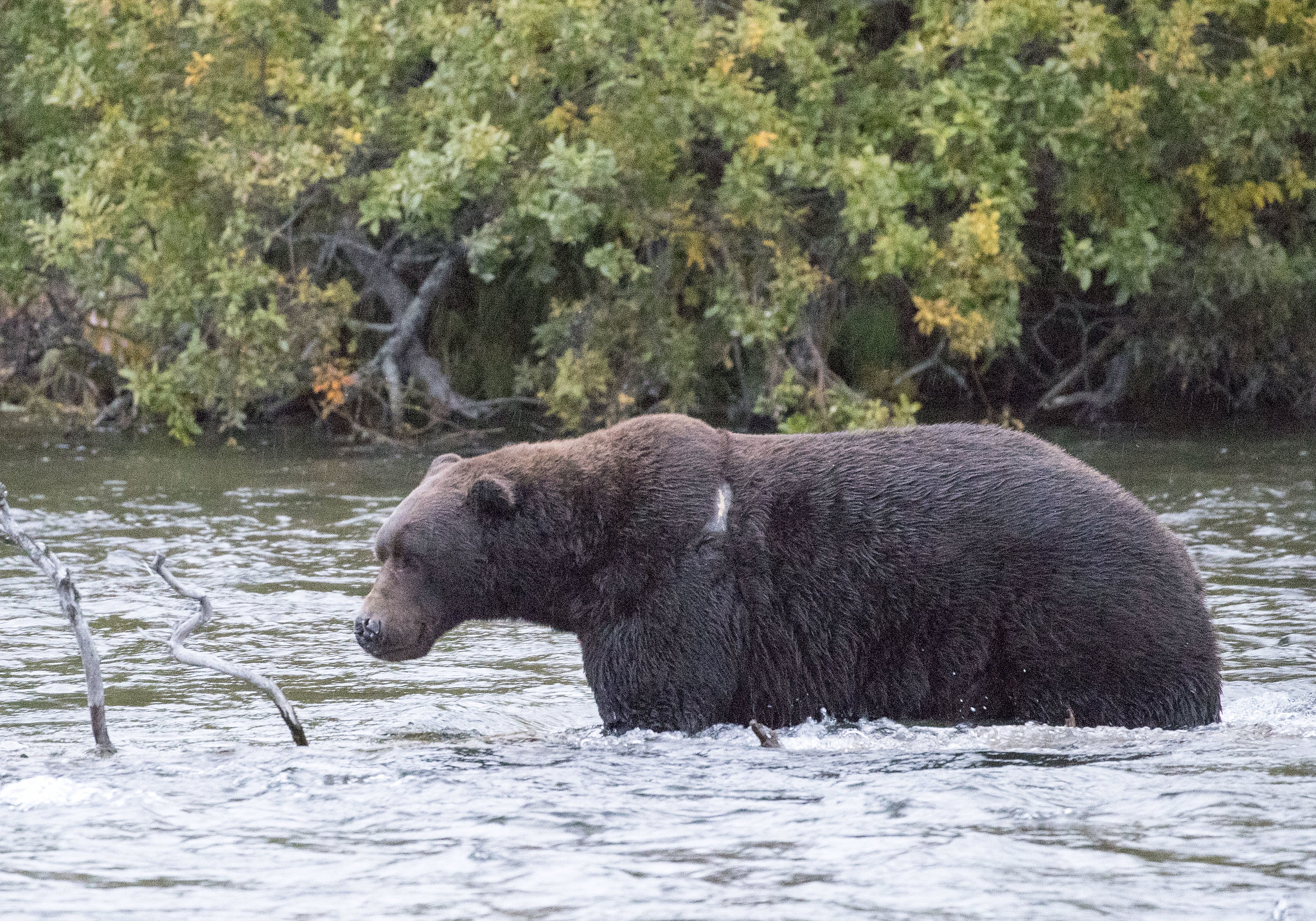
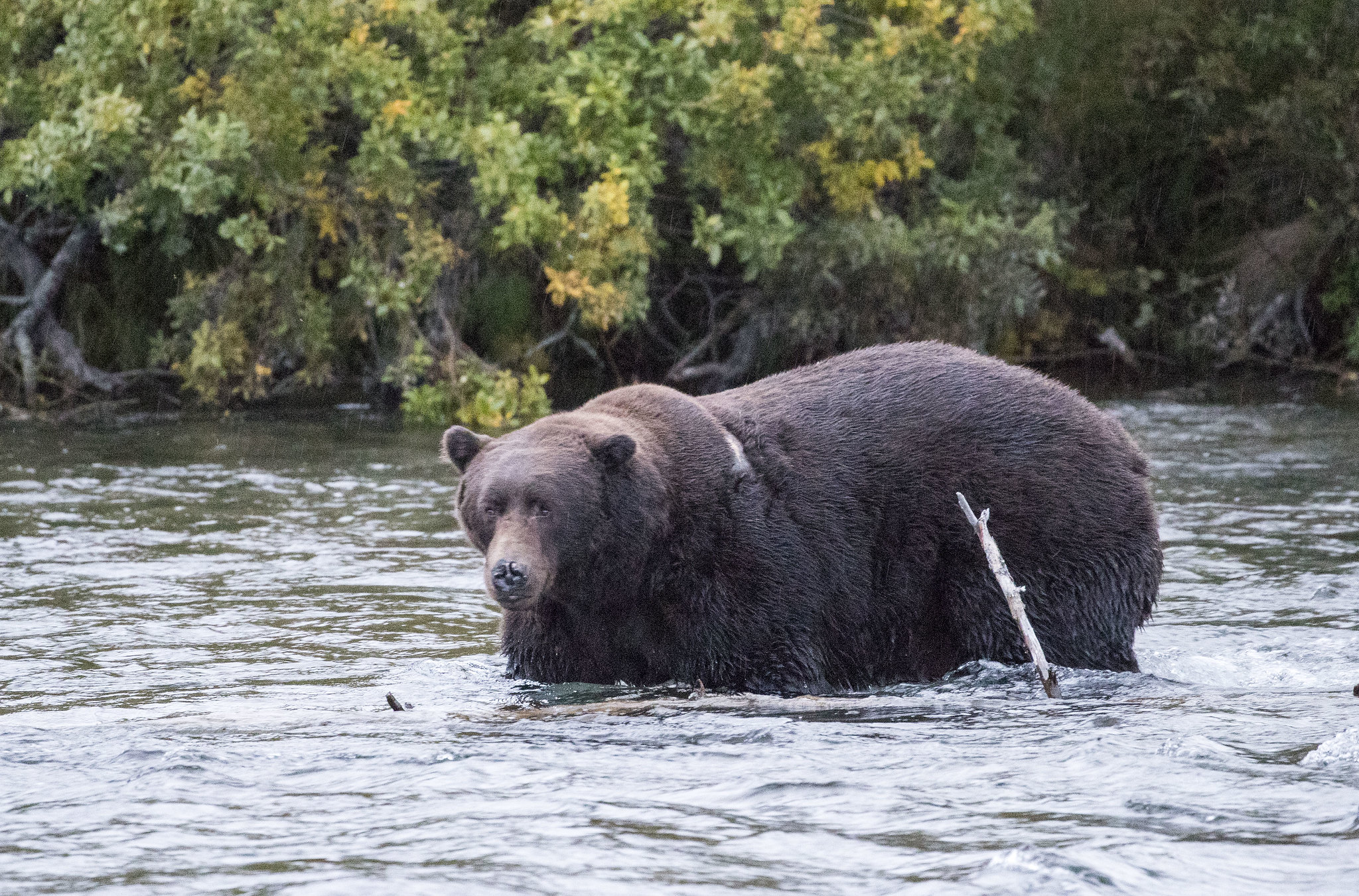
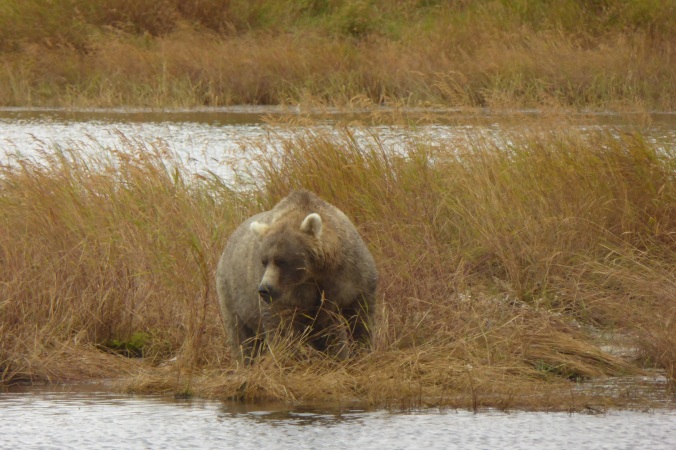
Bear 708 Amelia sits on a rock–a typical scene on Katmai’s webcams.
Inspired by the success of Katmai’s webcams and to communicate the need to utilize them in more places, I’ll be leading a session at the 2017 National Association of Interpretation Conference. Roy Wood, Katmai’s former Chief of Interpretation and the current Chief of Interpretation and Education at Shenandoah National Park, and Ryan Sharp, Assistant Professor of Park Management and Conservation at Kansas State University will join me. Roy and I will discuss our methods to interpret bears, salmon, and other park resources to online audiences. Ryan will present survey results exploring the online bear viewing experience at Katmai and its influence on support for bear conservation and management.
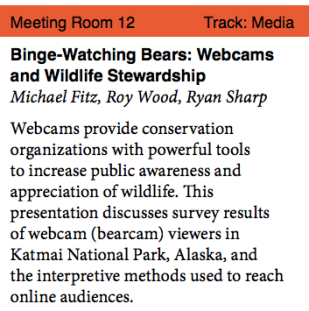
If you’re interested in watching but can’t attend, don’t worry. A presentation about Katmai’s bearcams wouldn’t be complete if it wasn’t streamed live on bearcam. That’s why I made tentative plans with explore.org, who hosts and funds Katmai’s webcams, to live stream the presentation. The session begins at 10:45 a.m. PT on November 16.
In the age of internet and social media, traditional interpretive programs catering solely to on-site visitors (through guided walks, ranger-led talks, slide shows, etc.) are no longer adequate to build and maintain widespread stewardship for parks and other conservation areas. When I worked at Katmai National Park, I was amazed, awestruck really, at the reach and effectiveness of the bearcams. Nearly everyday, I could find evidence of people connecting in meaningful ways with Katmai’s wildlife. Katmai is better protected today than it was even ten years ago due to the awareness and understanding its webcams have brought to people around the world.
The bearcams annually reach tens of millions of people worldwide. With effective interpretation, webcams consistently and positively engage viewers, increase public awareness and stewardship of wildlife, expand messaging to pre and post on-site visitors, and extend interpretive messages to audiences worldwide. Existing technology now provides conservation organizations with the ability to reach people all over the world, not just those who are fortunate enough to visit. We need more webcams and more rangers on them. This is how parks take their message to the world.
Update (Nov. 17, 2017): A replay of my presentation is now online.
Download the slide presentation in PowerPoint (199 MB) or Keynote (127 MB).
*Sharp, Ryan, J. Skibins, and J. Sharp. Online and onsite brown bear viewing: Influence on visitors’ support for conservation-based management at Katmai National Park and Preserve. Unpublished Report to Katmai National Park and Preserve. Kansas State University. Jan. 23, 2017.











 Wandering at Large