Restoring Grizzlies is not a Threat to Wilderness

Wilderness Watch, a non-profit advocacy and watchdog group for the National Wilderness Preservation System, opposes active restoration of grizzly bears in the North Cascades ecosystem. While their strict adherence to wilderness values is laudable, in this case it could lead to the extirpation of grizzlies from the ecosystem. Arbitrary wilderness values are not more important than the restoration of grizzlies.

Wilderness, as defined by the 1964 Wilderness Act, is “an area where the earth and its community of life are untrammeled by man, where man himself is a visitor who does not remain.” Importantly, the Wilderness Act states wilderness areas also preserve “wilderness character,” a set of values that link wilderness conditions with legislative intent. Federal land management agencies must manage wilderness so it maintains all aspects of wilderness character. Wilderness must remain untrammeled, natural, undeveloped, provide opportunities for solitude or primitive and unconfined recreation, and protect other features of value.

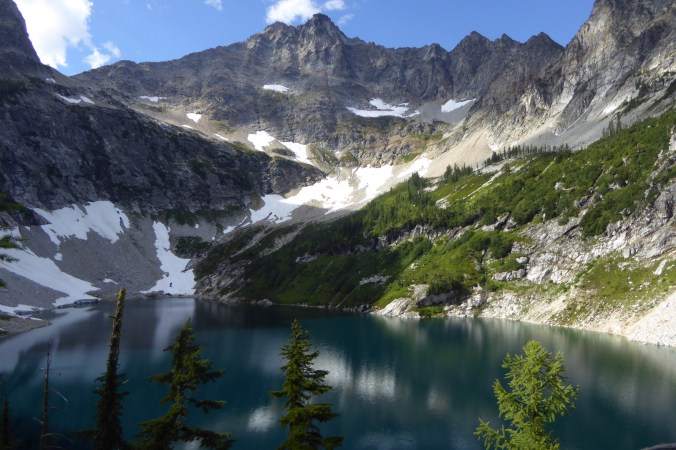
Bare mountain peak with lake below

Green view lake sits below Goode Mountain in the Stephen Mather Wilderness, North Cascades National Park.

Any ecosystem manipulation in designated wilderness will affect some of these values, especially during the effort to restore grizzlies. Specifically, the Draft Grizzly Bear Restoration Plan will temporarily trammel the land by manipulating a species’ population. Additionally, helicopters flights can impact opportunities for solitude, and tracking collars on bears will affect the wilderness’s naturalness and undeveloped characteristics. For these reasons, Wilderness Watch advocates for a natural recovery alternative, which would allow bears to return on their own and offer the greatest adherence to wilderness character and values. They state:

  • Information is lacking on the status of grizzlies on the Canadian side of the border where two moderately sized provincial parks provide some protection for the bears.
  • For dubious reasons, a natural recovery alternative was rejected for further analysis. Instead, the DEIS considers only heavy-handed management alternatives.
  • The extensive use of helicopters would continue indefinitely for monitoring bear movement and numbers. This heavy-handed management would be detrimental to Wilderness and bears alike.
  • None of the current action alternatives, involving translocating bears, are compatible with Wilderness.

However, some of these assertions are incorrect. There is a “natural recovery alternative” in the draft restoration plan. It’s the no action alternative, or Alternative A. This alternative may need further revision to achieve Wilderness Watch’s goals, but it hasn’t been rejected for further analysis or excluded. Perhaps most importantly, if Wilderness Watch’s position is adopted by the National Park Service and U.S. Fish and Wildlife Service, it will likely lead to the extirpation of grizzlies in the ecosystem, where only six bears are thought to remain (Draft Grizzly Bear Restoration Plan, p. 90).

Grizzly bears are not doing well in southwestern British Columbia. Adjacent populations to the north are only slightly more numerous. Fewer than 30 grizzlies are estimated to live within the Stein-Nahatlatch and Garibaldi-Pitt areas (interactive map of grizzly populations in British Columbia). Under current conditions, no grizzly population in Canada or the U.S. is likely to expand and occupy the North Cascades region (Draft Grizzly Bear Restoration Plan, p. 88-89).

Alt Text: Map of Grizzly Bear Population Status in British Columbia (Red=Extirpated, Yellow=Threatened, Green=Viable)

This map shows the current status of grizzly bear populations in British Columbia. Many areas of B.C. have healthy populations of grizzlies, but every population in southwest B.C. is either threatened or already extirpated. Red Circle is approximate area of North Cascades ecosystem.

Wilderness Watch is correct when they write, “None of the current action alternatives, involving translocating bears, are compatible with Wilderness.” In this case, helicopters and intensive management of translocated bears would impact the area’s wilderness character. The impacts may be unavoidable, but under certain conditions wilderness character can be manipulated for safety and management needs (i.e. invasive species removal). The NPS and USFWS would need to diligently consider ways to minimize impacts.

Anyone who is willing to share the ecosystem with bears and also wishes to preserve wilderness character should support Alternative B in the draft restoration plan, which proposes to introduce a small number of grizzly bears into the area, monitor them, then reevaluate whether more bears should be introduced. This offers the best compromise, in my opinion, between the no action (natural restoration) alternative and other options (alternatives C and D) that are much more heavy handed.

Wilderness and wilderness character is worth protecting. Groups like Wilderness Watch should continue to be a watchdog for designated wilderness. Yet, the effort to restore a healthy, self-sustaining population of grizzlies in North Cascades transcends arbitrary wilderness values. Bears need wild areas more than people.

I wish we could step back and let grizzly bears restore themselves. Nothing I’ve read indicates that’s a successful solution though. The North Cascades ecosystem was identified as one of six recovery zones for grizzlies in the Lower 48 partly because of its large, natural, and healthy wilderness areas. Bears can survive here, if we give them a push. I believe we can sacrifice a bit of our cultural need for an idealized, untrammeled wilderness to benefit grizzly bears. If we don’t act, if we allow grizzlies to disappear, then that would be one of the greatest trammels of all.

You can submit comments on the Draft Grizzly Bear Restoration Plan through April 28, 2017.

Related Posts:
Stehekin Grizzly Bear Meeting
Go Further So Bears Can Go Farther

Of Bears and Bicycles

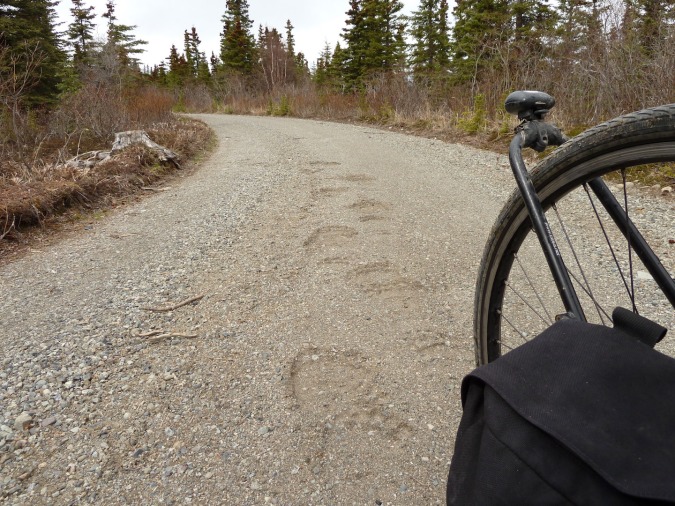
bear tracks on dirt road. bike wheel in right foreground.

Sometimes bears like to use roads as much as people, giving new meaning to the “share the road” concept.

While enjoying a quiet bicycle ride on a remote road you surprise a large animal in the brush. A split second later, you realize the seriousness of the situation, because you didn’t surprise just any animal. You surprised a bear. Would you be prepared to respond appropriately? What can cyclists do to reduce risky bear encounters?

Some of North America’s most amazing cycling destinations are located in bear country—Alaska, the Rocky Mountains, the Appalachians, Cascades, and Sierra Nevada, and the Great Lakes region. I’ve lived, worked, and cycled extensively in bear country and I love it. I’ve commuted by bicycle at Yellowstone National Park. I’ve toured in the Appalachians, Rockies, and Cascades where bears are frequently seen. When I worked at Katmai National Park, Alaska, I had hundreds of encounters with brown bears, and I frequently saw them while riding the park’s Valley of Ten Thousand Smokes road. Each experience taught me to fear bears less and respect them more. Cyclists can safely enjoy riding in bear country, but there is risk involved. However, the risk is manageable with the right knowledge, prevention, and preparation.
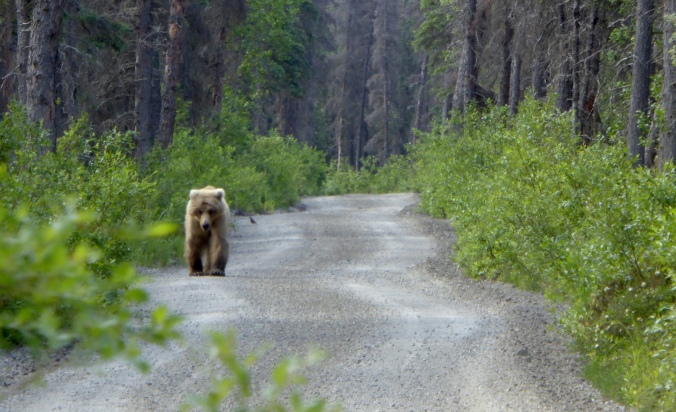
bear walking on dirt road through forest

Cyclists need to be prepared for bear encounters. I found this bear walking toward me while I pedaled the Valley of Ten Thousand Smokes road.

Cycling in bear country creates two main issues. First, bicycles are usually quiet and often travel at high speed increasing the possibility of surprising bears. Secondly, many touring cyclists prefer to camp, and while camping isn’t the problem, if you’re camping in bear country then the good campsite you found is often located in good bear habitat.

Warning noise is one of the easiest precautions to take in bear country. Given enough notice, many bears will avoid people. Noise is not a safety net though, just a preventative measure so you don’t surprise a bear. It must be made appropriately and for the right reasons. It’s especially useful in areas where visibility is limited, and it’s easy too. Use your voice or a loud bike bell. Those cheap bear bells may save your vocal chords for campfire songs later in the evening, but they aren’t nearly loud enough in most situations to adequately warn bears. More importantly, bears may not identify any bell’s sound with people. You need to make noise to warn bears of your approach and identify yourself as human. No bell is as effective as the human voice. It’s no fun to shout all day, nor is it an action that fits well in all settings, so vary the amount of warning noise as necessary.

If you need an excuse to slow down during a ride, bears can be it. Excessive speed was one of the main factors that led to a fatal mauling of a mountain biker in Montana. Ride cautiously where bears are frequently seen, avoid biking during hours when bears are less likely to expect encounters with people, and pay attention to your surroundings. On the Valley of Ten Thousand Smokes road, a road that averages less than five vehicle trips a day in summer, I’m forced to ride slowly because too many bears use it to allow for a purely fitness ride. This is torturous for certain cyclists, myself included on occasion, but bears necessitate it. If I want to ride responsibly here, I must slow down.

Take the time to assess the terrain. Are you approaching the crest of a hill, a sharp bend, or is the road carved through thick brush? Will you be traveling through areas with food sources, like berries or salmon, that attract bears? This may seem like a mental burden that will cause a headache by the end of the day, but cyclists practice this risk assessment all of the time. While riding in traffic we identify and respond to unsafe situations routinely. Bears pose different challenges than cars, I realize, but trust your instincts. Slow down and give yourself time to use them.
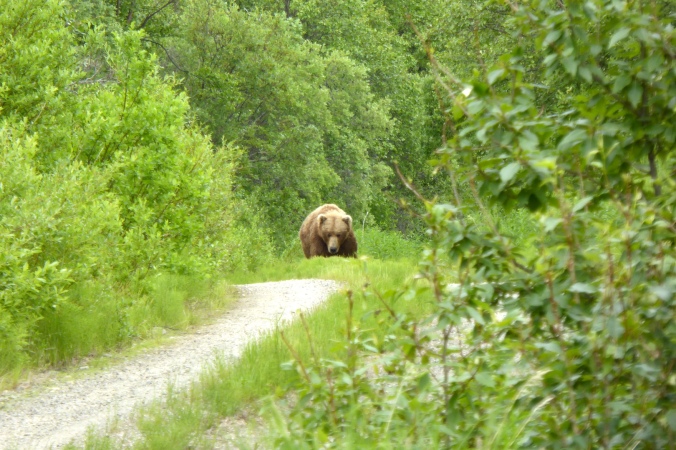
Bear walking on dirt road through forest.

This bear in Katmai was intent on using the road. To safely avoid a stressful encounter with him I stopped, picked my bike up, carried it off of the road and well into the forest to let the bear pass. Had I been traveling too fast, I would have risked surprising the bear at a very close range.
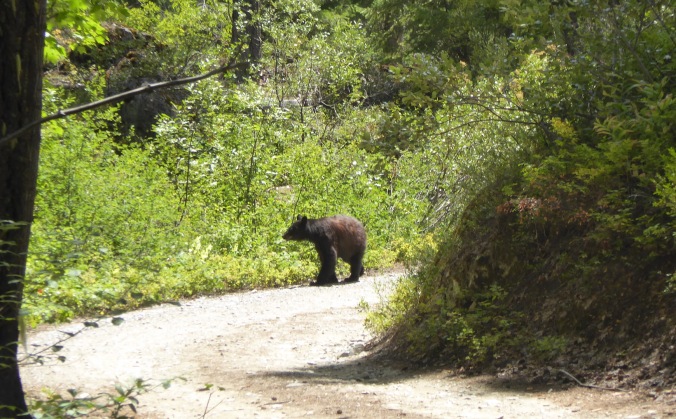
black bear walking on dirt road through forest

I let this black bear in North Cascades National Park know I was human by talking in a normal tone of voice. Once the bear realized I was human, he walked calmly into the forest.

Statistically speaking, groups of four or more people are very safe in bear country. So if the thought of encountering a bear alone is too intimidating, then join a group ride and stay close together. Group size is not effective if the group is spread so far apart that a bear only recognizes individual persons. Groups tend to be noisier and have lots of eyes to spot wildlife. Plus, during a bear encounter, a mass of humanity is intimidating to even the biggest bear.

With that being said, what should you do during a close encounter? Things can get complicated quickly and adrenaline will certainly rush, so prepare yourself mentally before you leave home. The key, according to Tammy Olson, a former wildlife biologist for Katmai National Park, “is to not behave in ways that are likely to be perceived as threatening when responding to a [defensive] bear at close range.”

How close is too close? The answer depends on a variety of factors (the presence of cubs, the vicinity of food like animal carcasses, the bear’s human-habituation level and disposition, surprise, and more). There are general recommendations to follow, but each bear is an individual and each situation is unique. A Yellowstone grizzly shouldn’t be treated like a Pennsylvania black bear. Talk with local officials about the general patterns of bear use and behavior in the area you plan on traveling through. Some areas, especially national parks, have regulations that define the minimum, legal distance to keep between yourself and a bear (50 yards at Katmai, 100 yards at Yellowstone, and 300 yards at Denali). These can be a useful, but not absolute, starting point to determine if you are too close. As a general rule, if you are altering the bear’s behavior, then you are too close.

Any time you find yourself in close quarters with a bear, stop riding and take a few seconds to assess the situation. Position your bicycle between you and the bear. As well as possibly adding a modicum of physical protection, the bike makes you look larger in a non-threatening way. Size matters in the bear world. This is why groups of people are generally safer in bear encounters than a lone person.

If you surprise a bear while bicycling, quickly assess the situation. What is the bear doing? Is it resting, feeding, approaching you, or showing signs of stress? Do you see or hear cubs? Is the bear vocalizing? Were you charged? Your behavior in these situations goes beyond the scope of this post, but what you see, hear, or think the bear is doing will influence your decision on how to react. (Please see the references at the end of the post for more information on bear behavior, identification, how to differentiate between defensive and predatory encounters, and the recommended responses.)

When you’re on a bike, you’re moving swiftly and you have less time to react than someone who is walking. This is more likely to provoke a charge from defensive bears, especially grizzly bears. If a bear charges you in a defensive, non-predatory situation, it is usually a bluff. Even so, this is a frightening experience. Hold your ground. Running or pedaling away may trigger the bear to chase you, and you can’t outrun a bear. Keep your bicycle with you if possible. Abandoning the bike, especially if there’s food in your panniers, can teach bears to approach people for another food reward.

Yelling at a defensive bear may provoke it further. Instead, talk to the bear calmly and back away slowly until the bear resumes its normal behavior (resting, feeding, traveling). Contact is rare, so only play dead if a bear makes physical contact with you. If it does, lie face down and cover your head and neck with your hands and arms. Remain still and quiet until the bear leaves the area. (Black bears attacks are very rare, but are much more likely to be predatory, so most bear behavior experts recommend you fight back if a black bear attacks.)

Sometimes you may see a bear before it is aware of you. If this happens, move away quietly the way you came and give the animal the room it needs. Find an appropriate place to observe it, where possible, and enjoy the moment. It’ll certainly be one you won’t forget.

Your goal should be to prevent close encounters. This is just as important when camping as it is when riding. At the end of a long day of bicycle touring, is there anything more satisfying than a beautiful campsite with a hot meal? Maybe not, but before you commit yourself to that wonderful campsite, take a few moments and search for signs of previous bear activity. Is there garbage scattered about from previous campers? Is the campsite near natural food sources that attract bears? Do you see fresh bear scat with human food or garbage in it? If so, consider moving on. You don’t want to risk a food conditioned bear coming into your camp at night.
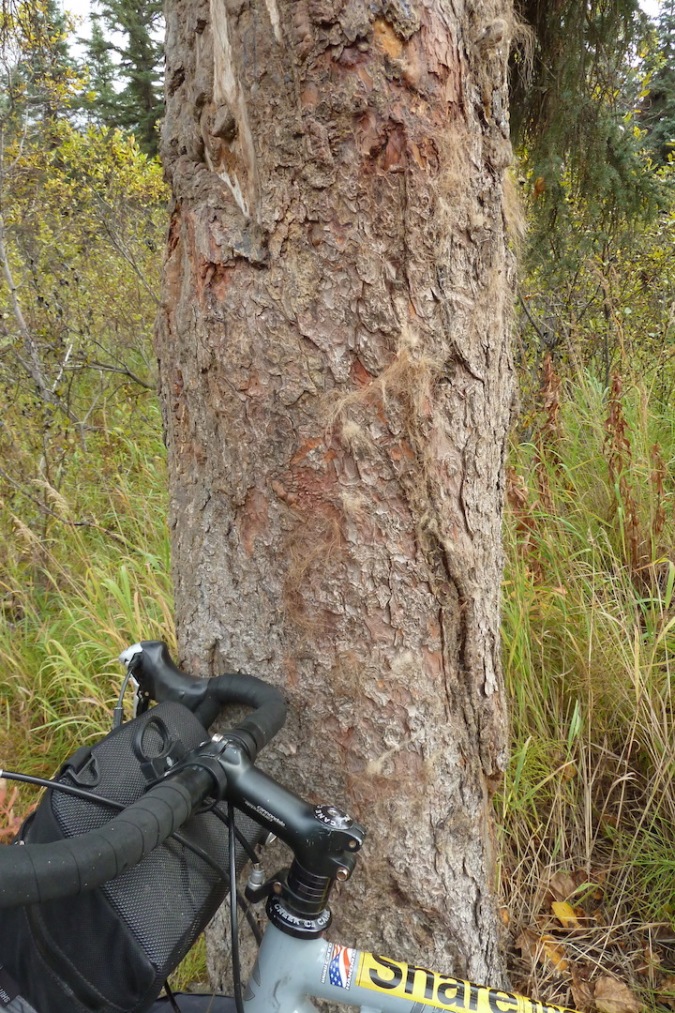
Bicycle handlebars leaning against tree. Bark has bear fur attached to it.

Look for signs of bears like scat, tracks, and marking trees when you choose a campsite. Move on if the area seems to be frequently used by bears. The bear fur on this marking tree indicates plenty of bruins use the Valley of Ten Thousand Smokes road.

Most problems with bears while camping can be avoided if bears aren’t attracted to your campsite in the first place. Outside of developed campgrounds, cook and eat well away from your sleeping area (at least 100 yards). This is a Leave No Trace principle everyone should follow, but it also disperses food odors away from your sleeping area.

Consider where and how you plan on preparing your food in the backcountry. Are hot meals important, or would cold dinners and snacks suffice? Eating cold meals and eliminating the need to cook is one easy way to substantially reduce food odors around your camp. There is less to clean and less garbage at the end of the day. If you choose to cook then consider meals that require little field preparation. Touring cyclists don’t normally carry and cook perishable, odorous items like bacon, but anything strongly scented or should be avoided.

Before you leave home, decide how you will store your food and other odorous items like soap and toothpaste. Bear resistant containers (BRCs) are the best and most portable way to keep bears from your food, and in some areas they are required. BRCs lack creases or hinges that allow bears to open them. Yes, they are heavy and bulky, but their effectiveness has been proven repeatedly and backpacking-style BRCs normally fit into a large, rear pannier. The most common alternative, hanging food in a tree, is time consuming and risky. Some bears, especially in the Sierra Nevada, have learned to ignore BRCs but specialize in stealing food hung in trees. Occasionally, developed campgrounds in high bear use areas provide food storage facilities as an alternative to BRCs, but many do not.

Lastly, some people prefer to carry a bear deterrent like bear spray (not self defense spray) or firearms. Neither firearms nor bear spray are 100% effective against bears. I carry bear spray since it is non-lethal, non-toxic, and easy to use. It is intended only for close encounters (generally 30 feet or less) on aggressive or attacking bears. This stuff is potent too, so be careful. I know enough people who have accidentally discharged their bear spray to know you don’t want it in your face or in your pants, as one unfortunate individual at Brooks Camp discovered. Wherever you choose to keep it, bear spray needs to be quickly accessible. When necessary, I carry bear spray in my bike’s handlebar bag. (Thankfully, I’ve never had to use mine.)

There are many bear deterrents, but the greatest of all is your brain. No matter what you do in bear country, where you ride, or what you see, there is no substitute for common sense. We empower ourselves with safe cycling practices in traffic, and we can do the same around bears. The scenario at the beginning of the article isn’t fiction. It happened to me, and it’ll probably happen again. Traveling in bear habitat requires responsibility. Sloppy habits and dirty campsites can endanger future visitors and the lives of bears.

I always look forward to bicycling in bear country, which is some of the most scenic and inspiring land imaginable. Knowledge of and respect for these animals can turn what would be a dangerous and fearful encounter into the highlight of the trip. Given the opportunity, humans, bears, and even bicycles can coexist.

More Bear Safety Information

You can never know too much about bears, but an action appropriate in one region may not be appropriate in another. Talk to local officials about what works and is expected in their area. There is also plenty of contradictory information available about bear safety available online. The information provided in the resources below generally follows the consensus of leading bear biologists and public land managers. Besides learning behavioral techniques that may keep you safe and give you peace of mind, learning about bears and their ecology is fascinating and can open up a world of wonder into their complex lives.

Websites:
Interagency Grizzly Bear Committee: The IGBC was established in 1983 to help ensure recovery of viable grizzly bear populations and their habitat in the Lower 48 states.

Leave No Trace: The seven guiding principles of LNT ethics not only reduce our impact on the outdoors, but also correlate to the best camping practices in bear country.

Yellowstone National Park Bear Safety Pages: These may be the most comprehensive bear safety pages on the web.

Get Bear Smart Society: This organization is dedicated to reducing conflicts between bears and people.

Literature:
Bear Attacks: Their Cause and Avoidance by Stephen Herrero: This is not your typical bear attack book. It written by a wildlife biologist who has statistically analyzed bear attacks across North America. It offers scientifically supported advice for travelers in bear country.

Backcountry Bear Basics: The Definitive Guide to Avoiding Unpleasant Encounters by Dave Smith: Although less academic than Bear Attacks, this is another readable, common sense look at bear identification, behavior, avoidance, safety, and it includes a brief section on mountain biking.

DVD:
Staying Safe in Bear Country: If there was just one resource you could choose to educate yourself on how to behave around grizzly and black bears, this video is near the top of the list. In a no-nonsense fashion, it clearly and accurately explains bear behavior and how people can minimize the chance of bear encounters and attacks. It also provides insightful footage of bear behavior that may be hard to visualize. A transcript is available too.
Stehekin Grizzly Bear Meeting

On Feb. 28, I attended an informational meeting about the draft plan to restore grizzly bears into the North Cascades ecosystem. I believe animals and ecosystems should receive more protection and I’m largely in favor of the plan to restore grizzlies here, but I listened through the whole meeting, not speaking a word. This wasn’t a forum for debate. I wanted to hear to the perspectives of other people who think differently. There are times when it’s more insightful to listen than to speak.

I took copious notes, trying to capture the essence of what was said. Below are a few paraphrased questions and comments from local Stehekin residents. I know who made each comment, but I won’t divulge their identities. I’m sure they’d share the same opinions with anyone who asked, but the meeting was not a formal public open house where people could provide testimony that would be entered into the official record, and as such they probably didn’t expect anyone to broadcast their name and comments all over the internet.

Many of the first few questions were about bear biology and the practicalities of restoration. How did you determine 200 bears (the number of animals the plan aims to restore)? What happens if Alternative C doesn’t work? What is prime grizzly habitat? What’s the typical grizzly bear territory? Will the habitat still be suitable for these bears if the climate changes?

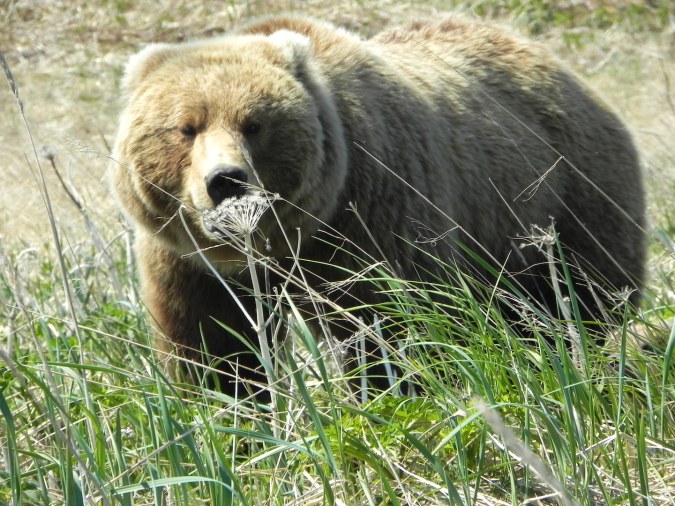
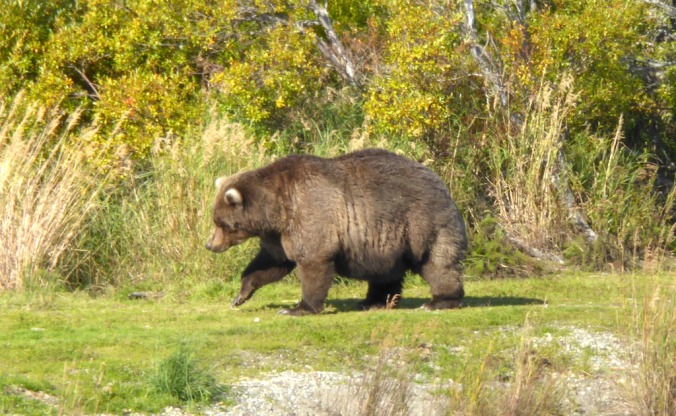
brown bear standing in grass

A viable population of grizzly bears may soon roam the North Cascades ecosystem. Not everyone favors the idea.

Then the comments and questions drifted into more contentious territory. Grizzly bears and endangered species are words that provoke strong emotions. Worry, loss, skepticism, and suspicion were many of the emotions local residents expressed. Bears could potentially bring more unwanted government regulation. Residents, understandably, expressed concerns about safety and loss of access to land. Few who spoke at the meeting seemed to believe the active restoration of bears is desirable.

Residents wondered about bear attacks and the effectiveness of bear spray. One person even read a lengthy description of a bear attack from this Facebook post. He also asked whether bears would inhibit the reopening of the upper Stehekin Valley Road, which has been a long standing issue for some local residents. The same person who read the bear attack description also expressed the opinion that humans are part of nature and the extirpation of grizzly bears across most of their former range in the Lower 48 was natural and okay.

A couple of people seemed to question the historical presence of grizzly bears in the ecosystem, a conclusion that surprised me, since the historical and archeological record confirms grizzlies were here. One person suggested that native tribes didn’t settle permanently because the mountainous terrain was rough and grizzlies could’ve been one of the factors. 

To their credit, the representatives for North Cascades National Park Service Complex and the U.S. Fish and Wildlife Service avoided debating any point. That would’ve been inappropriate given the context of the meeting. They did explain, however, that these lands are federal and must be managed in the national interest. Local interests, therefore, are not necessarily the most important. They also explained how this population of bears could be designated as experimental under section 10(j) of Endangered Species Act. 10(j) status would allow more flexible management of the restored grizzly population compared to a population listed strictly as threatened and endangered.

Many of the concerns boil down to a difference in worldview from my own. Many people believe bears don’t need more space, especially if their space comes at the cost to people. They exist in healthy numbers throughout much of British Columbia and Alaska. Additionally, grizzly bears are not needed in North Cascades to fulfill a missing ecosystem function. Why make the effort to restore bears?

I wrote this post not to criticize, debate, or debunk any point. I wrote it because if you’re like me, you often do not have the opportunity to hear opposing perspectives concerning wildlife conservation issues. Those of us who think wildlife and wildlife habitat should be given greater levels of protection need to carefully consider the wants and needs of other people. Sure, I can read or listen to so-called balanced news articles about the grizzly bear restoration plan, but that’s not the same as listening to your neighbors, many of whom may feel very differently about the issue.

You can comment on the draft North Cascades grizzly bear restoration plan through March 14, 2017.

A January Bear

It was late January, but I enjoyed nearly perfect hiking weather in Big Bend National Park. The sky was clear, the wind was calm, and the temperatures hovered in the hiking Goldilocks range (for me, that’s the low 60˚s F). I had spotted a few piles of bear scat earlier that day, but all were dry and desiccated. Then in the late afternoon, I found one particularly fresh pile of crap.

This scat was soft and pliable and hadn’t been exposed to the dry desert air for very long. (I poked it with a stick to gain a very scientific measure of its age.) Was there a bear nearby? I hoped to find out.

The previous day, I stopped in the Chisos Basin Visitor Center to purchase a book to help me search for the park’s endemic oaks. A map on the visitor center wall was marked with sticky notes identifying when and where people had spotted black bears. At least a dozen had been seen over the past two weeks. I made a mental note to watch carefully for bear sign. Maybe, just maybe, I would be lucky enough to see one for myself.

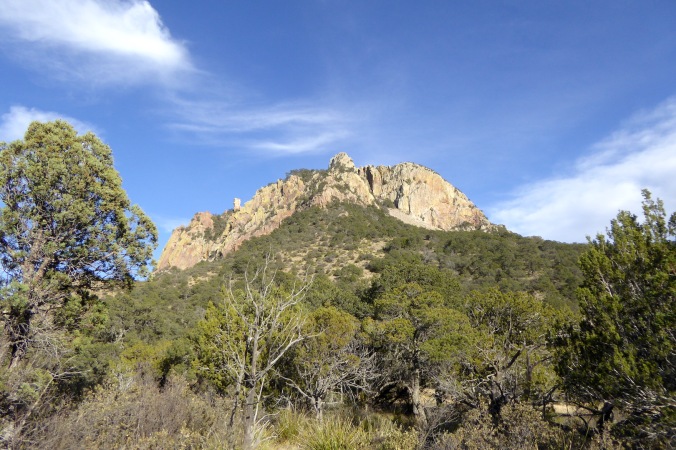
Mountain rising above pine and juniper forest

The pinyon-oak-juniper habitat near Emory Peak (center) is preferred habitat for Big Bend’s black bears.

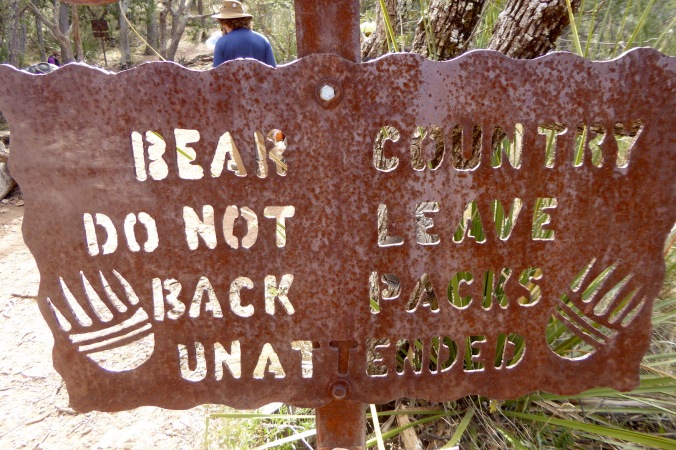
Although I spent considerable time searching for the endemic oaks (and found at least a couple, plus some species rarely found in the U.S.), bears were never far from my mind. Backcountry campsites all had bear-resistant food storage boxes, and signs clearly informed people that bears will take your unattended pack.

metal sign. Text says, "Bear Country Do Not Leave Back Packs Unattended"

Occasionally, I’d find old piles of bear scat or a marking tree.

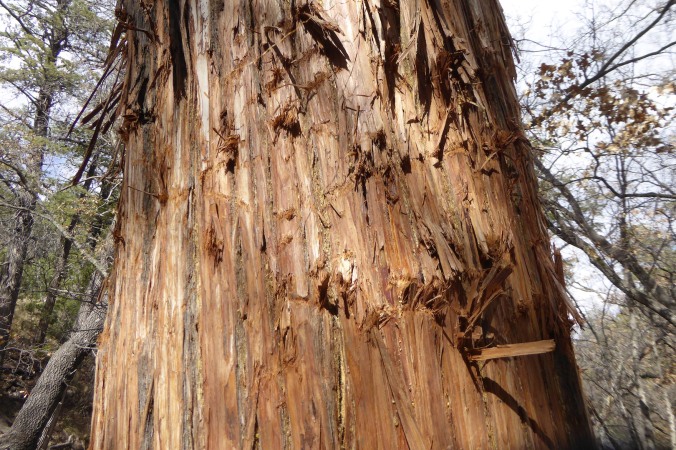
scratch marks on bark of tree

Black bears used this Arizona cypress (Hesperocyparis arizonica) near Boot Spring as a marking tree.

No long after I photographed the marking tree, I stumbled on the aforementioned scat. Its freshness caught my attention, but it wasn’t steaming so I couldn’t be sure if a bear was close or not. I only knew it was there earlier in the day. As I proceeded up the trail, motivated to pick up my pace and return to the campground before dark, two hikers traveling in the opposite direction told me they had just seen a bear not far from the trail. This was their first wild black bear sighting, and they spoke excitedly about their experience. I thanked them for the info and continued on, now even more alert.

The hikers said the bear was near a switchback in the trail, not far from a backcountry campsite. I slowed my pace as I approached that location, not wanting to startle the animal. A moment later, through some thick vegetation, I heard cracking branches and there it was—a black bear.

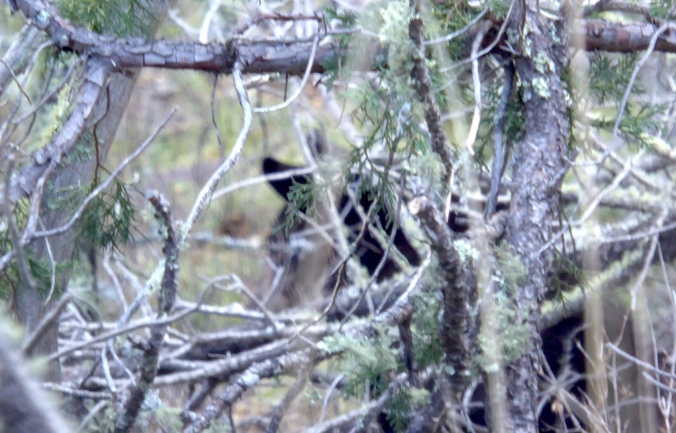
black bear ears seen through thick vegetation

My soon-to-be award winning wildlife photo of a black bear in Big Bend National Park. Move over Tom Mangelsen.

What would a bear be doing out in January? Since bears are omnivorous and eat a wide variety of food, their scat reveals a world of information about where they’ve been and what they’ve been up to. The fresh bear scat I found 10 minutes before, like the older scat on the trails, was filled with fragments of pinyon nuts and shells. Pine nuts are exceptionally nutritious, containing almost 700 calories per 100 grams. The pinyons pines in the Chisos Mountains seemed to have produced a sizable cone crop in 2016, one which helped sustain the bears into mid winter.

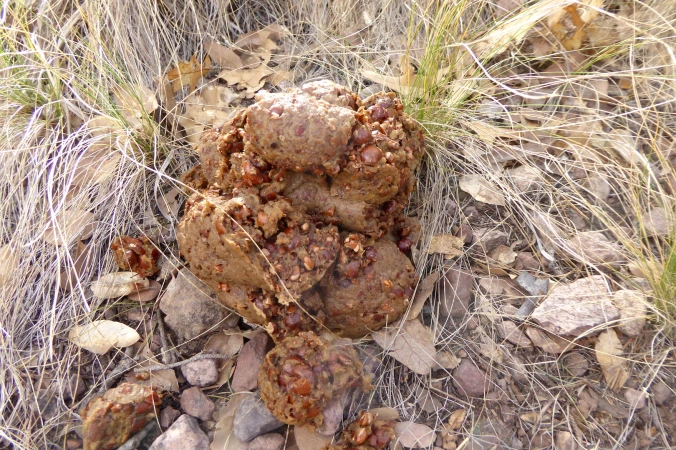
pile of black bear scat in grass

Pinyon pine nut shells and fragments fill this fresh pile of bear scat. I found this scat just moments before seeing an active bear.

The density of the shrubs made it difficult for me to se exactly what the actual bear was doing, but it appeared to have its nose to the ground and it wasn’t moving far. Perhaps it was still feeding on pine nuts.

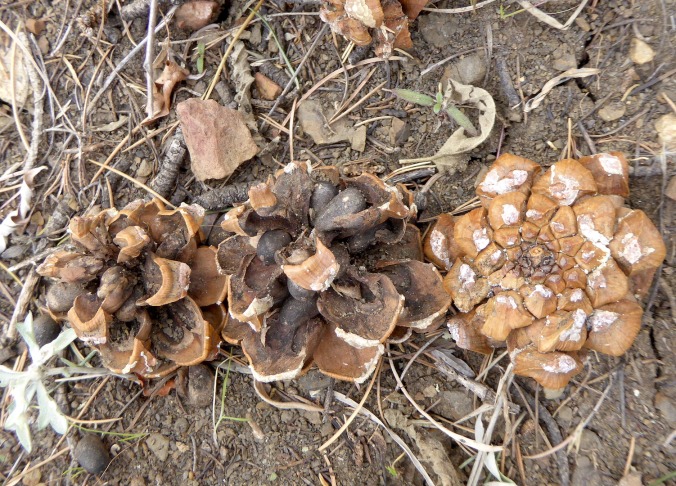
pine cones on the ground

These Mexican pinyon pine (Pinus cembroides) cones still hold their fatty nuts.

Black bears in the Chisos Mountains rely heavily on habitats with pinyon, oak, juniper, and grassy talus slopes, although male bears will make more frequent use of low elevation areas. Even so, this was January 26. Shouldn’t the bear be inside a den?

Black bears in more northernly locations hibernate well before January. However, bears in Big Bend don’t typically enter their dens until late January or February, and when they do many don’t seem to fully enter hibernation. Male bears, especially, are more likely to remain active. Pregnant females in Big Bend, like other bear populations in North America, have the longest average denning period, beginning in mid to late December and ending in late April.

This winter activity isn’t unique to Big Bend’s bears. Black bears in Florida have similar winter dormancy patterns. Mild weather and the prospect of food, especially, can keep bears active for longer time spans. After all, bears are avoiding winter famine more than winter weather when they hibernate. The bear I saw probably wasn’t doing anything abnormal for a Big Bend black bear. It was just another bear doing bear things like eating and shitting in the woods.

Go Further So Bears Can Go Farther

Plans are afoot to restore grizzly bears to the North Cascades ecosystem. The draft plan includes four alternatives. Only one (Alternative A) takes no action. The others, through various strategies, all aim to restore a self sustaining population of bears in the ecosystem, an effort I support. Grizzlies should be in North Cascades, but that can’t be the end game. We need to go further to allow wildlife to go father.

The story of the grizzly bear is well documented. Like bison, grizzlies suffered immensely from westward American expansion. Once found from California to Missouri and Alaska to Mexico, this iconic species is now restricted to Alaska, western Canada, and a few isolated pockets in the Lower 48.

The grizzly bear was listed as a threatened species in the Lower 48 under the Endangered Species Act in 1975. At the time, grizzlies were known or thought to exist in only four states. Since then, its range has not expanded substantially, but the most famous grizzly population in Yellowstone National Park has grown to over 700 individuals, at or near the Yellowstone ecosystem’s carrying capacity, and the Northern Continental Divide population, centered around Glacier National Park in Montana, is also doing well with over 1000 animals.

Elsewhere in the Lower 48, grizzly bears remain rare or non-existent. The Selkirk ecosystem, in northwest Washington and adjacent British Columbia, harbors only 80 grizzly bears. The Cabinet-Yaak ecosystem in northwest Montana and northern Idaho has about 50. No grizzly bears are known from the Bitterroot ecosystem in central Idaho, nor in the San Juan Mountains of Colorado where they were rumored to exist. They are extinct in Mexico.

Grizzly bears aren’t spreading far and wide, despite a high level of protection since the 1970s. They are slow to reproduce, need isolation from people, and roam over large areas of undeveloped habitat. They maintain a foothold only where they weren’t extirpated and where humans tolerate them.

In 1982, the U.S. Fish and Wildlife Service identified the North Cascades ecosystem as a recovery zone for grizzlies in the Lower 48. The ecosystem includes over six million acres stretching from extreme southwest British Columbia to Cle Elum and the Interstate 90 corridor in Washington. The core of the ecosystem is a 2.6 million acre federal wilderness complex. The wilderness areas encompass most of North Cascades National Park, Lake Chelan National Recreation Area, and a significant portion of the Okanogan-Wenatchee and Mount Baker-Snoqualmie national forests.

Map of North Cascades area showing public land and land management agencies. Black line outlines boundary of the ecosystem.

The North Cascades Ecosystem in Washington. (From the Draft Grizzly Bear Restoration Plan, pg. 2).

A handful of grizzly bears persist in the British Columbia portion of the ecosystem, but none are known in Washington. The last verified sighting of a grizzly bear in this area of Washington was in 1996. The last time a female with cubs was seen was 1991. (A possible sighting in 2010 was likely a black bear.) According to the restoration plan, it is unlikely that the North Cascades area contains a viable grizzly bear population and grizzlies are at risk of local extinction in this ecosystem if no measures are taken to introduce more bears.

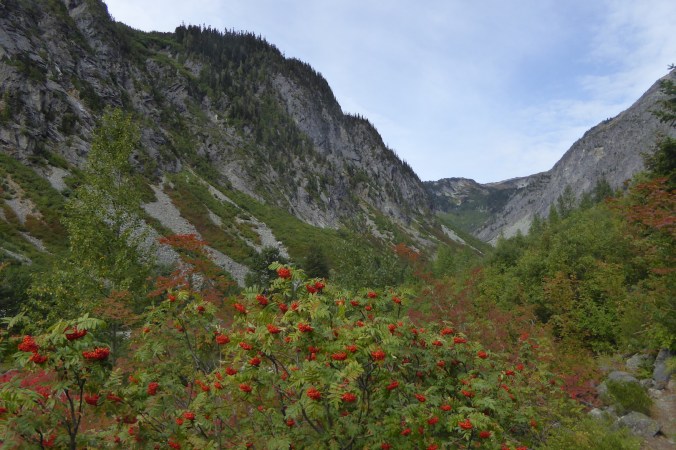
Mountain valley scene. Steep walled mountains with red-berried shrub in foreground.

Many places in the North Cascades ecosystem, like the upper Stehekin River valley, provide excellent habitat for grizzly bears.

I believe it is worthwhile to make an effort to prevent the extirpation of grizzlies in the North Cascades ecosystem, even though these bears aren’t keystones like salmon or sea otters. The bears may not create substantial changes in the area, but they will have many effects. Grizzly bears are an umbrella species. If we protect habitat for and maintain healthy populations of grizzly bears, then that large core of habitat is protected for the vast majority of other species in the area.

For grizzly bears and other large carnivores, like wolves, to regain their full potential as umbrella species, we need to do more than tolerate their existence in a few isolated areas. This is where the Draft Grizzly Bear Restoration Plan falls short. The plan aims to restore a population, not create connectivity with others. For grizzly bears to remain truly viable and self sustaining, their populations need connectivity.

The Yellowstone to Yukon Conservation Initiative is probably the most famous example of this concept. It’s an effort to protect a corridor of habitat from Yellowstone National Park north through the Rocky Mountains into the Yukon Territory. It would not only provide habitat for bears, but wolves, wolverines, elk, deer, moose, and many, many other animals and plants. It would provide animals with habitat corridors so they could migrate and shift their range as conditions dictate.

Perhaps we need to provide animals and plants on the west coast of North America with a similar corridor, one stretching from Alaska and British Columbia to Baja California. The current hodgepodge of national forests and parks along the Cascade Mountains and Sierra Nevada could provide the core. To achieve continuity between ecosystems, it would only be a (not so) simple matter of connecting those pieces together in ways to adhere habitats. (I also dream about similar conservation corridors across North America—the Appalachians, a bison commons on the high plains, and Florida among others.)

I’m not sure I will include a vision for the British Columbia to Baja corridor in any comments I might submit on the draft grizzly bear restoration plan. I already know the response: “This is outside the scope of the restoration plan.” The response is completely legit. The lead agencies for the restoration plan, the National Park Service and U.S. Fish and Wildlife Service, have no authority to create such an entity. It’ll need legislation, funding, time, and the strong support of citizens and non-government organizations to be successful.

When we have an opportunity to rewild a landscape, we should. When we have an opportunity to give a little back to wildlife, we should. But, we can do better than simply restoring grizzlies to the North Cascades. Earth’s systems don’t work in isolation. We know enough now to build resiliency into our efforts to protect wild lands and wildlife. We can provide grizzly bears with the habitat to roam into Oregon, California, and other parts of the West again. We can give the ecosystems more room to be resilient. Our goal shouldn’t be to simply have bears in a few isolated areas, but provide continuous habitat so bears can survive future changes without us. That’s how we know we’ve gone far enough.

You can submit comments on the Draft Grizzly Bear Restoration Plan through April 28, 2017.

Brooks River Bears Need Your Help

two sleeping bear cubs

402’s spring cubs rest near the Lower River Platform at Brooks River on October 24, 2013.

Addendum: Please read the response to this issue by Katmai’s Superintendent, Mark Sturm.

In 2017, an elevated bridge and boardwalk will be constructed at Brooks River. In this post, you’ll find a letter that asks Katmai National Park to further restrict the timing of staging and construction for the bridge. My reasoning is outlined in the letter. I wrote it because I believe no staging or work on the project should happen from late June to late July or September and October. Brooks River’s bears, especially those who are not habituated to people, need complete access to the lower river area in the fall. That is their last chance to gain weight before hibernation. The current work schedule allows staging and work to begin when bears need Brooks River most. This is not acceptable.

You are welcome to use the letter to contact the park. You can use it as is, or personalize it as you see fit. You can copy the letter’s text below or download the rich text file which can be used with almost all word processing software.

Before you contact Katmai with your thoughts, please consider the following…

  • The construction dates for the bridge project are in a federal contract which has already been awarded. If the dates can be modified it won’t be a simple process since it’s currently a contractual obligation. Don’t expect any change, if it comes, to be quick.
  • Form letters are easy to respond to, because the recipient only needs to write one response. Personalized messages often require more in-depth responses.
  • Phone calls can be more effective than written correspondence.
  • Be polite and respectful when you contact the park. The people who manage Katmai are intelligent and well-meaning. They do not deserve insults or personal attacks.

You can contact the park in several ways.

And now the letter:

Superintendent Sturm,

As you know, an elevated bridge and boardwalk will be constructed at Brooks River in 2017. The summary of work outlined in the project’s construction specifications generally restricts work and staging of equipment and supplies outside of July. Yet, it places minimal restrictions on staging and construction in late summer and fall. This will have serious impacts on bears who need full access to the river in September and October. I urge you to reconsider the construction schedule and modify the current contract to minimize the project’s impact on bears.

The construction schedule allows work in the river corridor to commence as soon as October 1. Work hours outlined in the construction specifications also permits staging on the spit at the mouth of Brooks River anytime after August 1. These activities can potentially displace many bears from the lower river, especially those who are not human-habituated.

Dozens of brown bears gather at Brooks River throughout September and October. The fall feeding period is especially critical, since bears are hyperphagic and need access to Brooks River’s abundant salmon. The river mouth provides salmon catch rates far higher than other areas of the river. Additionally, many bears who use the river in the fall are not habituated to people or vehicles. Habitat use by these bears is already restricted by the presence of people. Staging and construction in the fall will further displace these animals. Impacts to wildlife and the visitor experience from staging and construction of the bridge is of short duration, but can potentially be serious for individual bears who need to utilize the river. Bears that feed at Brooks River may do so because they know of no other or better place. For them, salmon in Brooks River ensures their yearly survival.

I understand that water levels in Naknek Lake provide a narrow window to transport materials and supplies to Brooks River, and often this can only occur in mid to late summer. However, this does not justify displacing bears from the food resources they need to survive, even for one season. Brooks River is a world famous bear viewing area. In FY16, the bearcams received 40 million hits. Brooks River’s wildlife deserves the highest level of protection possible. To do this, I urge you to place further restrictions on the construction schedule for the elevated bridge at Brooks River. Staging should only occur outside of July and September-October. Construction and clearing work in the river corridor should begin no sooner than November 1.

I look forward to your response and thank you for your time.


Addendum: Please read the response to this issue by Katmai’s Superintendent, Mark Sturm.

Bears Have Long Memories

Mother bear standing on rock. Her cub sits on the rock between her legs.Bear cubs are apt to reflect mom’s mood. When she’s relaxed, they are relaxed. When mom is alert and stressed, her cubs are on edge. Cubs also take a keen interest in anything that their mother investigates. In this way, they learn much about what to eat, where to find food, and many other survival skills. In this way, mother bears are teachers. However, mother bears may teach their cubs behaviors that lead to conflict with humans.

In a study recently published in the journal PLOS One, researchers from the University of Alberta found that behavior that leads to conflict with humans is not genetic. It is learned. Bears who were raised by mothers with a documented pattern of conflict with humans were more likely to be involved in conflict with humans as adult bears. The study identified 213 bears (118 males and 95 females) through DNA extracted from hair samples, then examined behavioral patterns in both father-offspring and mother-offspring relationships. The researchers concluded over 60% of offspring from “problem mothers” were likely to be “problem bears.”* In contrast, only 29% of bears from “problem fathers” were identified in bear-human conflicts. This was very similar to the percent of bears (30%) involved in bear-human conflict raised by mothers with no history of conflict with people. Since male bears have no role in raising cubs, the evidence in the study suggests that behavior leading to conflict with people is learned, not inherited through genes.

If you watch Katmai’s bearcams, you may be familiar with the escapades of 273 and her cub. These bears are famous for their curious and playful nature. Over the past two summers, they were prone to investigate almost anything that caught their attention. In 2015, they damaged buildings at Brooks Camp which prompted rangers to escalate their hazing techniques to deter them.

Tar paper shack surrounded by portable electric fence.

This building was damaged by 273 and cub in August 2015. I helped to erect the electric fence as a temporary deterrent to further damage.

They repeatedly damaged a sign near the bridge over Brooks River.

They caused wildlife technicians to photo-bomb a live chat on archeology.

They even played with unattended construction equipment.

I took the video of 273 and her cub with the construction equipment from inside a cabin last summer. Clearly, this family has demonstrated an interest in human objects and equipment. They are also relatively habituated to the presence of people. Since 273 has exposed her cub to people and buildings, does this increase the likelihood that the cub will repeat those behaviors when he becomes an independent bear? All signs point to yes.

I’ve long suspected that bears raised by highly human-habituated mothers are more likely to demonstrate high levels of habituation toward humans when they are adults. I’ve also suspected the same with bear-human conflict. If mom teaches her cubs to investigate human equipment or seek out human food, then the cubs are going to remember those experiences when they become independent bears. The study from Alberta provides some evidence to support my suspicions.

Does this mean that 273’s cub is destined to damage property at Brooks Camp? Not necessarily as long as rangers, lodge staff, and visitors at Brooks Camp are vigilant and actively work to eliminate conflict between bears and people. (Access to lots of natural food is extremely important too.)

Mother bears are teachers and cubs are students, but not everything cubs learn from mothers is advantageous in a world where habitat is increasingly crowded with people. Mother bears teach their cubs many survival skills, some of which can lead to conflict with humans. We can’t change the way bears live, nor should we. The onus is on us to act in ways that allow bears space to live and survive without learning behaviors that lead to conflict.
——-

*I discourage the use of “problem bears” as a term to describe bears involved in bear-human conflict. The term was used in the study, but this label stigmatizes bears in negative, anthropomorphic ways. These bears are only exploiting opportunities presented to them. The problem isn’t the bear. The problem is the temptations for conflict provided or caused by people.

Brown Bear Fatness Index

Brown bears get fat, often really fat. They also lose a lot of weight and sometimes become really skinny. They are often fat and skinny in the same year. When you watch brown bears, either in person or via bearcam, you can sometimes make a fairly accurate determination of a bear’s body fat and relative health by looking at its shape.

Fatness can be used as an indicator of health in brown bears. Brown bears need to eat a year’s worth of food in six months or less to survive, and body fat is the key their survival. They can lose 30% or more of their body weight during hibernation and can continue to lose weight throughout the spring when few high calorie foods are available. In the Brooks River area, only after green plants begin to grow and salmon have arrived do most bears begin to regain lost weight and start to accumulate body fat.

While fat is important to bears, a thin bear isn’t necessarily an unhealthy bear. Young subadult bears and yearling cubs, for example, often appear thin in spring and early summer before many high calorie food sources are available. These bears usually regain lost body mass in summer and early fall.

Polar Bear International developed a handy scorecard to measure the relative fatness of polar bears. I’ve adapted it for brown bears. My brown bear fat index uses the same categories as the polar bear index, which ranges from skinny/emaciated to very fat/obese. I also included additional information for each category such as the age/sex class most likely to be in a category and the time of year bears are most likely to be in a category.

Please note, my brown bear index is subjective and based on my observations at Brooks River, Katmai National Park, Alaska. The polar bear fatness index is also subjective, but less so than mine because researchers who handle immobilized bears can palpate the animal to estimate its body fat content. (Katmai’s Changing Tides project also tracks body fat content in female brown bears, but uses bioelectric impedence analysis.)

Brown Bear Fatness Index

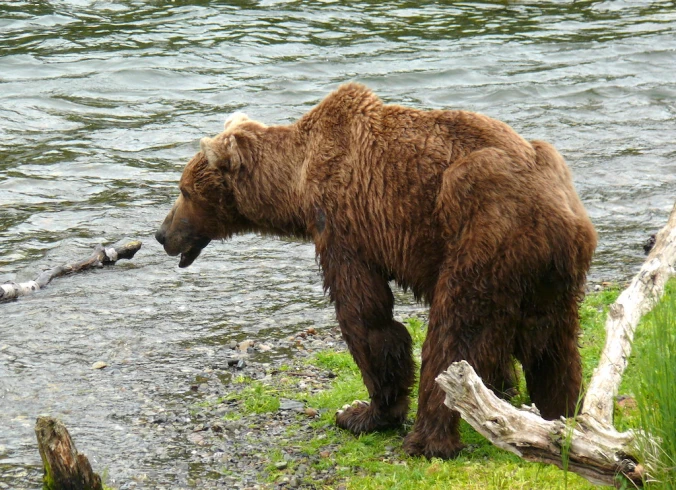
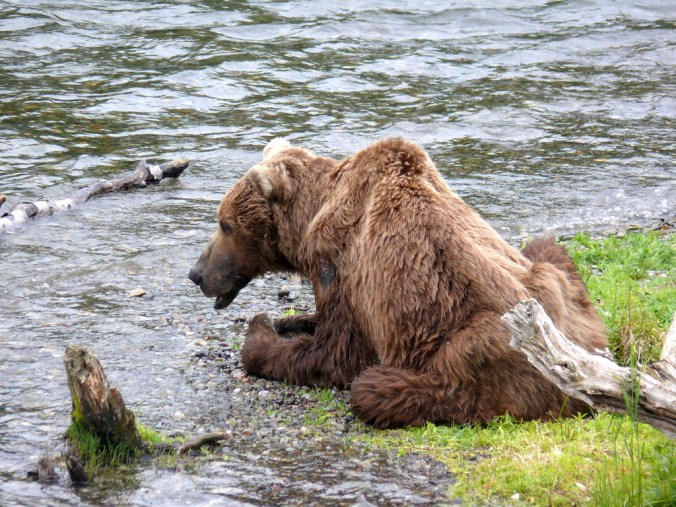
Emaciated: bear appears skinny with ribs, vertebrae, and hip bones usually clearly visible unless covered by fur.

  • Time of year most likely to happen: late winter through early summer, but can happen in all seasons.
  • Age/sex Class: Older bears, especially older mothers with newborn cubs and injured bears
emaciated 16 Cinnamon.jpg

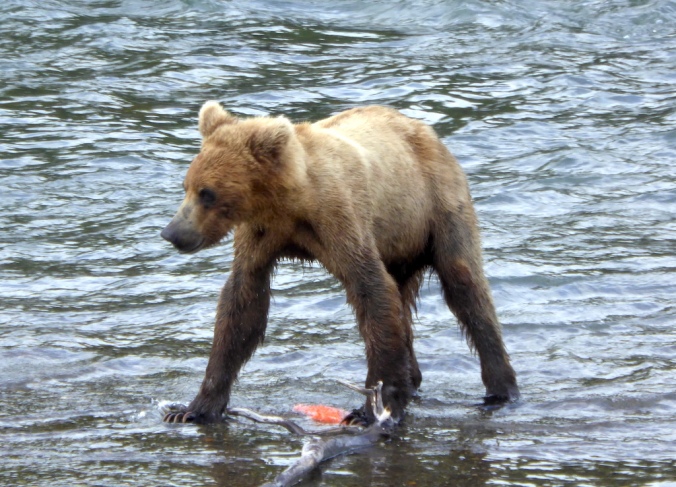
16 Cinnamon shows an emaciated figure in July 2010. Notice his prominent hip bones and shoulder blades. If he had less fur, his ribs would also be noticeable.

emaciated 16 Cinnamon_2.jpg

In this photo, also from July 2010, Cinnamon’s vertebrae seem visible through his fur. Despite his lack of body fat in July, he survived winter and returned to Brooks in 2011. At the time, he was estimated to be at least in his late 20s, but could’ve been older.

Thin: vertebrae and hip bones partly visible; narrow body

  • Time of year most likely to happen: late winter through early summer, but can happen in all seasons.
  • Age/sex class: subadults, yearling cubs, 2.5 year-old cubs, older bears, and mothers with newborn cubs
thin 234 Evander fishing near the far pool 2.jpg

234 Evander in July 2010 displays a thin body with noticeable hip bones. Evander was an older bear (probably older than 20 years) in 2010.

thin 503.JPG

In this photo from early July 2016, 503 Cubadult appears thin with slightly visible hip bones. His narrow body shape is not uncommon for young subadult bears (he was 3.5 years old in July 2016), and does not necessarily indicate poor health. Rather it reflects the time of year and his low rank in the bear hierarchy.

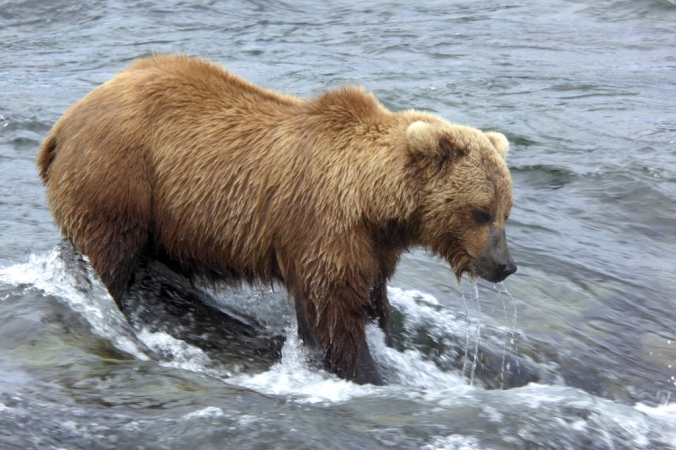
Average: hip bones and ribs not visible; the bear’s body, neck, and head are evenly proportioned

  • Time of year most likely to happen: all year, but most often summer
  • Age/sex class: all ages
average 505.JPG

This adult female, 505, is well proportioned and a good representative of average fatness for an early to mid summer bear. Photo taken on July 8, 2016.

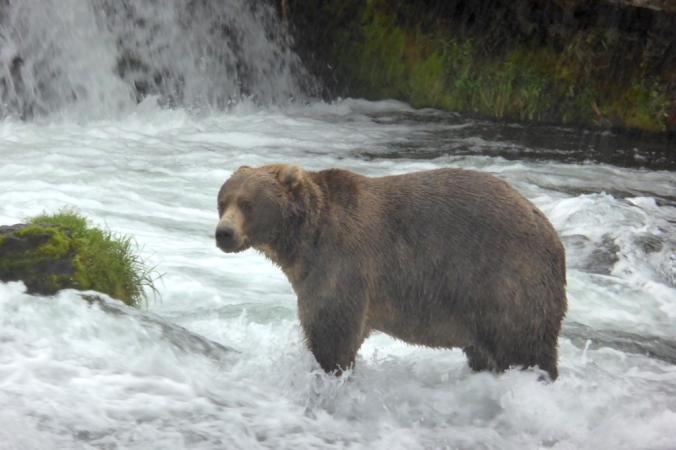
Fat: fat over rump, stomach hangs low; bear’s neck is semi-fat but doesn’t distort the size of the head

  • Time of year most likely to happen: late summer and fall
  • Age/sex class: adult males in prime of life in mid summer, all bears late summer and fall
Fat 89 Backpack_03_09132015.JPG

Katmai’s brown bears most often reach the fat class in late summer and fall when salmon are readily accessible and have been so for two months or more. In this photo from September 2015, 89 Backpack displays the typical body shape of a fat bear. Most bears attain this body shape before they hibernate.

fat 747.JPG

Sometimes large adult males, like 747, can reach the fat category by the end of July. Some bears aren’t this fat when the go into the den, yet 747 reached this size months before hibernation. This photo was taken in late July 2015.

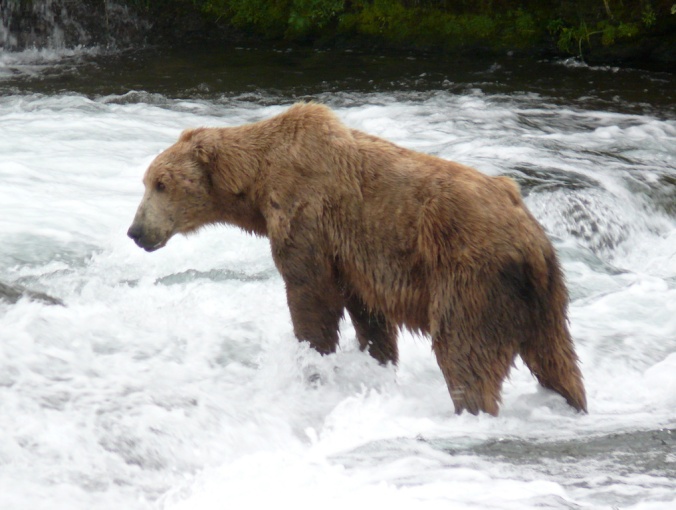
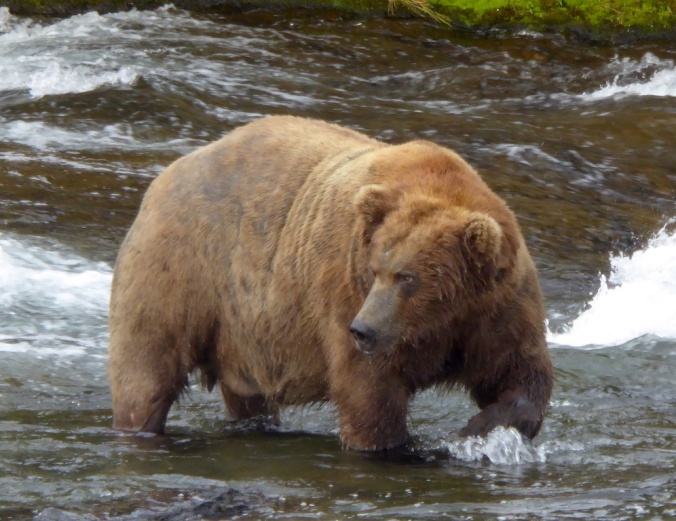
Obese: stomach hangs very low; bear’s neck is very fat and makes head appear smaller in proportion to its body

  • Time of year most likely to happen: very late summer and fall
  • Age/sex class: adult males in prime of life and adult females without cubs
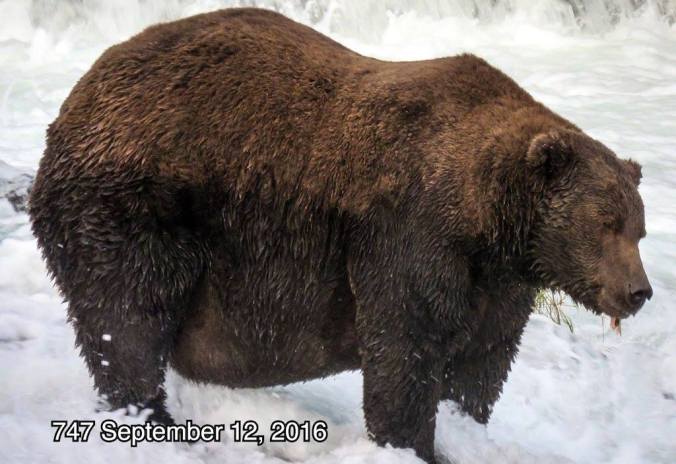
Obese 747.jpg

This NPS photo of 747 epitomizes an obese bear. (He should’ve won #FatBearWeek. Election was rigged!) Seriously, this is an extremely obese bear. I don’t think I’ve ever seen a bear this fat before. His belly hangs nearly to the ground (the water is not very deep where he stands in the photo). 747 is a very dominant adult male at Brooks Falls. As such, he has access to his choice of fishing spots. His well-endowed figure is proof of his dominance, health, and fishing skills.

Obese 409 Beadnose_45_09232015.JPG

409 Beadnose shows the ample proportions of an obese female in September 2015. Females with cubs do not usually attain this level of fatness because of the energetic costs associated with raising cubs. Beadnose did not have cubs in 2015.