A National Park Purge

I want to write about people if you’ll indulge me. This is a topic that I almost never delve into, since I find the human realm less interesting than the non-human and the overall behavior of my fellow humans to be disappointing. (“Hey let’s start another war.” “Hey, I don’t care if the climate gets warmer.” “The suffering of others isn’t something that affects me.” etc.) I’ll touch on politics too, which I loathe. Not that I don’t remain engaged on issues that matter, and I always vote, but I find politics exhausting. The rhetoric from elected leaders and pundits is often disingenuous at best and too often purposefully deceitful. Our media industry, especially social media platforms, uses it to monetize outrage and divisiveness. I want to avoid adding to the cycle that got us here if that is at all possible.

But to be blunt, we’re experiencing a purge of national park staff that threatens the stability of parks.

I worked in nine U.S. national parks, mostly as an interpretive ranger. Those are the rangers that lead programs, staff the visitor centers, and generally try to give people meaningful experiences. Although I no longer work for the National Park Service (NPS), I maintain close ties to parks across the country through family, friends, colleagues, the Katmai Conservancy, and my work for explore.org. Parks survive as places of significance through the support of the public and the work of NPS employees. The ability, however, of the NPS and other federal agencies to manage our public lands is facing a demanding, unnecessary challenge that will cause harm to these irreplaceable spaces.

By now, you’ve likely heard of the Fork in the Road, an attempt led by Elon Musk at the behest of the President to reduce the size of the U.S. federal workforce. Almost all federal civilian employees were offered a deferred resignation. Setting aside the confusion it sowed, its uncertain legality, and its ignorance of established regulations, the Fork was a not-so-subtle attempt to strong-arm employees into making a hasty decision about their careers. Those who didn’t take the offer were in no small way threatened that their jobs were not secure. “We cannot give you full assurance regarding the certainty of your position or agency,” as the Fork in the Road email stated in reference to those who do not accept the resignation offer.

The total number of employees who took the offer hasn’t been fully tallied, but it is likely that a few tens of thousands of people did resign across the entire federal government. As part of his justification, Musk argues that unelected bureaucrats have too much power, even as he fails to understand that he is now the quintessential example of an unelected, unaccountable bureaucrat. It is the Spiderman meme for real.

Cartoon image. Two Spidermen are standing and pointing at each other. Instead of Spiderman wearing the Spiderman mask, their heads are replaced by Elon Musk's face.
Musk photo courtesy of Duncan.Hull – Debbie Rowe, Photographer, CC BY-SA 4.0, https://commons.wikimedia.org/w/index.php?curid=125330577

The Fork in the Road window is over, so to further reduce the federal workforce the administration is firing thousands of employees who were within a probationary period—a generally 1 – 2 year window that acts as an employment trial. Here is a good primer if you’re interested. During that time, your supervisor can decide whether your performance is acceptable. If it is, then great. Good work. Continue. We’re glad to have you. If it isn’t, then you could be fired due to poor performance. At least that is how it is supposed to work.

On February 14, about 1000 people lost their jobs in the National Park Service. That number could grow. Other land management agencies are targeted too such as the U.S. Fish and Wildlife Service (which manages wildlife refuges and endangered species), the U.S. Forest Service (which manages national forests and employs the nation’s largest wildfire fighting force), and the Bureau of Land Management (which manages large swaths of public lands that aren’t refuges, parks, or national forests). 

The Fork in the Road and mass firings are different from Bill Clinton’s methods to reduce the federal workforce in the 1990s. Namely, Clinton’s plan was approved by Congress and implemented over three years. The current administration’s plan is not Congressionally approved. Its tactics are different too. Probationary employees are being fired en masse without consideration of the value of their job, the benefits they provide to the public, the skills they possess, or their work performance. The justification for the firings is nothing more than “not in the public interest” according to the emails they’ve received. That’s not a rational justification. It is pure ideological fervor that harms real people.

How does this affect the national park that I am most connected with, Katmai? Although I’m hopeful that many of Katmai’s probationary staff may be exempted from the firings, a loss of just a few staff members at Katmai will have a disproportionately large negative impact. Katmai’s year-round staff includes perhaps 30 people. In contrast, Yellowstone has closer to 750 year-round staff. Absorbing staffing cuts is generally easier for parks with a larger staff. Additionally, the administration has implemented a hiring freeze for most seasonal positions. Reports indicate that the NPS is allowed to hire 5,000 seasonal staff, but the park staff that I’ve talked to remain unsure if they will be able to hire all the staff they need. Five thousand seasonal employees is well short of the typical 7,000 to 8,000 that are usually hired annually. 

The delay jeopardizes the ability of supervisors to hire, train, and get seasonal rangers in parks for the busiest time of the year. Katmai and most national parks cannot function properly without their seasonal workforce. 

The NPS at Katmai employs about 12 seasonal interpretive rangers for Brooks Camp. These rangers provide mandatory bear safety talks, manage access to the extremely popular Brooks Falls wildlife-viewing platform, help in bear management situations, operate the visitor center, and lead programs. Most of the maintenance, law enforcement, and bear technicians (rangers that manage bear and human conflict) are also seasonal employees. The federal hiring freeze has created extraordinary uncertainty regarding the NPS’s ability to hire seasonal staff and get them ready to run Brooks Camp. The purge of probationary employees may also lead to the loss of some supervisors for the seasonal staff. Due to the administration’s actions, we’re likely at a breaking point where park staff will not be able to keep up with the workload that already exists. 

For decades, the National Park Service has coped with too few employees for the work. Congress also saddles the NPS with perpetual budget deficits. I don’t think I ever had a supervisor in the nine parks that I worked at who wasn’t nearly or actually overwhelmed with work. Both Republicans and Democrats are at fault for this.

I wonder if you visited a park site if you would have noticed, because the NPS is really good at doing more with less. The NPS hides the stress and low morale felt by their employees and crumbling infrastructure behind smiling rangers wearing flat hats. Most people who aren’t employees don’t see the struggle to keep parks functional, the efforts made to ensure that people have good experiences despite ever increasing visitation, the knowledge and commitment necessary to study and protect ecosystems, or feel the day to day stress that comes with never being able to keep up. This spring and summer are likely to be some of the most challenging seasons that NPS employees have ever faced. People will still want to visit parks. They’ll still go to parks, but the NPS will lack the staff to provide for the best, safest experience.

The NPS shouldn’t hide the ramifications of mass firings and the seasonal job hiring freeze.

Layoffs don’t make the work of rangers go away. The public will see the results in the form of shuttered visitor centers, damage to park infrastructure, vandalism, increased emergency response time, wildlife harassment, poaching, road damage, campground closures, overflowing parking areas, and unclean bathrooms. Those things are difficult enough to address when parks are fully staffed. It is easier, cheaper, and more efficient to prevent those issues from occurring than to deal with the aftermath, just like it is easier to prevent infection through proper hygiene than to clean a wound of gangrene. Neglecting public lands now is a tax on the future.

“Where is the money supposed to come from?” you might ask. “After all, the national debt keeps going up and up and up.” If economics matter to you, then please consider that national park tourism generates more revenue than it costs the parks to operate and supports hundreds of thousands of jobs nationwide outside of the NPS. The requested NPS budget in 2023, for example, was $4.75 billion, while the 2023 economic output of national parks was more than $55 billion. For every dollar invested in national parks, taxpayers get much more in return. I bet our Congress and President find money for more bombs in the midst of all this. There always seems to be money for more bombs. They might also fight to provide more tax breaks for the ultra-wealthy because the rich always seem to need more money to feed their greed. So let’s not pretend that firing hardworking and dedicated NPS employees is a true means to reduce debt or taxpayer burden or make government more efficient. It is driven by an ideological agenda.

Our public lands are the nation’s most cherished spaces. The tech billionaires and politicians want you to think that it is GDP, stock values, Walmart, Amazon, Tesla, and Facebook. In reality it is our shared democratic spaces such as parks, wildlife refuges, and national forests. 

Most everyone can agree that the U.S. government can spend its money more wisely and efficiently. I favor that. I would question the rationality of anyone who thinks otherwise. Scapegoating federal employees as the problem, however, isn’t a solution. The goal of elected leaders should be to make government work better, not break it. But here we are.

If you’ve read this far, you’re likely a Brooks River bearcam watcher. It remains to be seen how firings will ultimately affect the operation of Brooks Camp this summer. Yet more people than ever before visited Brooks Camp in 2024 (about 19,000 according to park statistics provided to me). Even if visitation declines overall, the nature of the Brooks Camp experience means that it will remain an intensely managed place. Katmai will be especially challenged to ensure that bears and people are safe at the park’s most visited site. The bearcams on explore.org will not be affected, thankfully, but that is of little solace to me knowing that friends and colleagues may be fired solely for ideology. It is not ethical. It is not in the best interest of the taxpayer. It is cruel.

Finally, there’s been a lot of talk of loyalty from the administration. Federal workers need to be loyal, etc. Loyalty for NPS employees doesn’t mean capitulating to a presidential administration’s ideology, which comes and goes on the will of voters. Loyalty for NPS employees means staying loyal to the NPS mission and purpose, which was established by Congressional law in 1916. It is in the U.S. Code. NPS employees cannot escape it nor should they. 

The NPS mission is somewhat contradictory and often frustrating to fulfill. I lived the contradiction as a ranger when struggling to determine how to best provide for enjoyment without impairing the things that make parks special. Ensuring that parks meet their Congressional mandates is where the loyalty of NPS employees truly rests. That’s how it is supposed to work. It safeguards parks against the whims of politicians.

I would still consider the current methods to purge the government workforce as wrong even if it were applied to areas of government that I disagree with on principle. Don’t hand the reins of power to an unelected billionaire bureaucrat. Consider how you’d react if you are on the other end of overreaching, unchecked presidential powers in the future. If you don’t like the way that the NPS operates, then work through Congress to change it.

If this is an issue that matters to you and you haven’t contacted your congressional representatives about it, please do. Calling might be better than writing, but this template has some good starting points to communicate. There are a lot of other reasons to write to them as well like their efforts to erase the existence of Trans people. We can get through this but not without holding elected and unelected people accountable, and not without reining in the powers of the presidency.
2023 Fat Bear Week Endorsement

Think of a mama bear. What does that idea conjure in your mind? Perhaps it is fierceness, since mother bears are ornery and defensive when necessary. Maybe it is commitment, because mother bears dedicate years to raise a single litter. Perhaps it is sacrifice, since mother bears provide cubs with time and energy that could otherwise serve to promote her own physical health.

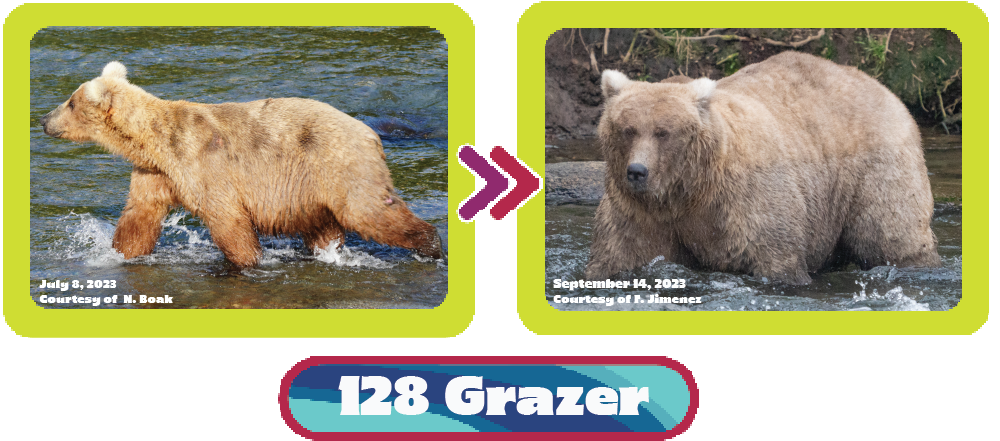
We’re fortunate to watch many different female bears at Brooks River in Katmai National Park. Yet there is one whose maternal efforts are legend. One who can fish successfully almost anywhere. One whose fearsome reputation is long-lived among other brown bears, including large adult males. Don’t get in her way. Don’t lurk near her fishing spot. Don’t look at her cubs. Do give 128 Grazer your 2023 Fat Bear Week vote.

Early and late summer photos of 128 Grazer. Photo on left is Grazer on July 8. She is facing left and walking through water. Photo on right is from September 14, 2023. She is facing left and standing in belly deep water. She is round.

Grazer | ɡrāzər |

  • (2005 – Present) A female brown bear documented to use Brooks River in Katmai National Park, Alaska. Also known as bear 128.
  • verb. [with object]
    The effort of a mother bear to maul or attack another bear with little provocation, especially in defense of her cubs: She grazered him.
  • Origin: Bear cam slang. Circa late 2010s and early 2020s.

Grazer is famous among people and (maybe) infamous among brown bears for her extraordinary defensiveness. When she arrived at Brooks River in 2016 with three cubs representing her first known litter, she would confront and attack other bears with little or no provocation. Sometimes it appeared that another bear only had to look in her family’s direction to draw her ire, as bear 83 knows well. 

Her behavior didn’t mellow when those first cubs grew into yearlings the following summer. Nor did she rethink her aggressiveness toward other bears when raising her second litter. While mother bears can change their parenting strategy as they gain skill and experience, Grazer continued on the path forged with her first litter—the best defense is a good offense.

Grazer separated from her most recent litter at the beginning of summer 2023. Since then, she’s lived a brown bear bachelorette’s life. Her pheromones attracted the attention of male bears during the mating season. They chased her tail, with varying degrees of success, right bear 164? After the mating season, and also during it, she focused on eating. A lot. Her waistline carries the weight of her success.

Grazer’s formidable reputation carried into this summer. She ranked high in the hierarchy among bears and was perhaps the river’s most dominant female. Notably, 151 Walker deferred to her frequently in early summer. Walker is a big dude and he’s not shy about displacing bears from preferred fishing spots. Bears have good memories, though. Maybe he had too many bad experiences with her in the past and didn’t want to risk more dangerous confrontations.

In this video, Walker is in full dominance mode as he works to displace another adult male at Brooks Falls. But watch his behavior when Grazer shows up on the boulders above.

And in case you need more examples of Grazer bulldozing bears, here you go. (Watch with sound on for the full effect.)

During my brief time at Brooks River early last summer, I watched bears fish largely without success because the expected salmon run was slow to arrive. Some of the big guys caught some fish. 747, for example, sat at Brooks Falls like he always does and let the fish come to him, but even he wasn’t catching many. Most other bears fared worse. They roamed from one place at the river to another, searching for the few early arriving salmon.

Grazer, though, has practiced—no, perfected—her fishing tactics in many different places. If fish are jumping Brooks Falls, she’ll catch them there. If there’s space in the waterfall’s far pool, she’ll catch them there. She’ll work the jacuzzi below the falls. She’ll fish in the middle of the night. She’ll use her strength and agility to chase down salmon. 

One evening last summer, I stood on the riffles platform watching her work the river in front of me. While the riffles provides brown bears with fishing opportunities, it is often a more challenging place for bears to catch salmon than the falls. The riffles doesn’t provide the same pinch points in topography as the falls and salmon have many escape routes. There aren’t many bears who can make the best of that situation consistently, especially when few salmon are in the water and bears are forced to run through the water to get them.

Grazer parks herself on the near bank upstream of me. She moves into the water after several minutes and spots a lone salmon. She lunges and misses. She chases. Another lunge, another miss. She continues running at full speed through the water while somehow keeping an eye on the salmon. With a final lunge, she fully submerges into a two to three-foot-deep pool and surfaces with the salmon in her jaws. I can see the fish gasping in the air as blood runs from deep puncture wounds in its body. Grazer eats all of it—tail to head—even the gill plates and mandibles.

In early summer when few bears were catching salmon, Grazer found success. She is perhaps the best angler at Brooks River. 

Brown bear standing in river. Water is flowing over boulders forming riffles. Bear is moving in direction of camera. Water drips off her fur. She holds a sockeye salmon in her mouth.
Bear 128 Grazer with a catch in the riffles on July 6, 2023.

Let’s not lose sight of Grazer’s goals either. She’s working to build the fat reserves necessary to sustain her survival during winter hibernation. She’s also building fat in case she gives birth in the den. Bear cubs are born mid winter while mother hibernates. Abundant fat reserves are necessary for mother bears to reproduce, so getting fat is vital to a bear’s reproductive success.

In a way, my 2023 Fat Bear Week endorsement is a recognition of Grazer’s full-bodied and fat-addled collection of work since 2016. When she is raising cubs Grazer is the archetypal mama bear. She’s formidable, strong, brave, skilled, and  successful. She deserves your vote in Fat Bear Week 2023.

Fat Bear Week bracket. Four bears (806 cub vs 428; 402 vs 901) in two first round matches on left. Two bears (32 and 480) are in bye round on left. Four bears (128 Grazer vs 151; 284 vs 164) in two first round matches on right. Two bears (747 and 435) are in bye round on right. Graphical cartoon bears fill the top and bottom center of the bracket.
My Fat Bear Week bracket predictions for 2023. Yes, yes, I know. I don’t predict that Grazer will win. There’s a difference between who I think should win and who I think will actually win, after all. Which bear’s corner are you in? Download your bracket from FatBearWeek.org.

Action Needed: Support a Permit System for Brooks River

Brooks River in Katmai National Park, Alaska is historically, culturally, and ecologically unique. The river corridor has harbored Alaska Native peoples for thousands of years, is one of the densest archeological sites in Alaska, and remains a place of profound significance for Alutiiq descendants of former Katmai residents. The underlying geology records stories of great volcanic and glacial change. Hundreds of thousands of sockeye salmon annually use the river for migration and spawning. And, during the last 40 years it has become especially famous for its brown bears and wildlife viewing opportunities. There’s no other place like it.

A mother bears swims through water in front of a grassy shoreline. Her two first year cubs ride on her back. She swims from right to left.
Bear 482 Brett searches for salmon in Brooks River while her two cubs hang on for the ride. July 14, 2021.

Brooks Camp is also experiencing more people than ever before. 

In the midst of skyrocketing visitation last year, Katmai National Park implemented a pilot permit program for Brooks River. The permit system didn’t change wildlife distance regulations at Brooks River or limit the overall number of people who could visit. Instead, it applied only to those who wish to physically enter the river or its banks outside of the designated trails, roadways, bridge, and platforms. No one needed to reserve a permit unless they planned to enter the river or walk off trail along the riverbanks (two activities that I suggest should be avoided to give bears the space they need).

The pilot program appeared to be successful. It provided National Park Service (NPS) staff with an additional opportunity to communicate the special circumstances, rules, and responsibilities that apply to Brooks River. The NPS could revoke the permit in instances where permit holders did not adhere to wildlife distance or fishing regulations, which effectively prohibited the person(s) from reentering the river. It allowed approved Brooks River Guides to continue to give their clients the mandatory bear-safety orientations. And finally, it did not restrict or interfere with subsistence fishing associated with the traditional redfish harvest.

Now, the NPS is looking for public comments about the permit system. If you have the time and care about the bears who make the river their summer home, then please support the plan with a comment on or before April 28. As the Katmai Conservancy suggests, say yes to the permit and ask the NPS to limit the number of permits on a daily or weekly basis.

Modified satellite map image showing permit area for Brooks River. Title text reads, "Brooks River Permit Corridor (Permit Needed Within 50 Yards of River). Areas highlighted in blue represent the permit corridor. The area outlined in red represents the area closed to people from June 15 to August 15.

Why are permits necessary? The relative ease and accessibility of the bear-viewing experience at Brooks Camp has attracted increasing numbers of people. More than 16,000 people visited in 2022—an all time record high—and almost double the visitation of 2008. Brooks River is a mere 1.5 miles (2.6 km) long, yet dozens of brown bears use it during the salmon migration and spawning seasons of summer and early fall. 

People who enter in the river directly occupy the habitat that bears need to fish for salmon. Numerous scientific studies (reviewed here) have documented that human recreation can displace bears in time and space. The presence of people can cause bears to switch from diurnal to crepuscular activities in response to bear-viewing, angling, hiking, and camping. Bears decrease in number and are present for shorter time spans when exposed to people, angling, and bear-viewing. Bears also spend less time fishing and have less fishing success when anglers and bear-viewers are present.

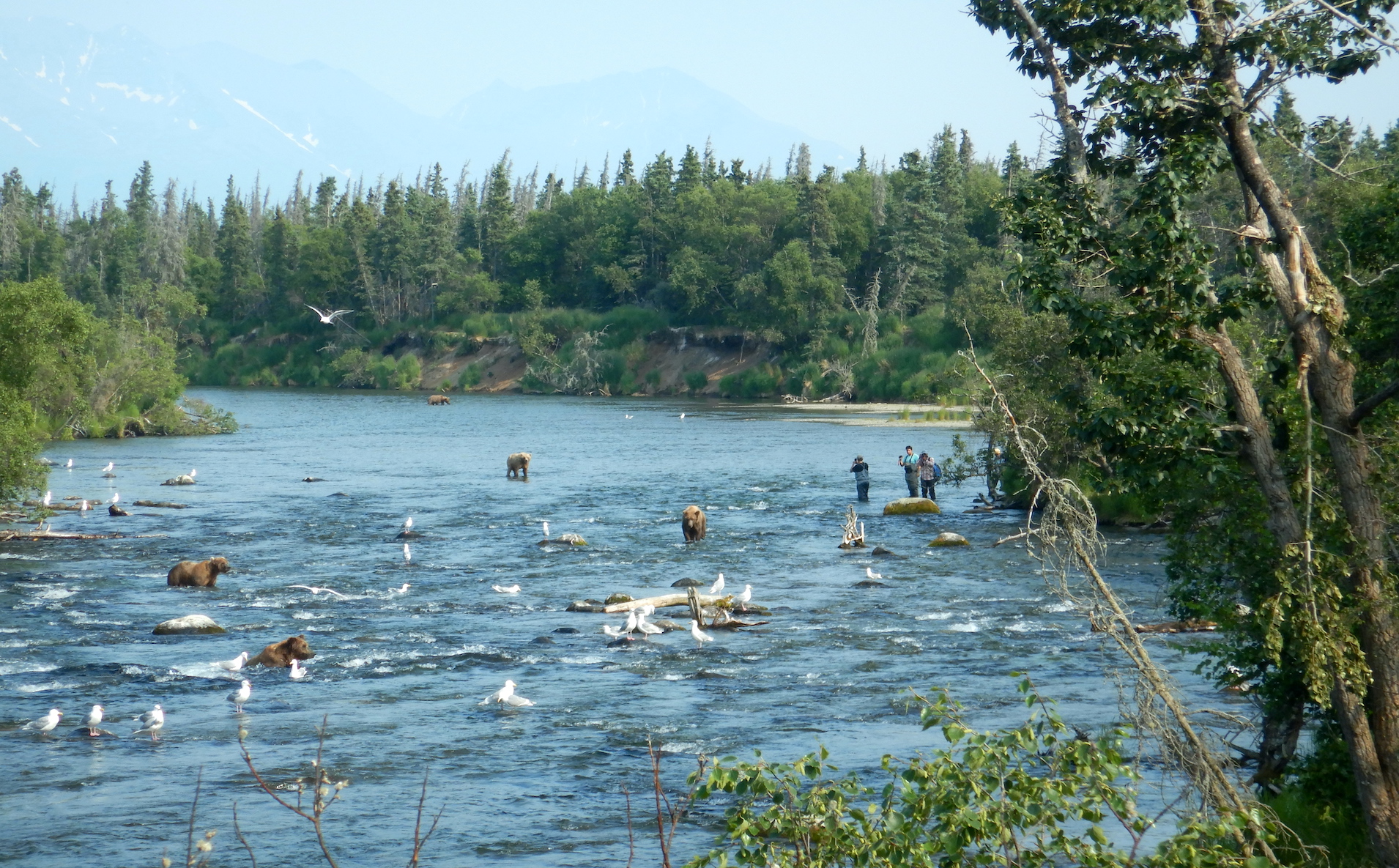
View of river surrounded by boreal forest looking downstream. Five bears are in the water. Nearby, a group of four people stand in the water photographing the bears.
Bears gather at Brooks River to fish for salmon. People in Brooks River risk displacing bears from important foraging areas in the river. This is especially true for bears who do not habituate to our presence. In these situations, we unwittingly become a competitor in the bear’s mind for space, and most of the time that bear won’t challenge us for it.

Studies specific to Katmai National Park have found that the presence of people can affect when bears fish (Olson et al. 1998) and cause bears to avoid or alter their use of foraging areas (Rode et al. 2007; Smith 2002; Turner and Hamon 2016). Therefore, even a small number of well-behaved and well-intentioned people in the wrong place (like in the river) can have a disproportionately negative effect on brown bears. Disturbance of wildlife can also result in decreased visitor satisfaction (Skibins et al. 2012) and create user conflicts between visitors who are recreating in different ways (bear watching from the platforms or online via webcams vs fishing or photographing bears in the river).

Importantly, and tucked away in the park’s newsletter about the permits, is this: “There is no limit established to the number of permits issued during the permit-required time frame currently, but this will be considered if public feedback to the plan supports a limitation or if conditions change within the Brooks River Corridor to warrant a limitation.” Therefore, I recommend that comments ask the NPS to go beyond merely requiring permits. Comments about the permits should encourage the NPS to establish limits to permits on a daily or weekly basis and perhaps even greater seasonal closures to Brooks River to adequately protect habitat for bears.

I didn’t visit Brooks River in person last year, but rangers and some people I know who had traveled there reported to me that the pilot permit system worked well. While it does not address over-crowding and congestion issues at Brooks Camp caused by record-high levels of visitation, it is certainly a big step in the right direction to ensure the river’s bears have access to the habitat they need to survive. None of the existing regulations would change at Brooks Camp. The permits only make it easier for the NPS to enforce them. But permits alone are not enough. Existing protections for bears can be made more effective if permits were limited in availability. Our national parks, and indeed Brooks Camp, cannot support unlimited numbers of people. The Brooks River corridor is a small area overall. It has limited space for bears and a limited carrying capacity for a high-quality bear-viewing or fishing experiences. Please let the NPS know you support their efforts to protect habitat for bears in the river through the permit system and that the number of permits should be limited on a daily or weekly basis when bears are actively fishing in the river.

Submit your comments here on or before April 28, 2023.

For additional information, please see the comments I wrote on behalf of the Katmai Conservancy, an example comment that you can use, and my Brooks River pledge. As always, when commenting please stay polite and respectful. The people who manage Katmai are intelligent and well-meaning. They do not deserve insults or personal attacks.

Book Talk at Veteran’s Memorial Library

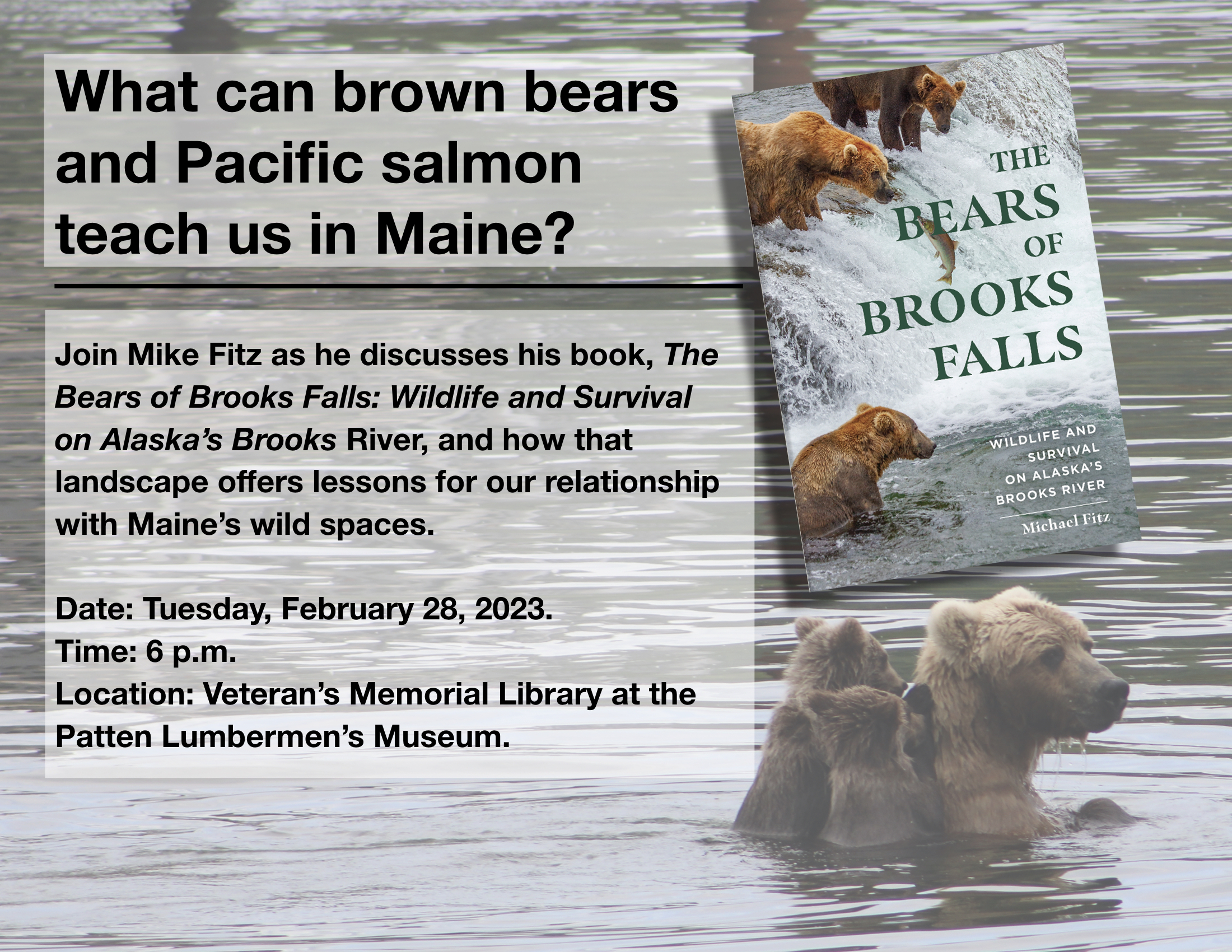
Mark your calendars if you’re based in northern Maine. I’ll be giving a talk at the Veteran’s Memorial Library in Patten at 6 p.m. on February 28. While I’ll discuss some of the main storylines in my book, The Bears of Brooks Falls: Wildlife and Survival on Alaska’s Brooks River, I also talk about how those stories might provide lessons for our relationship with the Maine landscape.

This will be a new talk, so now it is time for me to stop procrastinating and get to work polishing the presentation. I hope to see you there.

Flyer for a book talk. Background image is a bear swimming through water with two cubs clinging to her back. Above the bears is a book cover with the title "The Bears of Brooks Falls." The descriptive text reads, "What can brown bears and Pacific salmon teach us in Maine? Join Mike Fitz as he discusses his book, The Bears of Brooks Falls: Wildlife and Survival on Alaska’s Brooks River, and how that landscape offers lessons for our relationship with Maine’s wild spaces. Date: Tuesday, February 28, 2023. Time: 6 p.m. Location: Veteran’s Memorial Library at the Patten Lumbermen’s Museum."

E.P.A. Vetoes Pebble Mine!

On January 31, the U.S. Environmental Protection Agency banned the disposal of mine waste associated with the Pebble deposit in southwest Alaska. The mine could have become one of the largest open pit mines in the world and would have imperiled Earth’s last great salmon run. The EPA’s decision is a great victory for the Bristol Bay region and its salmon.

Seventy-nine million salmon returned collectively to Bristol Bay in 2022, setting a new record high for the region. Bristol Bay’s wholly intact watersheds make this possible. Water flows freely from snowmelt-fed rivulets and springs high in the mountains through the chains of lakes that occupy glacially-carved basins and into the lower stems of rivers that empty into the Bering Sea. Adult salmon swim upstream without encountering human-made obstructions or water diversions. And, instead of being displaced by shore-line hardening structures to protect buildings or roads, such as it is throughout much of the U.S. west coast, billions of salmon fry in Bristol Bay find ample refuge in the slack-waters along stream margins, grassy marshes, and lakes. Vast numbers of salmon don’t even see a bridge during their entire lives. The diversity and health of the watersheds make Bristol Bay whole. 

Turbulent water filled with salmon. A red-colored salmon's tail fin breaks the surface at upper left. At center, a more silver-colored salmon's face breaks the surface.
salmon jumping at waterfall. salmon are jumping from bottom center to lip of falls on upper left.
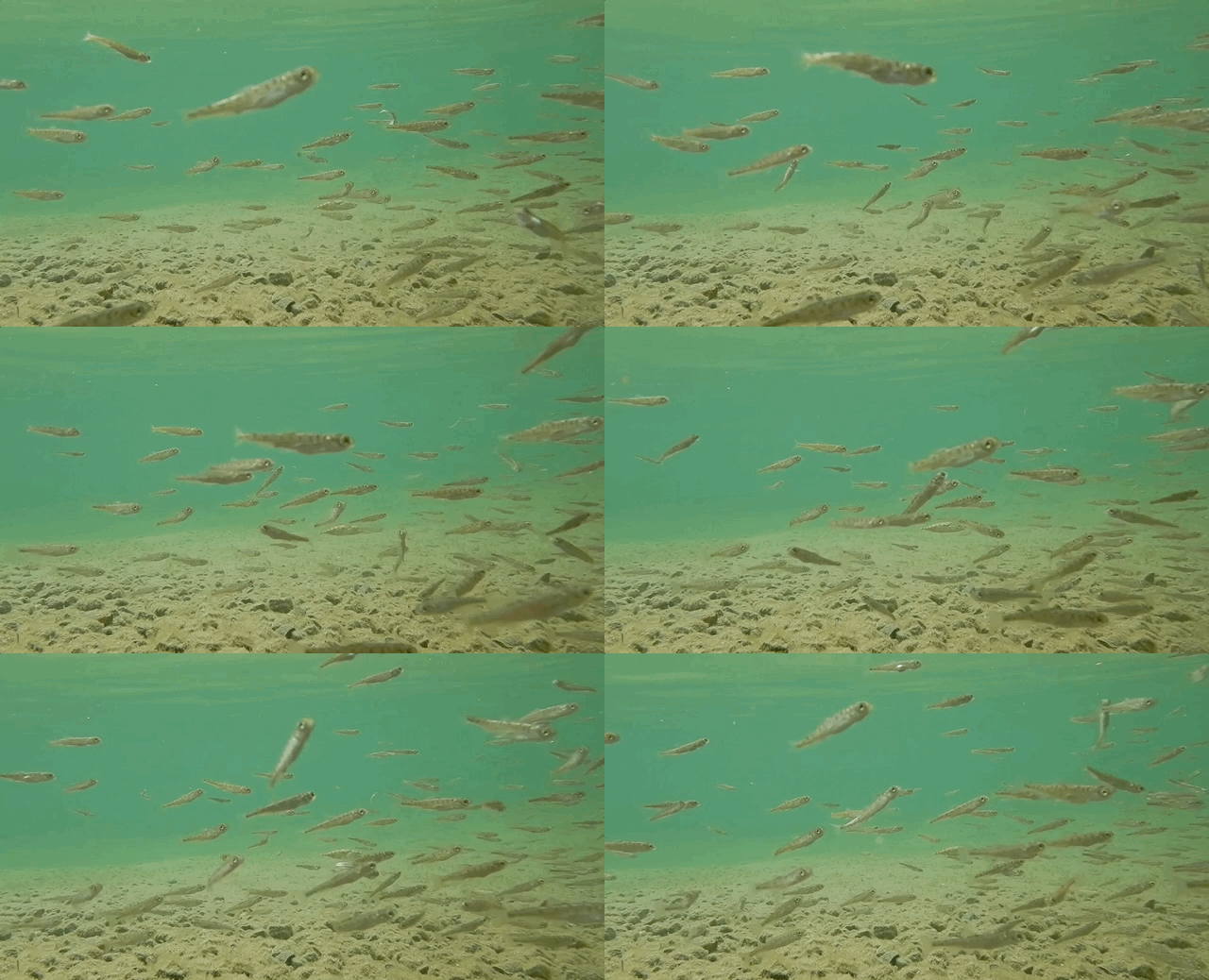
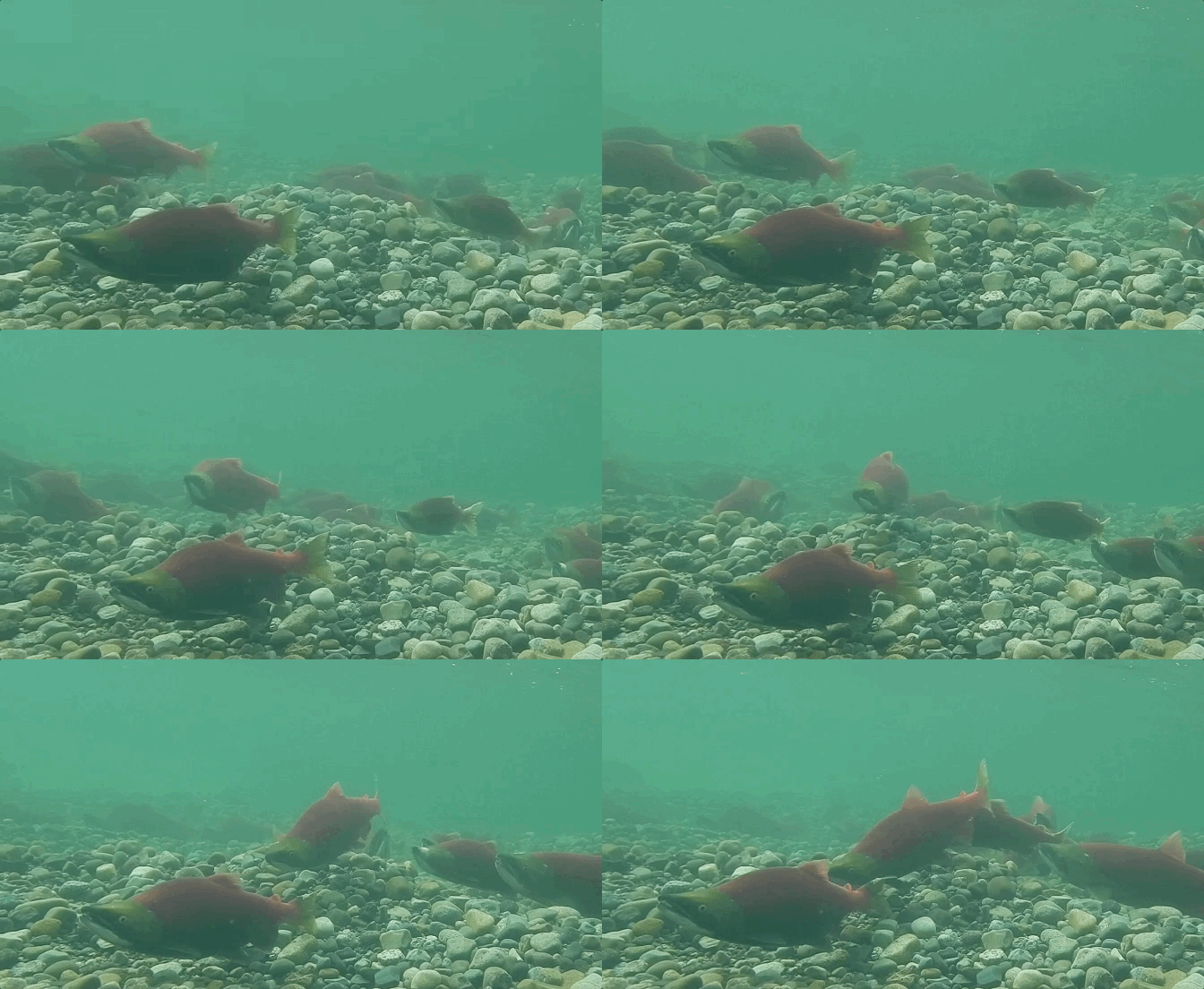
GIF of underwater footage of salmon fry. Water is clear. Salmon swim in current facing right over pebbly bottom.

I was late to the Pebble fight, only learning about the proposed mine in 2007 during my first summer as a park ranger in Katmai National Park. But many people in the Bristol Bay region have been advocating against Pebble Mine for 20 years. I hope the fishing boat captains and their deck hands; Alaska Native Tribes, village councils, and coalitions; lodge owners, employees, and fishing guides; chefs; scientists; those who work for non-profit and conservation organizations; and many others have the opportunity to rest well for at least a few days now that the threat of the mine is no longer looming. I thank them for their work.

Landscape scene from mountaintop. Scree slope in foreground transitions to lowland area with, forests, some mountains, and large lakes. No human development can be seen.
GIF of underwater footage of sockeye salmon. Salmon are facing left over stream bottom covered in cobbled

Before I had the fortune of living in the Bristol Bay area, I did not understand—or even fathom—the importance of salmon to place and people. The calendar in Bristol Bay is centered on salmon. The region’s economy is centered on salmon. Its ecology is centered on salmon. And it works, beautifully.

I’ve said many times before that our world is wounded. Too much of humanity seems to have a unique desire and capability to consume land, habitats, material without considering the rights of other creatures or the value that future generations of people might place on those things. I wish I could take everyone to Bristol Bay at the height of the summertime salmon run to see the fishing fleet and processors, to stand on the edge of a river while tens of thousands of salmon swim upstream, to watch brown bears gorge on their most important and sought-after food, to see an ecosystem functioning at its fully realized potential. It just might change your perspective on what should be and what is possible for our world.

Ten Years of Bear Cam and Counting

Last summer, explore.org celebrated the 10th anniversary of the bear cams at Brooks River in Katmai National Park. These webcams offer an in-depth look at the behavior and ecology of a population of brown bears, allow us to observe the same individual bears over many years–giving us the chance to learn about their personalities and habits–and provide a platform for rangers and other experts to host live programs and commentary about the bears and their stories. It’s a wildlife watching experience like no other.

As part of the celebration, I chose to highlight some the moments that I thought were most memorable from the last ten years of bear cam. Some explore point-in-time events. Others celebrate the behavior of individual bears who have left their mark on Brooks River in ways we can’t forget or ignore. Each was unforgettable from my perspective. I hope you enjoy them.

Most Defensive Mother: 128 Grazer 

Grazer is an archetypal mother bear. Don’t get in her way and don’t approach her cubs.

Lefty Learns to Fish at Brooks Falls

Old bears can definitely learn new tricks. In July 2015, we watched a fully mature adult male brown bear figure out how to fish where he’d never fished before.

Otis Eats 42 Salmon in a Sitting

Be awed by the capacity of his stomach.

Death of 451’s Spring Cub

When a bear cub falls ill the world will watch.

503’s Saga

A lone yearling finds a new family.

Reign of 856

Few bears will ever experience the prolonged dominance and advantage earned by 856.

2020 Salmon Smorgasbord

What happens when bears have access to unlimited salmon? The 2020 salmon run gave us the answer.

History of Fat Bear Week

A goofy idea becomes a world famous internet sensation.

We are Family: 909, 910, and Cubs

Sister bears reunite while raising cubs to create an extended family.

If that’s not enough, the bear cam community complied links to all of our bear cam live events from 2022. Two stand out in my mind: 1. The impromptu Q&A about a fight between and mother bear and a dominant male, and 2. The bear cam 10th anniversary live chat.

We’ve seen a lot of special moments on the cams during the last ten summers–perhaps too many to recall–so these are only a small snippet of the larger story. What are your most memorable moments from the bear cams?

Cultivating Mass: 2021 Fat Bear Week Endorsement

Life as a champ is rough. Rivals look to take advantage of any weakness you might show. Arm chair critics analyze your every move. Fans expect perfection. When the next championship tournament rolls into town your body has aged another year and your preferred food has worked its hardest to evade and escape you. Meanwhile, you’re trying to live your best life, because you are a bear and the concerns of humans matter not to you.

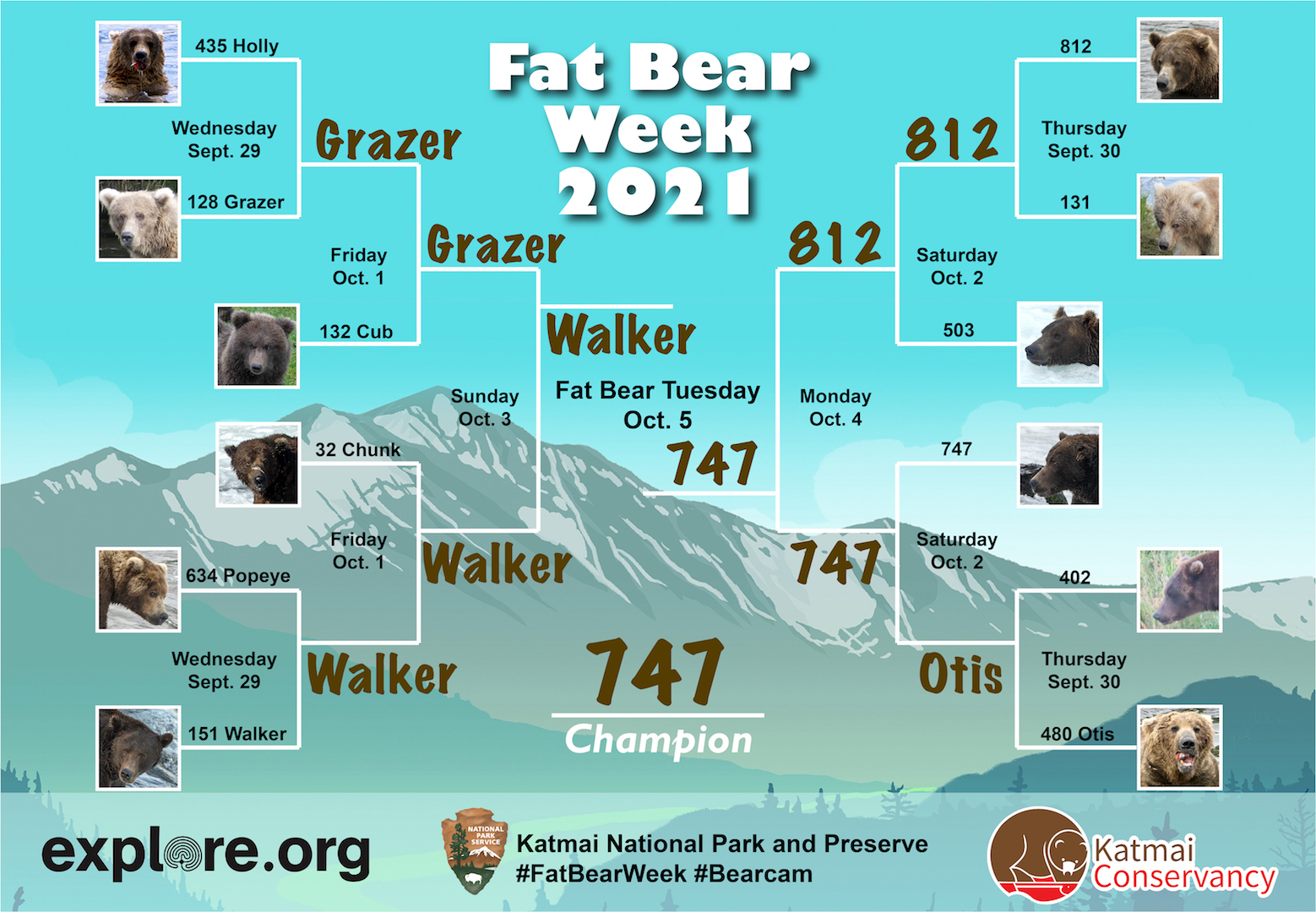
Yet, for those of us who recognize greatness and celebrate success when we see it, there is one clear choice for Fat Bear Week 2021—the mighty 747.

before and after photos of a large brown bear. Top photo was taken on July 4 2021. Bottom photo was taken on September 14 2021.

Long-time readers of this blog may be thinking, “This again?”

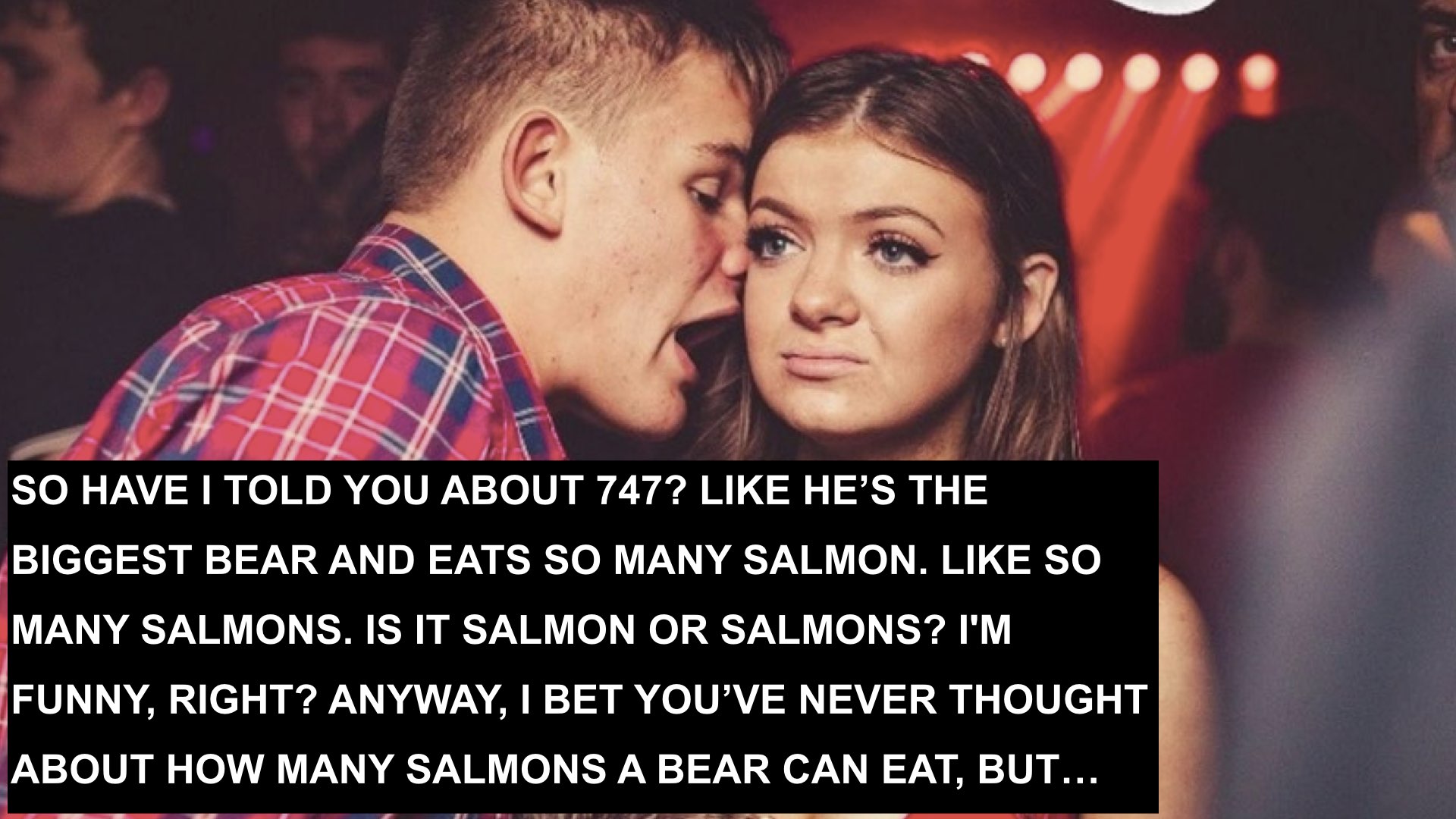
photo of man leaning close to a woman's ear to talk to her. Woman stairs ahead with a bored look. Text reads in all caps, "SO HAVE I TOLD YOU ABOUT 747? LIKE HE’S THE BIGGEST BEAR AND EATS SO MANY SALMON. LIKE SO MANY SALMONS. IS IT SALMON OR SALMONS? I'M FUNNY, RIGHT? ANYWAY, I BET YOU’VE NEVER THOUGHT ABOUT HOW MANY SALMONS A BEAR CAN EAT, BUT…"

…Let me tell you dear friends: 747 is as fat as ever.  He deserves your Fat Bear Week vote.

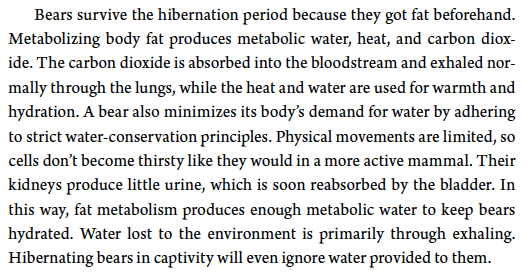
Brown bears get fat to survive. Their obesity (and it is that since a bear’s body fat percentage is routinely 20-30 percent or more when they begin hibernation) is a savings account. In the den, bears do not eat or drink. They stay warm and hydrated by burning body fat. Unlike utilizing muscle for energy—a process that produces metabolic wastes that must be recycled, sequestered, or purged from the body—burning fat is a relatively clean fuel as I write in chapter 4 of my book, The Bears of Brooks Falls.

screen capture of text that reads, "Bears survive the hibernation period because they got fat beforehand. Metabolizing body fat produces metabolic water, heat, and carbon dioxide. The carbon dioxide is absorbed into the bloodstream and exhaled normally through the lungs, while the heat and water are used for warmth and hydration. A bear also minimizes its body’s demand for water by adhering to strict water- conservation principles. Physical movements are limited, so cells don’t become thirsty like they would in a more active mammal. Their kidneys produce little urine, which is soon reabsorbed by the bladder. In this way, fat metabolism produces enough metabolic water to keep bears hydrated. Water lost to the environment is primarily through exhaling. Hibernating bears in captivity will even ignore water provided to them."

It’s akin to cultivating mass only to carefully harvest it later. Just not for vanity’s sake, bro.

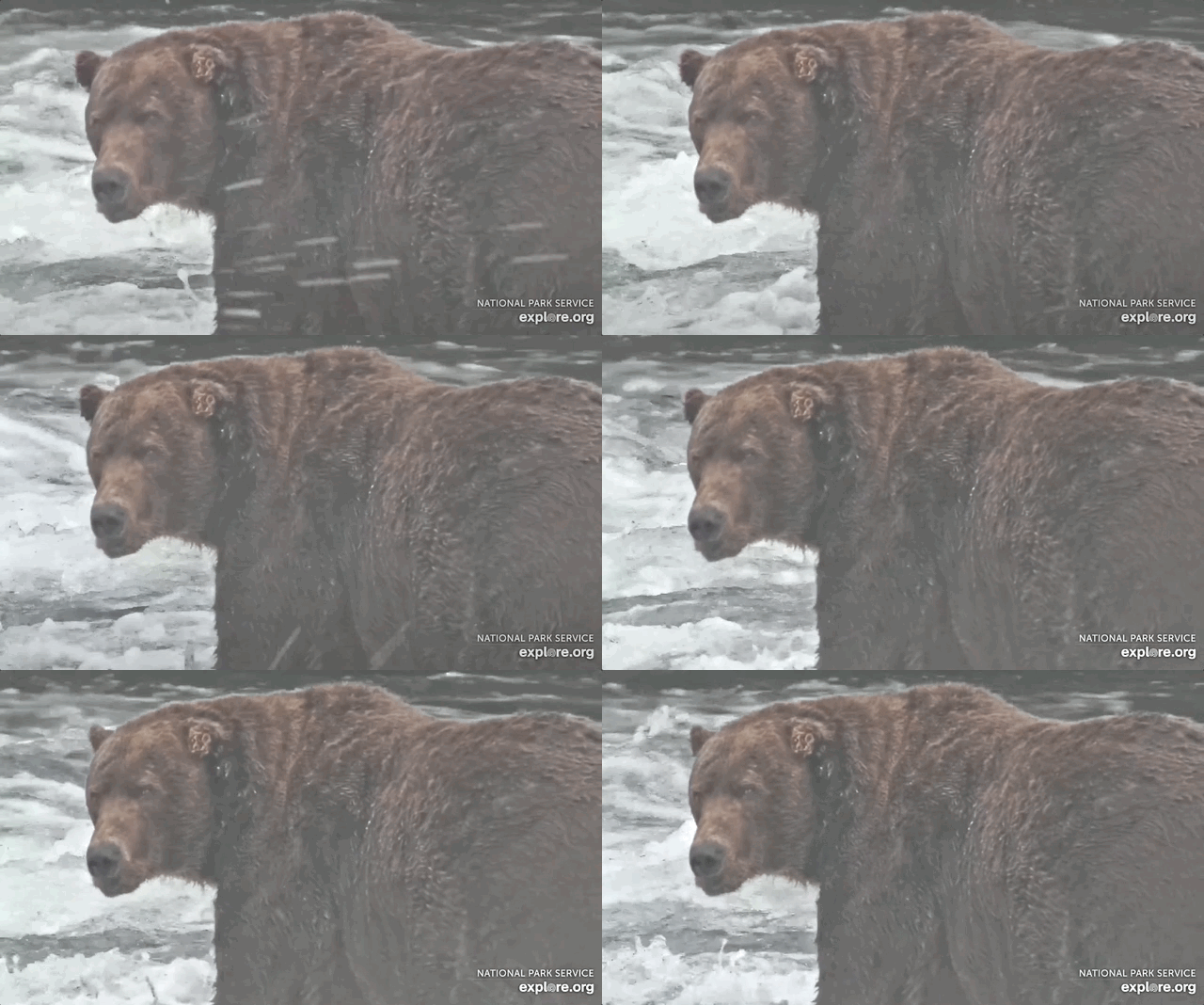
747 cultivates mass at an exceptional rate. This summer, he reigned as Brooks River’s most dominant adult male. Even the river’s long-time dominant bear, 856, would not challenge him, and as a result 747 had nearly free access to any fishing spot of his desire.

A single brown bear can eat thousands of pounds of salmon per year. The largest can eat 6,000 to 10,000 pounds. Given his size, appetite, high rank in the bear hierarchy, and his keen fishing skills, 747 is more than capable of eating many thousands of pounds of salmon each summer. At Brooks Falls, he intercepts a great deal of fish by being at the right place at the right time and waiting for his food to come to him. When Brooks River’s sockeye migrated upstream, 747 was primed to harvest them.

GIF of bicycle crash. Woman who holds sign that causes crash represents 747. Peloton represents salmon.

He’s so successful that in September 2019 and again in September 2020, he was estimated to weigh more than 1,400 pounds. This places him, as I estimate, among the top one percent of brown bears based on body mass.

Even with his size, he remains agile.

Well, maybe not always that agile.

When he walks close to the webcams at Brooks River, he eclipses the sun.

And yes, that is a tapeworm hanging on for a ride.

Fat Bear Week celebrates the success of Brooks River’s bears, the ecosystem and salmon that sustain them, and the bears’ abilities to get fat and survive. 747 exemplifies success among adult male brown bears. He deserves your vote and a repeat Fat Bear Week victory.

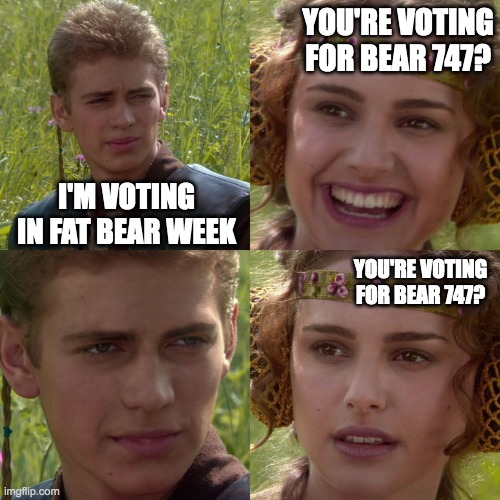
Four panel meme from Star Wars. Text in panel 1 says, "I'm voting in Fat Bear Week." Text in panel 2 says, "You're voting for bear 747?" No text in panel three, just a stoic face. Text in panel 4 says in smaller text, "You're voting for bear 747?"
photo of man leaning close to a woman's ear to talk to her. Woman stairs ahead with a bored look. Text reads in all caps, "BEARS GET FAT TO SURVIVE. DID YOU EVER CONSIDER THAT? I MEAN NOT A LOT OF PEOPLE THINK ABOUT THAT, RIGHT? MAYBE IF YOU THINK THAT’S COOL WE COULD HANG OUT ON FATBEARWEEK.ORG AND VOTE FOR 747."

Join explore.org’s Fat Bear Week live events, fill out your bracket, vote for your bear in Fat Bear Week. See you on the campaign trail.

Title: Fat Bear Week 2021 Bracket. 12 bears, six on each side. Four first round matches and 4 bears that get a bye into the second round. Winners are chosen. 747 is predicted to win.
My 2021 Fat Bear Week bracket leads to a 747 victory. Get in his corner before it is too late.
GIF of large brown bear looking intensely in direction of camera

Guess the Cover Bear: Winners

Most of the bears who use Brooks River in Katmai National Park are known individuals that return to fish for salmon year after year. Many return for their entire lives, and their stories are an integral part of my book, The Bears of Brooks Falls. Last month, I invited readers to guess the identities of the bears on the print and audio covers. I placed entrants into separate drawings for the chance to win free copies of the print and audio book as well as a personalized signed copy of the print book. Here are the answers and the lucky winners.

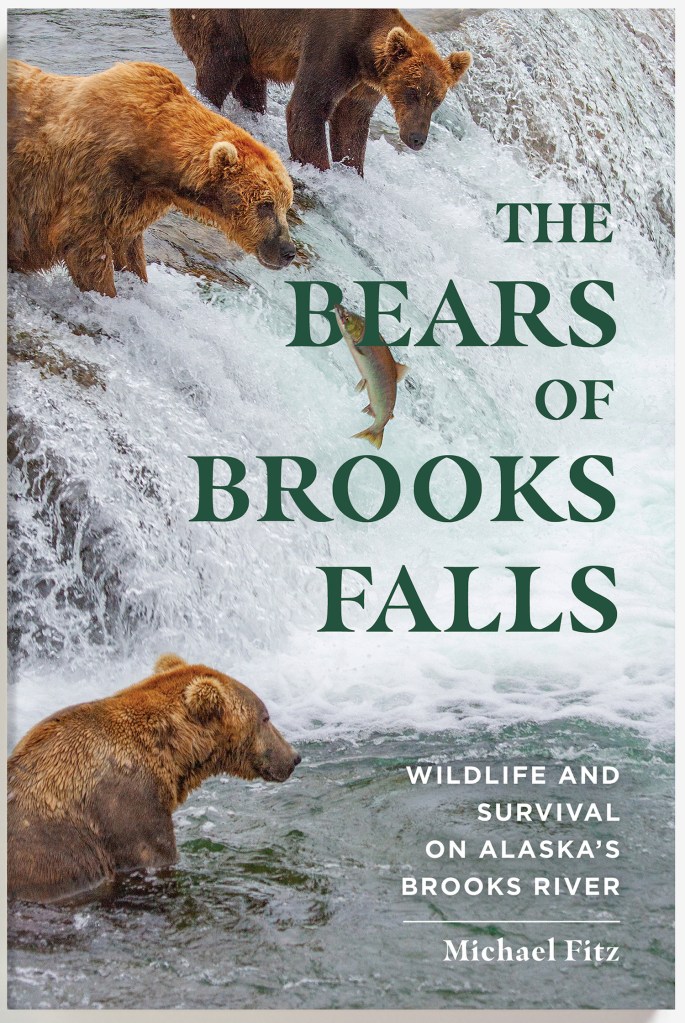
On the print book cover, two of the three bears are fairly distinctive yet all three are legends.

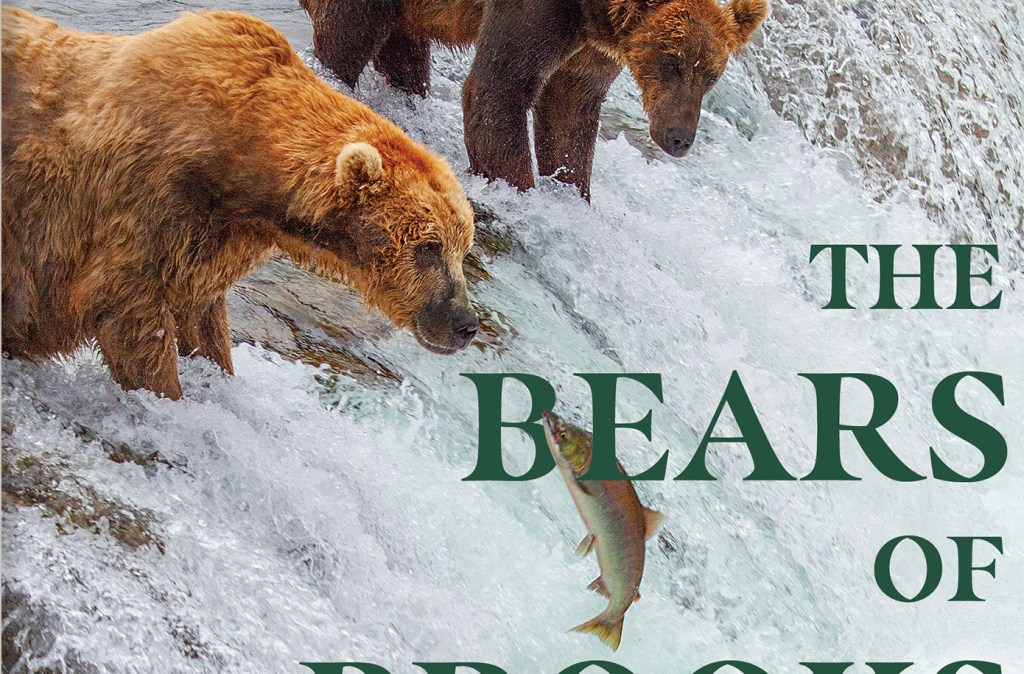
Book Cover. Background image shows three bears at edge of waterfall while one salmon jumps out of the water. Text is "The Bears of Brooks Falls: Wildlife and Survival on Alaska's Brooks River; Michael Fitz"

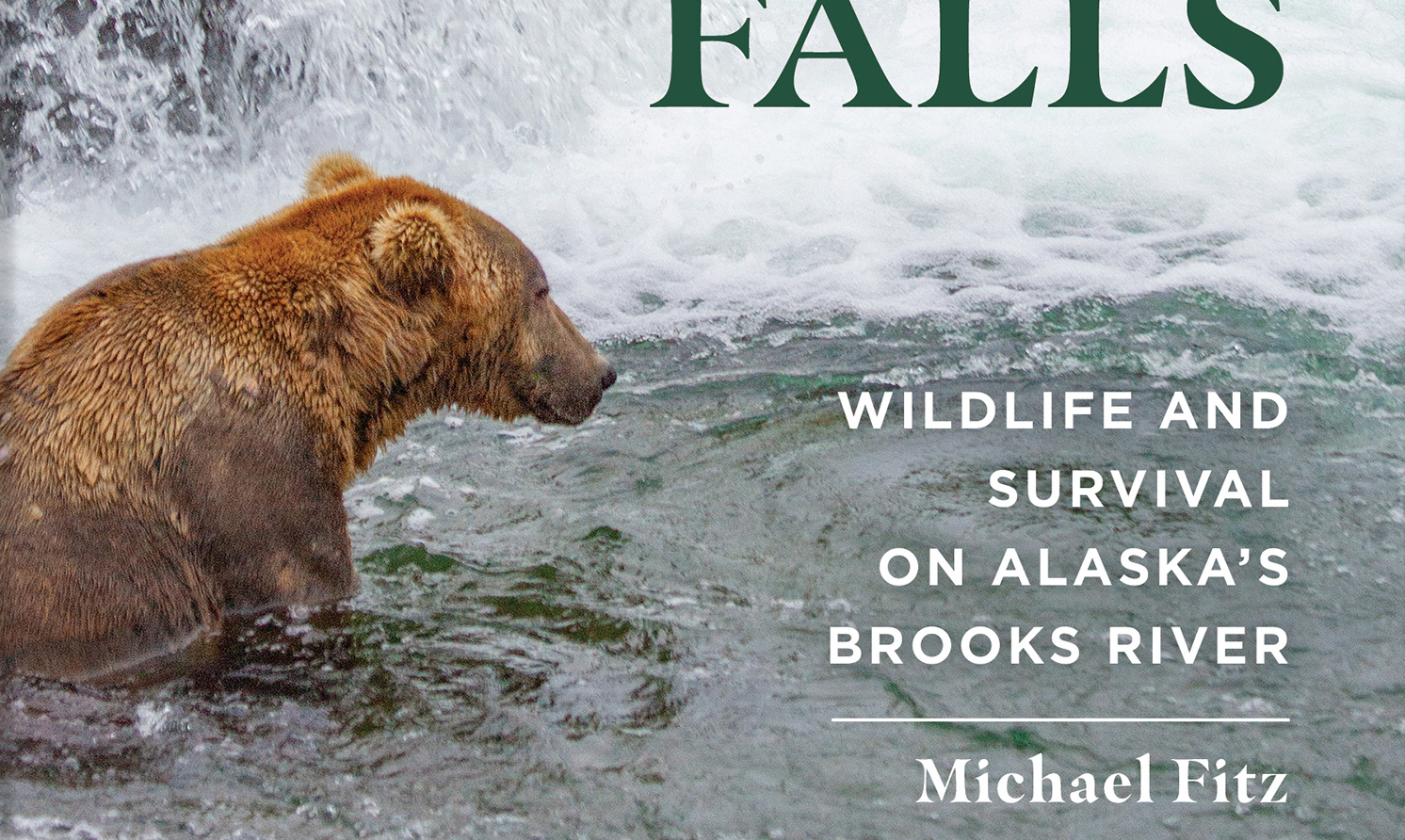
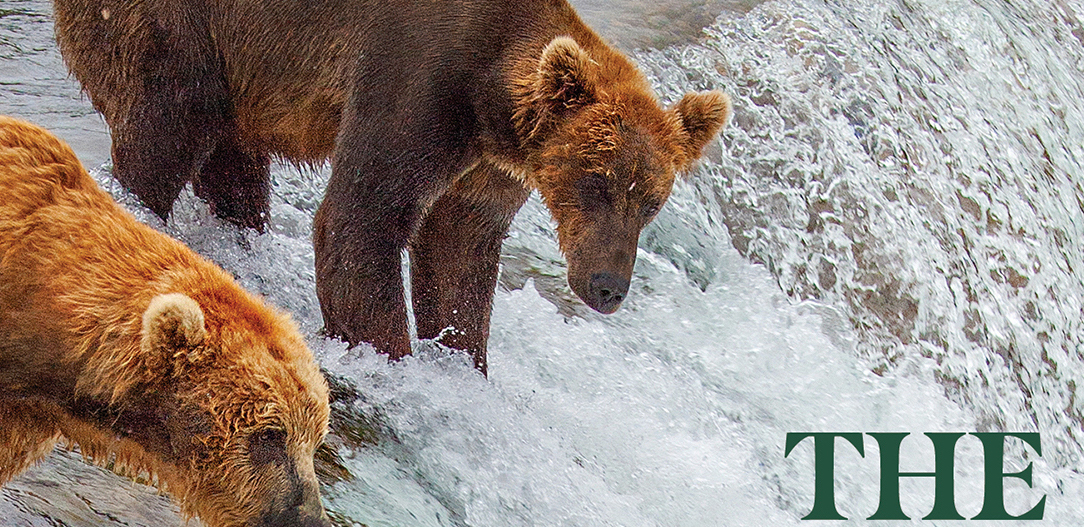
Sitting below the falls is everyone’s favorite example of patience and efficiency, 480 Otis. His face is a bit obscured due to the camera angle. The photo was also taken before he acquired a bit of a wonky right ear, but you might recognize his classic Eeyore-like posture.

screen shot of corner of book cover. Bear sits at lower left at base of waterfall. Text says, "Wildlife and Survival on Alaska's Brooks River | Michael Fitz."

Standing on the lip of the falls at upper left is 6 Headbob, a bear identified as a young adult male in 1988. When I first saw him in 2007, Headbob was a large and skilled angler who had free access to his preferred spot on the lip. (I do wonder how he would’ve fared if he had to compete with Grazer this year.) Headbob was one of the first bears to teach me about longevity and survival for older individuals in this long-lived species.

Screen shot of section of book cover. Bear stands on edge of waterfall at upper left. Text says, "The Bears of

The other bear on the lip is difficult to identify. In this photo he’s a young adult soon to mature into one the river’s most dominant bears. It is 856. Starting in 2011, he reigned as the river’s most dominant bear for most of a decade. No one predicted his rise to the top of the hierarchy. Even though 856 took a slight step back this summer and began to yield to the mighty 747, it may be many years before we encounter another bear with a similar combination of his size, assertiveness, and fighting skills.

Screen shot of section of book cover. Bear stands on edge of waterfall at upper left.
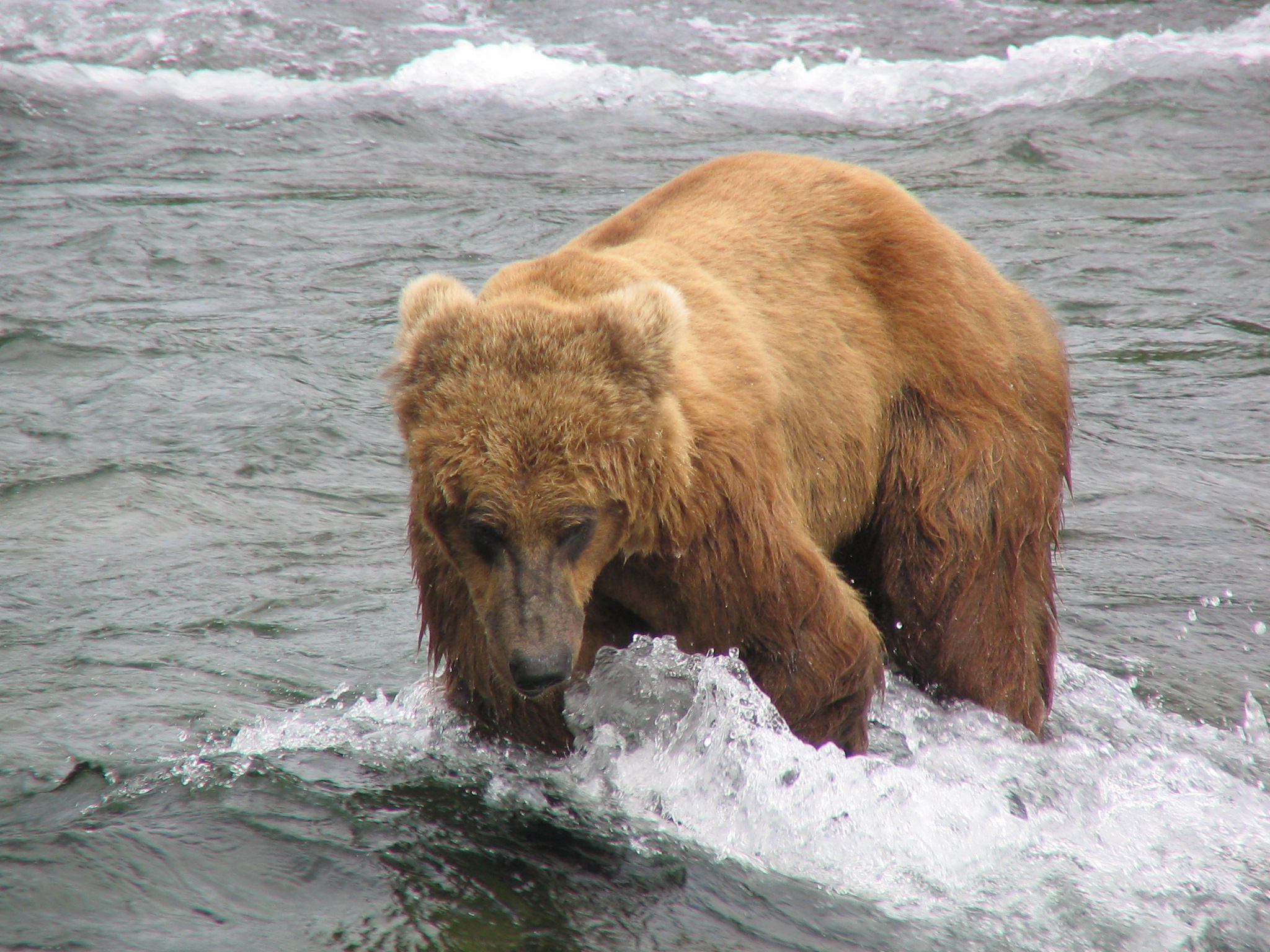
photo of bear standing in flowing water. Bear is walking toward
This National Park Service photo of 856 was taken on July 6, 2006. The difference in 856’s coat color between this photo and the book cover is due to shedding. Brown bears shed their fur in early summer, so the audio book cover was likely taken in late July 2006 or 2007.

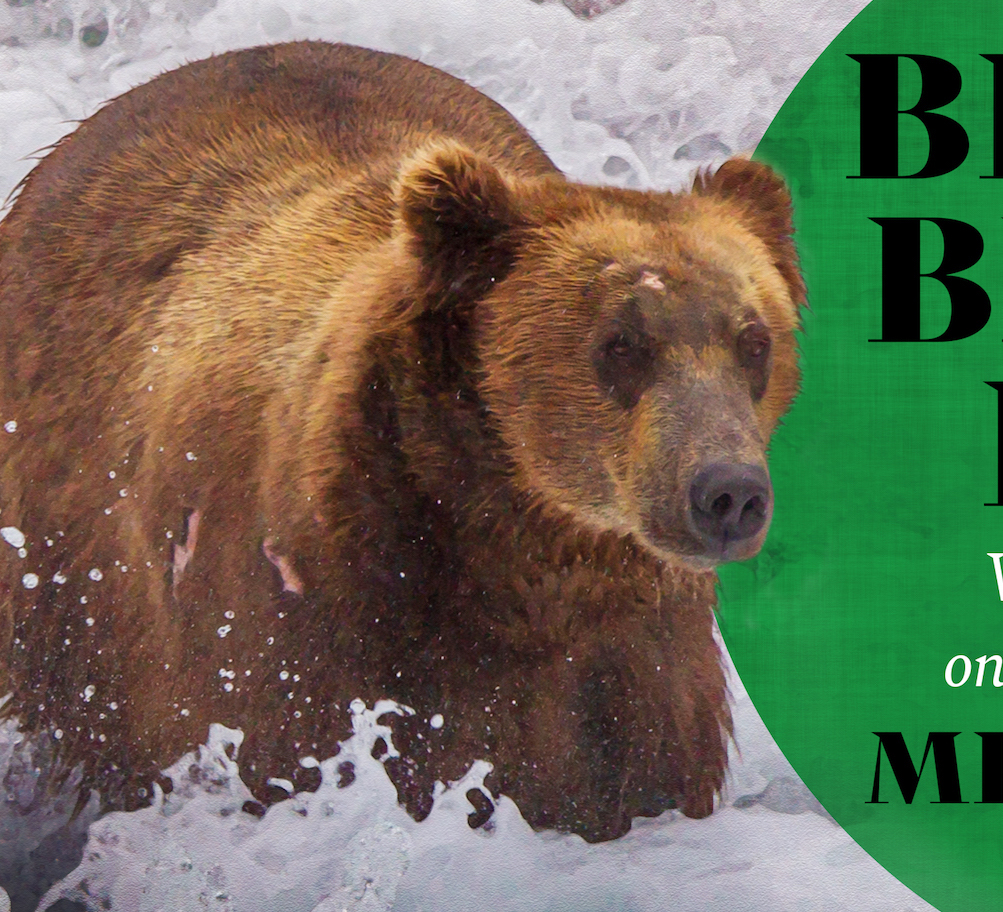
Now to the audio book cover. At upper right is 489 Ted and at lower left we see 32 Chunk. Ted is recognizable by his triangle-shaped ears and distinctive scar on his left hip.

Book Cover. Background image shows two bears standing in shallow white water. Text is "The Bears of Brooks Falls: Wildlife and Survival on Alaska's Brooks River; Michael Fitz; read by John Pruden."

His scar, notably, is the remnant of a large wound he received in 2007. Fair warning: the video is gasp worthy. Ted showcased a bear’s ability to get on with life despite pain.

Bear standing in shallow water in a corner of a waterfall. Bear is facing toward camera and has large flap of skin hanging from its left hip.
Bear 489 Ted on August 3, 2007. National Park Service photo.

Chunk is a bit harder to identify. In this photo, he has no obvious distinctive features like Ted. Instead, I recognize him by his face and body shape. Even during his subadult and young adult years, Chunk always had a pear-shaped body.

Screen shot of section of book cover. Bear stands in foamy water facing the camera.

Since Ted’s wound is relatively small in the cover photo and he was last seen in 2013 and since Chunk appears to be a sizable young adult, then this places the photo sometime during 2011 – 2013.

Only one person correctly identified all the bears on the print book cover. Congratulations to Mariah Denhart from California for correctly identifying all the bears on the print book cover. She receives a personalized signed copy from yours truly. No one correctly guessed the both cover bears on the audio book, so I placed all entrants from that category with at least one correct ID into a separate drawing. Congratulations to Jolene Nagle from West Virginia who wins a free copy of the audio book. Lastly, congratulations to Mike Hass from Oklahoma who wins a free print book from a drawing of all “Guess the Cover Bear” entrants. I’ll be touch with each winner via email with more details.

Thank you to everyone who participated. I’ve been overjoyed by the positive notes and reactions that have been sent my way about the book. Most importantly, though, I hope it enhances your understanding of Brooks River, its bears, and your bearcam watching experience on explore.org. May it inspire you to protect this special place for bears, salmon, people, and all the area’s inhabitants now in the future.

PS: Bearcam fan and sometimes National Park Service volunteer Stacey Schmeidel has been leading a book club about The Bears of Brooks Falls this summer. The next meeting is September 11 when the club discusses Chapter 11: Keystone. Please sign up for the Zoom meeting if you want to participate.

Cover Bear Book Giveaway

Brooks River in Katmai National Park is unique among bear watching sites, because its bears are known individuals with life histories so well documented that several are veritable internet celebrities. Many return to Brooks River year after year, some for their entire lives, a phenomenon we can watch on the bearcams. At Brooks River, bears are not anonymous wildlife, but unique individuals that we can know. Perhaps no other place offers the public the same wildlife watching opportunity.

Many of these same bears feature prominently in my book, The Bears of Brooks Falls. I explore how Otis and 747 satisfy their profound hunger, how 856 establishes and maintains his dominance, how 402 and other female bears navigate the mating season, and how mother bears like 273 nurture their vulnerable cubs.

Since watching the lives of individual bears is a focus of many bearcam fans, I’m frequently asked, “Mike, which bears are on the cover of your book?”

I’ve steadfastly refused to answer, until now that is. I’ll answer, I promise, but you’ll have to do a bit of work first, and perhaps win a copy of my book in the process. Here’s how.

  • Guess the identity of the bears on the print and audiobook covers.
  • Submit your answers.
  • Wish yourself good luck.

Three prize categories will be awarded. *

  1. Correct answers to the identities of bears on the print book cover will be entered into a drawing to receive a personalized signed copy by the author of The Bears of Brooks Falls.
  2. Correct answers to the identities of bears on the audiobook cover will be entered into a drawing to win a free copy of the audiobook of The Bears of Brooks Falls.
  3. Everyone who submits answers, whether correct or not, will be entered into a drawing to win a free copy of the print book.

If you feel a bit unsure about which bears are on the book covers, here are some hints to consider.

  • On the print book cover, one of the bears hasn’t been seen at Brooks River in many years and is presumed deceased. The other two continue to use Brooks River, now as older individuals.
  • On the audiobook cover, only one of the bears was identified at the river in 2020. The other has not been seen since 2013.
  • Neither the print or audiobook cover photos were taken within the last seven years, but they were taken after 2005.
  • All the bears in the photos are male.
  • No bear is on both covers.
  • All the bears have their own page on the Katmai Bearcams Wiki.

Katmai National Park’s The Bears of Brooks River: A Guide to Their Identification, Lives, and Habits is an excellent resource to peruse, although it also may be worthwhile to browse an older version (look for those on Bears of Brooks River on npshistory.com).

Submit your answers through July 20, 2021 and good luck!

*The giveaway is open to U.S. residents only.

Q & A: The Bears of Brooks Falls Book Club

Bearcam is back for 2021, and while it’s still very early in the season several bears—including Grazer, Holly, and their yearlings—have made an appearance. As Rangers Naomi Boak and Lian Law discussed with me during our Welcome to Bearcam live chat, there are many fascinating storylines to follow this year. At the risk of offering a shameless plug, my book, The Bears of Brooks Falls, explores many of those stories too.

A dedicated book club has sprung up to discuss the book. At the end of each meeting, participants answer one question: If you could ask the author anything, what would be? Below, I’m happy to answer those questions. If you are interested in joining the book club for their next discussion on June 19 via Zoom, please sign up.

Questions from the club’s discussion of Part One: Creation and Discovery (May 29, 2021)

Can you clarify WHY there used to be fewer bears at the falls? In the past, were they hazed away? Did they stay away from the falls because anglers were given priority there?

In Part One of my book, I discuss the events that led to the proclamation of Katmai National Monument in 1918 and the monument’s evolution into one of the largest national parks in the United States.  Bears were not a major tourist attraction at Brooks River until long after Brooks Lodge was established. It wasn’t because anglers were given priority. It was because the bear population was much smaller than today. The national monument was expanded in 1931 to include areas such as Brooks River to protect habitat for wildlife like bears, but:

By all accounts, few bears used the river when Brooks Lodge first opened for business in 1950. Bears and any type of bear-management activities were absent from the reports of the first rangers stationed at Brooks Camp. Ranger Russell Todd, for example, never saw a bear on foot in the summer of 1954. The presence of people alone was apparently enough of a deterrent to displace bears from the river except at night. In 1957, biologists conducting salmon research at Brooks River for the US Fish and Wildlife Service reported bears “loudly evident” every night during September at the salmon- counting weir strung across the head of the river.

How many bears lived within the monument at that time remains an open question, but it was likely not many. The population may even have been at a nadir, the result of decades of heavy hunting pressure near the monument and, I suspect, the lingering effects of the 1912 eruption. After a two- summer biological investigation of the monument in 1953 and 1954, Victor Cahalane reported: “It is impossible to make even a rough estimate of the population of bears in Katmai National Monument.” Yet he tried. According to his and other anecdotal sightings, including one from a pilot who claimed to have seen 60 bears along Savonoski River in early September 1954, Cahalane ventured that about 200 bears lived in the monument.

Steady levels of salmon and a reduction in hunting pressure outside the monument were probably the main factors that allowed the area’s bear population to slowly increase, but at Brooks Camp people inadvertently helped accelerate the bears’ use of the river. By the end of the 1960s, a small and growing contingent of bears had become accustomed to the easy access to unsecured food at nearby garbage dumps, the lodge’s burn barrels, and unsecured supplies. By the mid- 1970s, Brooks Camp had become well known as a place to find at least a few bears, and several had begun to fish in the river during the day when people were active. (Pg. 172-173, The Bears of Brooks Falls)

I will add that over the last 40 years, salmon runs in the Naknek River watershed have been quite strong and that, perhaps more than anything else, has allowed the bear population to increase in the park. Additionally, during much of that time, park staff management have emphasized minimizing bear-human conflicts. The experience of cubs that accompanied their mothers to Brooks River may now consist largely of relatively benign contacts with people. This probably allowed the number and proportion of adult bears tolerant of people to increase.

It sounds, from Mike’s description [in Chapter 3 — Ramble], that the outlet of Brooks Lake into Brooks River is pretty shallow. Could global warming threaten the snowfall on the mountains, dropping the level of the lake and halting the flow of the river? If so, could that be a risk in the near future?

Although I can only provide a speculative answer, and while Lake Brooks will be affected by a warmer atmosphere, its water flow may not change appreciably. Lake Brooks occupies a deep basin that is almost completely below the water table of the surrounding land. There are no glaciers in its headwaters, unlike nearby Naknek Lake, so it’s already adapted in a sense to a hydrology that is highly influenced by annual precipitation. Snowmelt is only one influence. After most of the snow melts from the watershed in late spring, then summertime rain seems to have the biggest influence on water levels in the lake. Wetter summers can raise lake levels more than a foot compared to dry summers. Importantly, much of its water is sourced from spring-fed streams and springs under the lake surface. So, even during drought years, the lake basin experiences some recharge.

Climate change is certainly altering Katmai’s landscape, both the land and water. In 2019, we saw the impacts of a very hot, dry summer on Brooks River. Water levels were quite low and water temperatures were quite hot during an early July heat wave that year. However, water continued to flow through the river, albeit at a reduced level.. That’s just one year, though. By the end of the century—especially if we don’t get our act together and reduce our greenhouse gas emissions as quickly as possible—the summer of 2019 will be one of the coolest of this century. Droughts and heat waves may become the norm in Katmai. For more information on the present and future of Katmai’s climate, please see chapter 17 of The Bears of Brooks Falls.

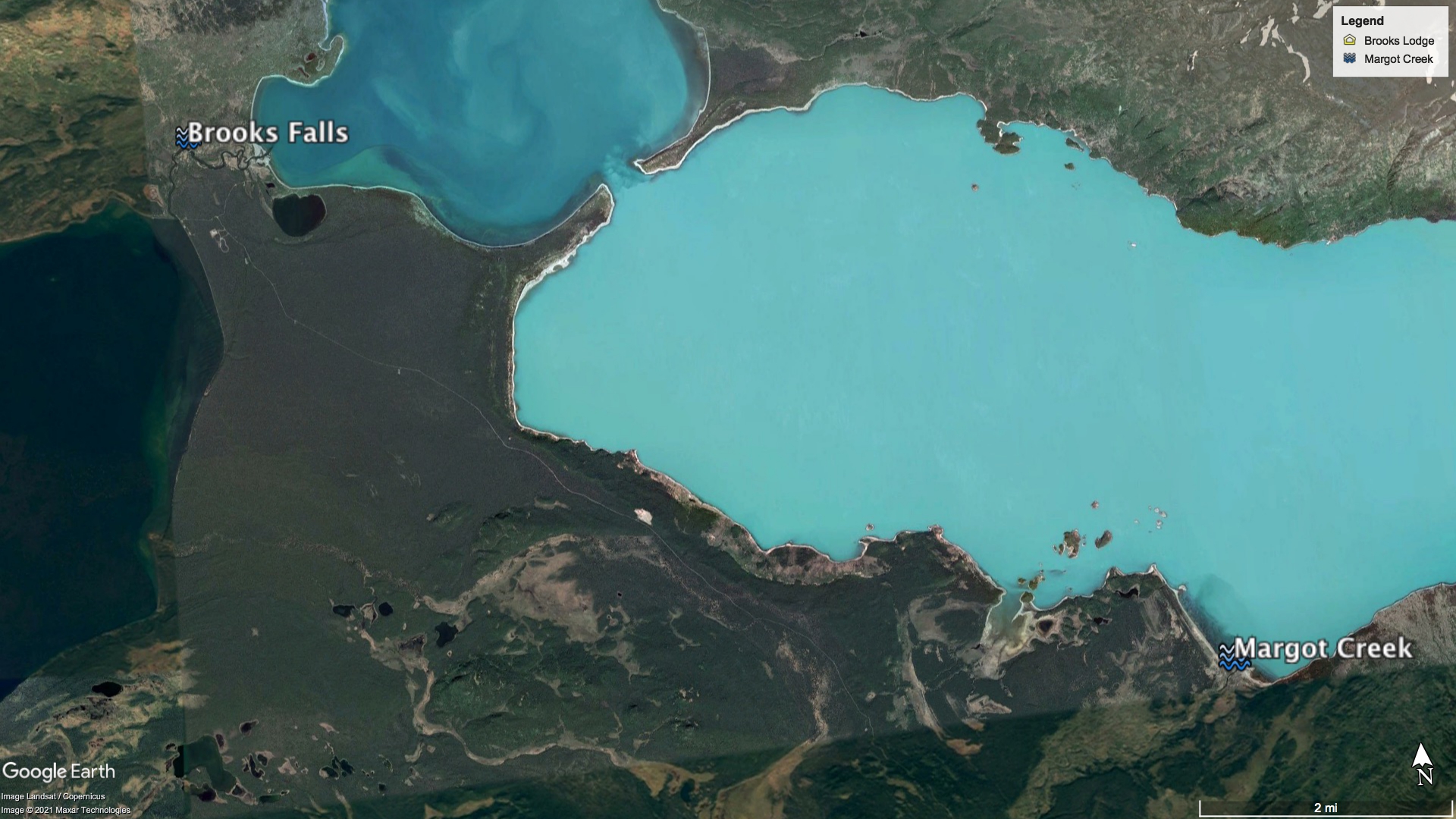
Can you clarify the distance from Brooks River to Margot Creek? Is it common — or uncommon — to see “our” cam bears at Margot Creek?

The shoreline of Naknek Lake between Brooks River and Margot Creek is about 13 miles, well within a day’s walk for a brown bear. If a bear takes a few shortcuts through the forest, then the walk is closer to 10-12 miles.

Google Earth image showing relative locations of Brooks Falls (upper left) and Margot Creek (lower right). Thickly vegetated land surrounds milky blue lake. North is the top of the map. The scale at lower right is 2 miles

Several identifiable Brooks River bears use Margot Creek in August including 402, 435 Holly, 480 Otis, and 856. I would not be surprised if there are others well. But, salmon are dispersed widely in central Katmai in August when bears fish at Margot Creek. Unlike early summer and early fall when Brooks River is the only place to fish, bears have many other alternatives to Margot Creek in mid summer so not all Brooks River bears need to go there.

Can you talk about your research process? The book draws on your personal experience — but it clearly draws on extensive research, too. 

When I began drafting the manuscript, I thought most of my research was finished since I had to study a lot to prepare programs and talk about bears when I was a park ranger at Katmai and through my current job at explore.org. That head start was helpful but not thorough enough. It was merely the foundation to build upon.

As I wrote, I wanted to be sure that my facts and conclusions were backed up by personal observations, experience, and the best available science. While working on the manuscript, I probably spent half my time reading research and half my time writing.

I began writing each chapter by outlining it. Then after I established what I wanted to write about and the stories that would add depth to the facts, I read or skimmed through the relevant books and scientific papers that I saved previously to establish the basic facts that I wanted to include and confirm what I thought I knew. This led me down many rabbit holes. I probably read dozens of papers for some chapters, especially Chapter 4 on hibernation. Tracking down specific facts and, hopefully, ensuring that I represented them accurately in the book was a tedious yet necessary task. Readers deserve no less.

Not a bear question, but a question for you as an author: What did it hurt to leave out of the book? What did you have to omit that you wish you’d been able to keep?

Quite a lot, actually. For example, I drafted chapters on glaciation and the evolution of Brooks River, but after consulting with an editor I decided to cut those. They weren’t a great fit for the narrative I tried to build. I also wanted to include the story of Holly adopting a yearling 503 in 2014 but couldn’t find the right place for it when I outlined the book. I considered using that story as the framework for Chapter 5: Family, but since adoption in bears is so uncommon I thought it best to focus on a bear whose maternal experiences were engaging yet more typical. That’s how I settled on 273 and her cub for Chapter 5. I’m happy with the final result of that chapter, yet I still wish I had found a way for Holly to be a part of it.

Questions from the club’s discussion of Chapter 6: Mating Season (June 6, 2021)

What if a female [bear] doesn’t want to mate? How much “say” does she have in the decision?

The female bear can’t control estrus or the signals that indicate to males that she is in estrus. However, female bears seem to have a lot of say in the timing of copulation. Although male bears are much larger than females, I’ve never seen a male bear force himself on a female bear. Instead, he doggedly follows her until she is ready to accept his advances. I also wonder if prolonged courtship can provide female bears with the chance to shed a suitor that they do not prefer. As I write in the book, a bear’s sense of smell is so powerful that a female can’t hide from a male. But, since mating opportunities are so limited for males, it’s not uncommon for more than one male to catch the scent of an estrous female. A prolonged estrus cycle coupled with a lengthy courtship could increase competition between males—an unconscious way for her to attract the most “fit” mate.

What is the ratio of males/females at Brooks River?

It hovers near 50:50, but last year there were more females than males. Because large adult male bears occupy the most productive fishing spots at Brooks Falls, it can sometimes seem like there are more males on the river than females. In July 2020 park bear monitoring staff identified slightly more female bears than males (29 adult females, 22 adult males, 14 subadult females, 11 subadult males).

Can you talk a bit about inbreeding? It seems like a lot of the bears we see mating are likely related to each other…

There’s only one confirmed case (through DNA analysis) of consanguineous couplings (inbreeding) between related bears at Brooks River.

24 BB was a very dominant male bear at Brooks River from the late 1990s through 2007. He was the equivalent of 856 during that time, and because of his dominance few bears would ever challenge him for fishing spots or for access to estrus females. BB sired a litter with the female 209. Bear 402, who still uses Brooks River, was one of the cubs from that litter born in 1998. 24 BB then sired a litter with 402. The offspring from the 402/24 relationship were weaned by 402 and identified as independent bears, but have not been seen in many years. I should note that this is common among subadult bears and their absence may not be reflective of interbreeding between a father bear and a daughter bear.

The limited DNA analysis of bears in 2005-2007 did not document any litters from a mother/son relationship. I think it’s unlikely that a bear could mate with its mother for a couple of reasons. 1. Male bears compete for the opportunity to mate with females and a larger, more dominant male would certainly outcompete a younger male bear for access. So while a young male bear is mature enough to mate around age 6, he’s still quite small compared to older males. 2. Young male bears often disperse away from their mother’s home range, and consequently their ranges as adults might not overlap. Mother bears remember who their offspring are too, and mom is often intolerant of the approach of her former cubs (we sometimes see a mother charge her former cubs, even years after family breakup, almost as if she is saying, “I told you to leave. Now stay away”).

Katmai’s brown bear population is quite large and robust. About 2,200 bears were estimated to live wholly or partly within Katmai National Park and Preserve in 2007. Although, we don’t know its true frequency, inbreeding between bears is probably uncommon here since the population is so large.

Why do mating males want to keep females in sight? It seems like all this following females around would distract males from eating and getting fat.

Courtship between bears isn’t always a prolonged process. In fact, sometimes bears couple soon after meeting. Potential male suitors, therefore, need to guard access to their prospective mates, lest they lose a rare mating opportunity.

The pursuit of mating opportunities certainly distracts male bears from other life tasks like fishing for salmon. I remember one July when 856 seemed like he didn’t stop courting females for the entire month. While the other males at the river got their fill of fish, 856 fished only occasionally because he was more interesting in reproduction. Near the end of July, he looked well muscled from the exercise of the pursuit but looked as though he had little body fat.

A large brown bear stands in shallow water. He looks toward the left side of the photo. A partly eaten salmon rests at his front paws.

856 often spends a lot of time courting females in early summer and less time fishing compared to many other adult bears. He can afford to do so because his high level of dominance provides access to fishing spots wherever he goes.

“Survival of the fittest” is often thought to refer to athletic fitness or survival instincts, when it is more accurately framed in terms of reproductive fitness. Perhaps the male bears who have the energy reserves and stamina to court female bears for long periods of time with little food are the most reproductively fit. It’s also important to consider that the bears’ mating season ends in early summer, just when food becomes plentiful in Katmai, so a male who doesn’t eat much in June has ample opportunities to make up for it during the next few months.

Questions from the book club’s discussion of Chapter 14: Boundaries (June 12, 2021)

Is there any research showing how reduced attendance during the 2020 pandemic affected the salmon and/or the bears?

As far as I know, there’s nothing publicly available yet. However, biologists at Katmai National Park expanded the bear-monitoring program last year to collect data that might help answer that question. It was an unexpected research opportunity to observe bears at Brooks River at a time of year when typically it is loaded with people.

Certainly the lack of people at the river in 2020, especially when the camp remained closed to the public, allowed bears more space to fish. The greatest influence on the distribution of bears last year, though, was salmon. The record run of sockeye salmon was overwhelming and it provided bears with ample feeding opportunities throughout the river. In a year with fewer fish, I don’t think we wouldn’t have seen bears using the lower river in early summer as much as they did in 2020, no matter how few people visited.

The bears at Brooks are perhaps more human-habituated than other bears. And yet, as 854 Divot’s story proves, they do wander outside the boundaries of the park, where they will encounter humans who don’t operate according to park rules. Can you offer some reassurance — or some insight — about how their human habituation might affect their fate outside park boundaries?

Habituation at Brooks River provides a bear with advantages. It allows access to parts of the river that may otherwise be off limits if the bear isn’t tolerant of people. At Brooks River, people are especially tolerant of bears too through both attitude and regulations designed to protect bears.

Outside the park, they may not encounter the same tolerance. Having a bear prowling outside your cabin at Brooks Camp is one thing. Having it do so near your children and pets is another.

If a habituated bear wanders into King Salmon, for example, its tolerance for humans may lead it to temptation in the form of unsecured food and trash. A habituated bear could more easily become conditioned to seek human foods in that situation. Bears encounter much greater risks around people in those places than they do at Brook Camp.

Some biologists I’ve spoken to speculate that habituation could be context specific. That is, a bear might be able to learn that people in one location are tolerant while people in another location are dangerous. I think this is plausible but I’m not yet convinced it works that way for most bears. Further research is needed.