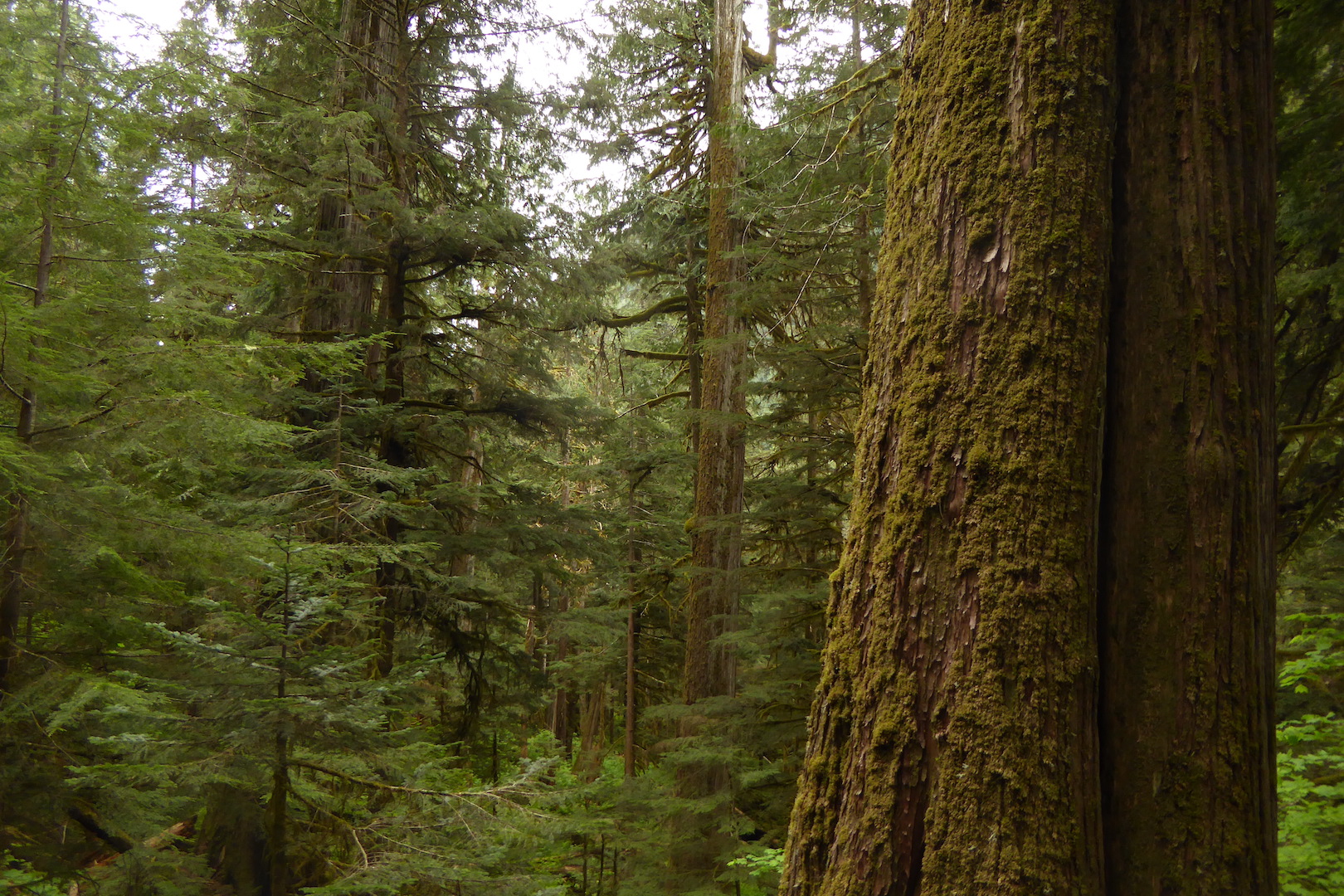
Fisher and Other Trails

Compared to summer, winter can seem like a dull companion, especially in my corner of the globe. The buzzing of insects ceased months ago. The forest floor rests under one to three feet of snow. Trees, shrubs, invertebrates, amphibians, and fungi lie dormant. Ice insulates wetlands that were vibrating with life not long ago. Migrating birds vanished months ago. Then, there’s the dangers posed by cold weather. Numbed toes and fingers aren’t pleasant, nor are the perpetual threats of frostbite and hypothermia. All-in-all, I could convince myself that winter is a season to be endured rather than embraced. This would be a mistake, though. 

While I miss the sheer volume of aliveness that accompanies summertime, winter has many endearing qualities. It helps me appreciate the abundance of summer. Off-trail travel is often easier when wetlands are frozen and snow smooths the terrain. And few experiences are as peaceful as the immense quiet that accompanies a snowstorm in an isolated grove of trees.

But this post isn’t about falling snow. Rather, it’s about a story written in the snow. Instead of looking at the wintertime forest as lonesome and empty, snow allows me to better understand how the landscape is a fully inhabited place. 

Last Monday, I highlighted the travels of a fisher during More to Explore, a bi-weekly highlight show on explore.org cohosted by Brian Byrd and me.

In the interest of brevity for the show, I skipped some details of the fisher’s trail. Tracking is an art that I’m still learning and I argue that I’m a slow study, but a few clues revealed I was looking at a fisher’s trail rather than a fox, coyote, marten, or lynx, all of whom inhabit the area.

  • Claw marks registered in most of the prints that I examined carefully, effectively ruling out felines since their claws are retractable and don’t register reliably in tracks.
  • The clearest tracks had five toes—an important clue that rules out the canines such as foxes and coyotes. Porcupines, bears, skunks, hares, and rodents can make five-toed tracks too, but they have other features that make them distinctive.*
  • The tracks’ size were too large for other members of the weasel family who live here such as short- and long-tailed weasels, mink, and marten. I could rule out river otters too since there was no evidence that the animal slid across the snow (something otters routinely do) or sought liquid water. The trackway crossed a beaver-created swamp but the tracks did not lead to water as an otter would have.
  • The animal’s gait was a mostly loping in a 3 x 4 pattern, which is a common way for fishers to travel. The 3 x 4 lope is a method of travel where a fisher places a front and rear foot from one side of the body in the same place, while the feet on the other side do not overlap. This gives the impression of only three tracks instead of four. Fishers walk, lope in a 2 x 2 pattern, and gallop too, but in my experience they’ll use a 3 x 4 pattern much more often in firm snow than American martens.
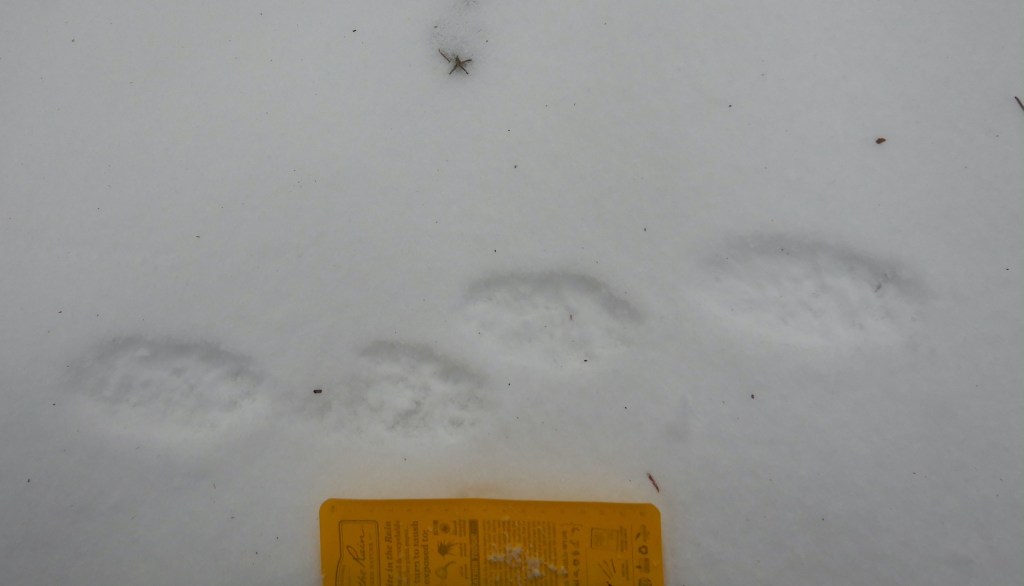
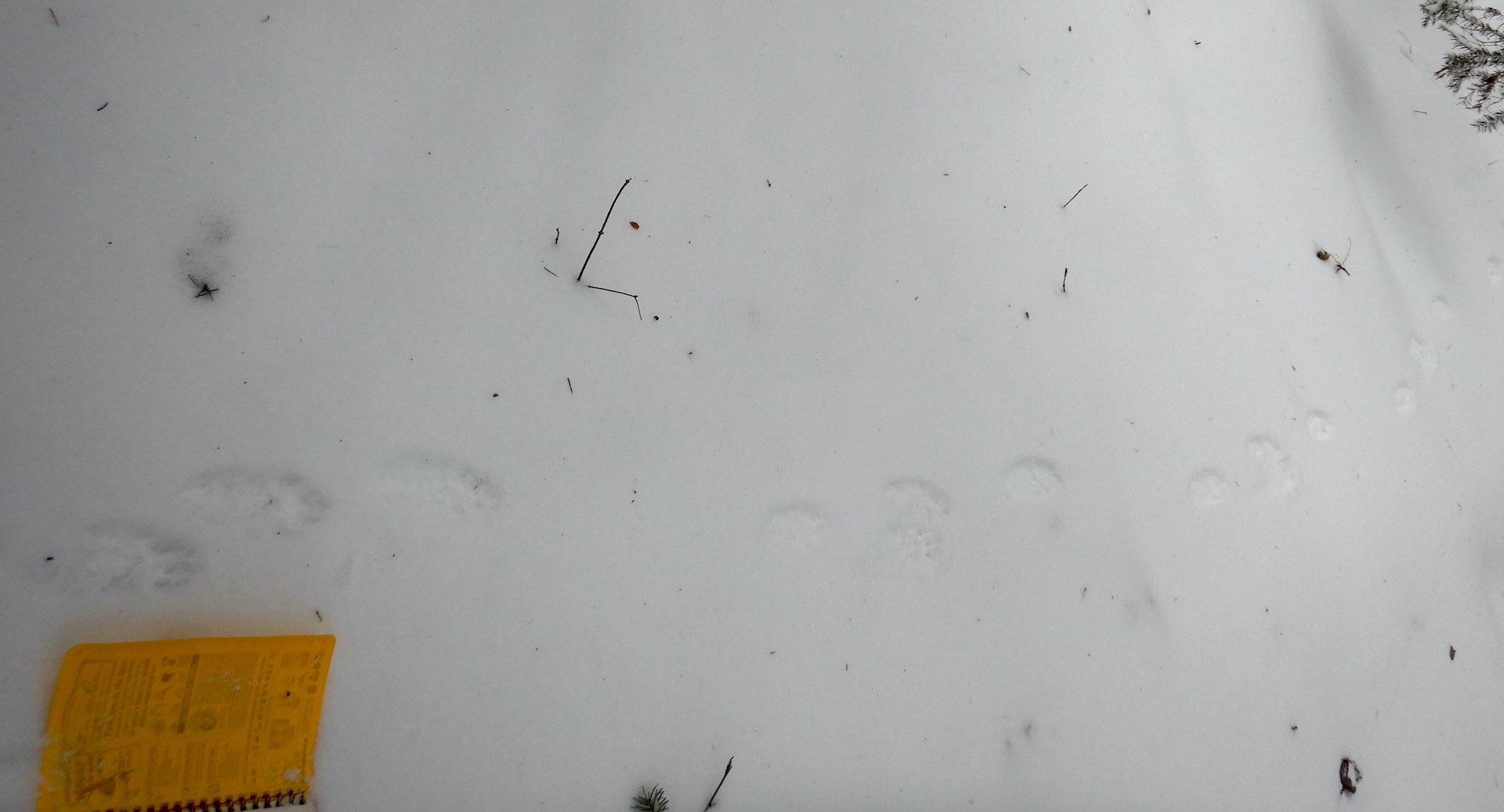
A set of fisher tracks in the snow. Four tracks are visible. The fisher moved from left to right. The yellow notebook at bottom center is ~17 cm wide.
A clear set of fisher prints. Her five toes are perhaps easiest to see in the second track from left. Also note that the fisher created four prints here so she slightly deviated from her typical 3 x 4 lope.

A fisher trackway in snow. The yellow notebook at bottom left is ~17 cm wide. The fisher moves mostly in a 3 x 4 lope. It was headed from left to right in the photo. The tracks are shallow, maybe only a centimeter deep.
A trackway from the fisher. She was moving with a 3 x 4 lope across firm snow. My notebook is about 17 cm wide for scale.

Several other mammals were active that day as well. Snowshoe hares, red fox, red squirrels, mice, and voles all left tracks or scat to reveal their presence. I was only lucky enough to be chastised by a couple of squirrels and didn’t see any other mammals for the majority of the day but walking slowly and quietly gives one the opportunity to be surprised. In a moment of quiet contemplation, the kind you experience while gazing through trees pondering your next move, a glimmer of movement appeared in the corner of my eye. I turned my head to find a weasel bounding through the snow. I didn’t dare reach for my camera knowing I’d spook it into hiding, although I remember clearly my confusion upon seeing it. 

A long-tailed weasel changes its fur color from summer brown to winter white and back again with the seasons. In winter, they are nearly pure white except for the tip of their tail, which is black—a feature that seems to misdirect attacking predators away from the head. This weasel, however, appeared to have a dark tail and head. 

My brain needed to register a few more bounds by the weasel to clear the confusion. it wasn’t oddly colored. The weasel was carrying a vole or mouse in his mouth. As he disappeared in a thicket, I was offered a special opportunity to examine its prints for clues about that may help me better understand how small weasels move in snow when they are burdened by the weight of their prey. 

Long-tailed weasels and the smaller short-tailed weasel (ermine) travel most often in snow by using a 2 x 2 lope. When you see them traveling in this way, it looks almost like a long hop, with the front feet hitting the ground first. The front feet quickly lift into the air while the hind feet land in the same place. The weasel I watched used this method and he seemed to carry his rodent cargo with ease—an impressive display of relative strength. His prey, though, left an important clue. Each of the weasel’s bounds were accompanied by a slash in the snow, which must have been created by part of the dead rodent (a foot? a tail?) dragging in the snow with each leap of the weasel.
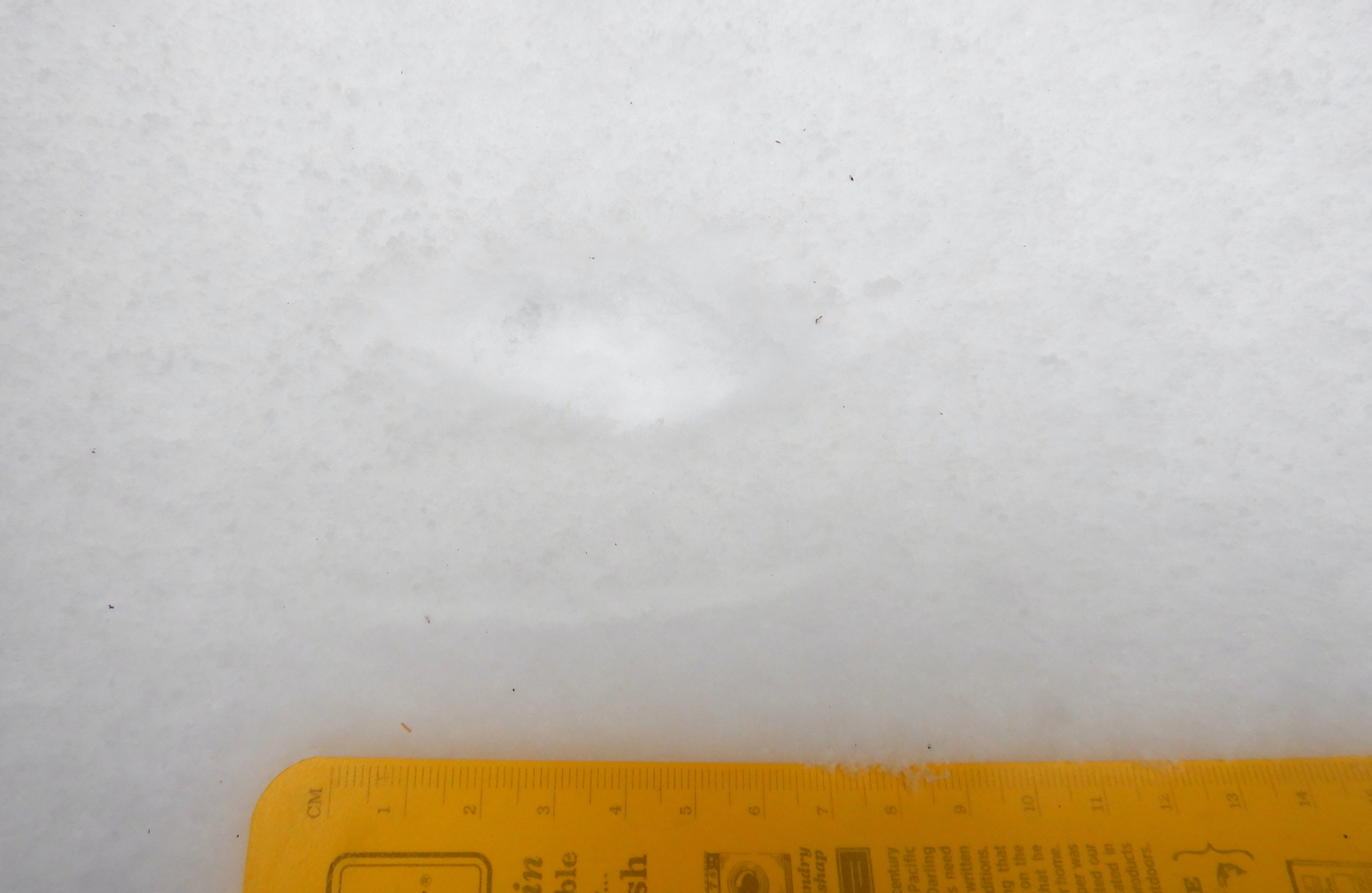
A single set of long-tailed weasel tracks. They make a single depression in snow in the center of the photo. A light slash is visible beneath the weasel prints. The width of the yellow notebook at bottom is about 15 cm.
A long-tailed weasel’s prints are underscored by a slash in the snow created by the rodent prey it carried.

Two sets of long-tailed weasel tracks. Each set makes a single depression in snow. A light slash is visible beneath the weasel prints. The width of the yellow notebook at bottom is about 17 cm.
Two sets of prints from a long-tailed weasel. Note the repeating slash next to each track. The weasel traveled from right to left.

As I discussed in the video segment above, the life of a fisher would be far more mysterious without the record it leaves in snow. I would have no real clue how much fishers leave scent marks or climb trees without reading their trackways. Likewise, if I’d not been in the right place at the right time or been looking in a different direction I would have missed the weasel and its meal completely. Had I stumbled upon its trail with the strange, repeating mark next to each print I’m not sure I’d reason it was from the weasel’s prey. But now, I’ll be looking for other examples like it.

I hope you have the opportunity to utilize snow to learn more about your neighbors. When the snow pack melts in spring, I welcome the change although I must admit that forest seems a bit lonelier when I don’t know who has been visiting. 

*Mammal Tracks and Sign: A Guide to North American Species by Mark Elbroch is an invaluable resource if you want to learn more.
Fishers Return to North Cascades

On an uncommonly sunny day in early February, I stood in a tract of old-growth forest not far from the Suiattle River to watch a missing mammal return to the North Cascades. With the return of the fisher, this area is one step closer to whole.

The fisher (Pekania pennanti) is one of the largest North American weasels. Adult females weigh four to six pounds and measure about 30 to 36 inches long, including tail, when fully grown. Males are about 20% larger, growing upwards of 13 pounds and nearly four feet long. Despite the name, fish are not a primary prey. Instead, fishers are wolverines of the forest. Highly arboreal, cylindrical in shape, and agile in motion, they are formidable predators of rodents, rabbits, hares, grouse, and other small to medium-sized animals.

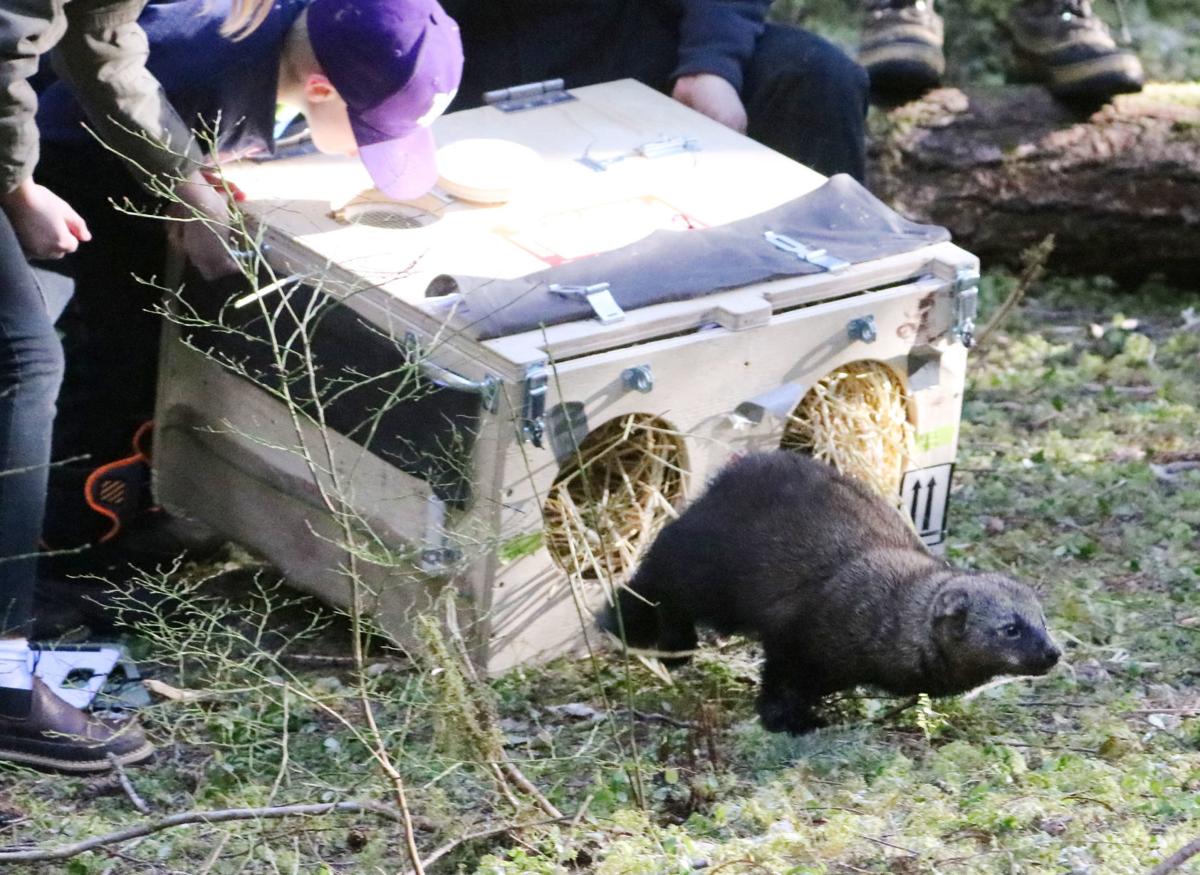
fisher running to escape a box, people standing behind it

One of the first fishers to be released on February 6. The common name, fisher, is probably a modern English language corruption of “fitch,” a Middle English term for the pelt of the European polecat (Mustela putorius), also known as the common ferret. Not coincidentally, the colonial Dutch fisse and visse as well as the French fiche and fichet, all words for the polecat, sound quite similar to fisher. (NPS Photo)

Fishers were functionally extirpated from Washington by the mid 20th century due to habitat fragmentation and, especially, unregulated trapping. Surveys in the 1990s and early 2000s failed to find evidence of any viable fisher populations. As a first step to recover the species in the state, a coalition of public agencies, tribes, and private organizations released fishers in Olympic National Park from 2008-2010. This was followed by similar efforts in Gifford Pinchot National Forest and Mount Rainier National Park from 2015-2017. The North Cascades National Park Service Complex and Mount Baker-Snoqualmie National Forest began to host the fisher’s return last fall, which is how I found myself standing in the woods with about twenty other people on February 6.

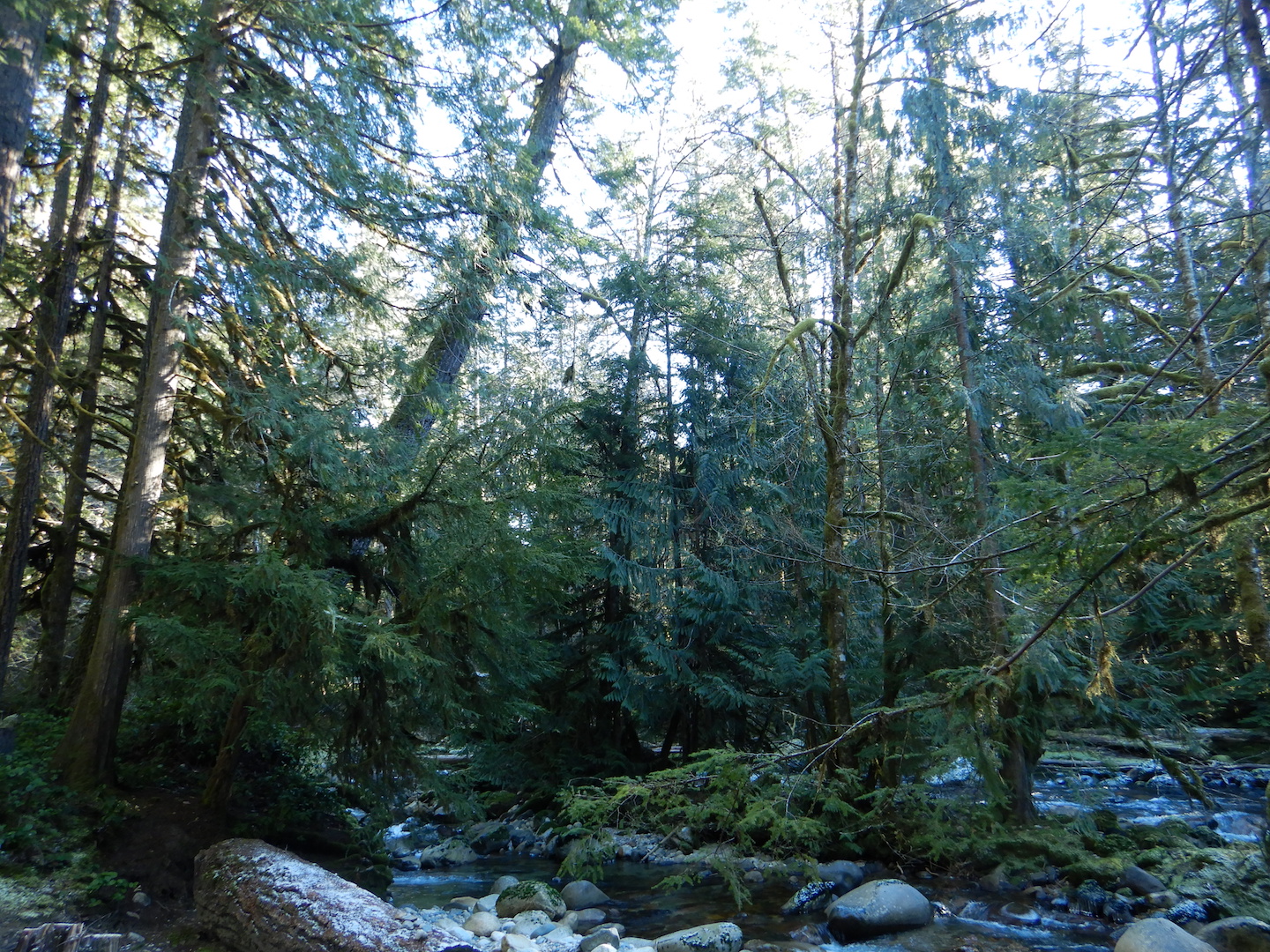
Fishers prefer mature forests with a high canopy, relatively large diameter trees, and an abundance of downed trees. Dead standing trees are particularly important to fishers, as they den exclusively in tree cavities. The release site for the fishers this day seemed particularly well suited to their needs.

forest and stream

Fortunately and conveniently, healthy populations of fishers remain in British Columbia and Alberta and they serve as the source for the restoration effort. Fishers from western Canada are also genetically similar to those that used to inhabit Washington. Canadian trappers were paid to capture live, healthy animals. The Calgary Zoo temporarily housed the fishers while veterinarians evaluated their health and surgically implanted tiny radio transmitters to assist biologists in tracking them.

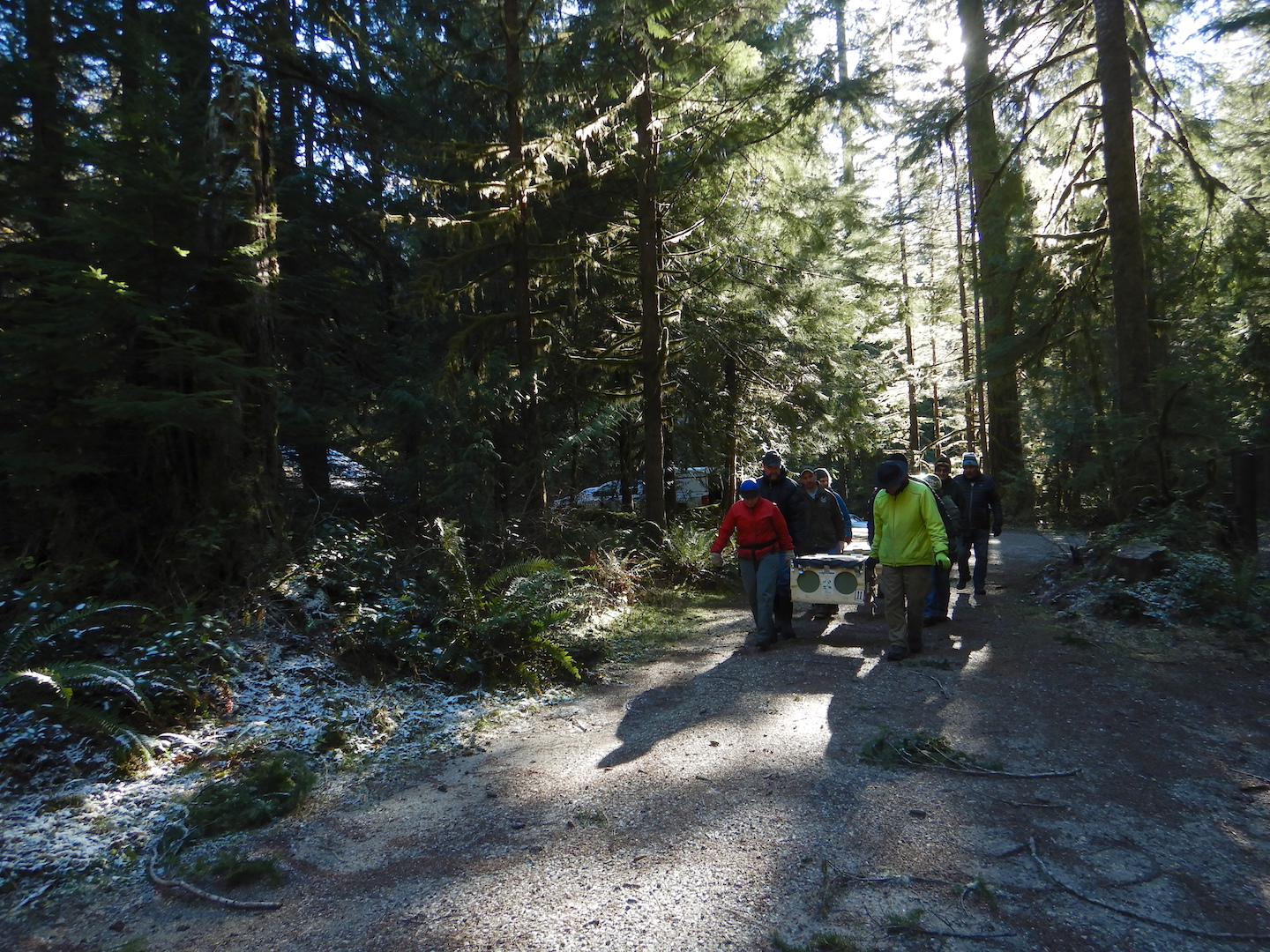
Twelve hours before release, these particular animals were still in Calgary. At 1 a.m., the fishers were flown to Abbotsford, British Columbia where they were picked up by biologists and driven into Washington. By early afternoon, a gang of biologists and a few interested souls like me were unloading the cargo and carrying the fishers a short distance to the release site.

Fisher release, Buck Creek Campground, Mount Baker-Snoqualmie National Forest_02062019_4

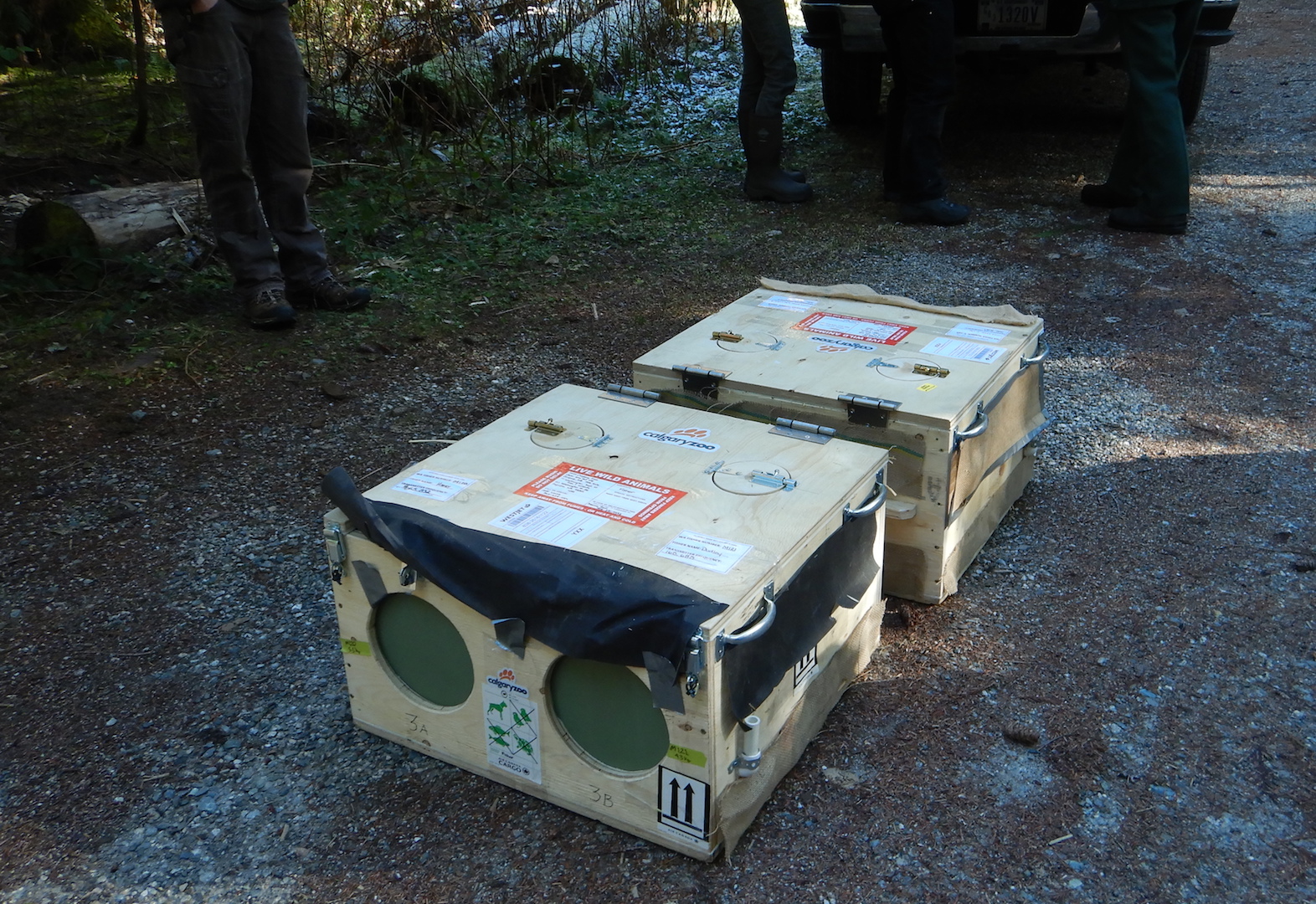
Fishers were transported in specially designed crates. Two fishers, separated by a partition, are in each crate.

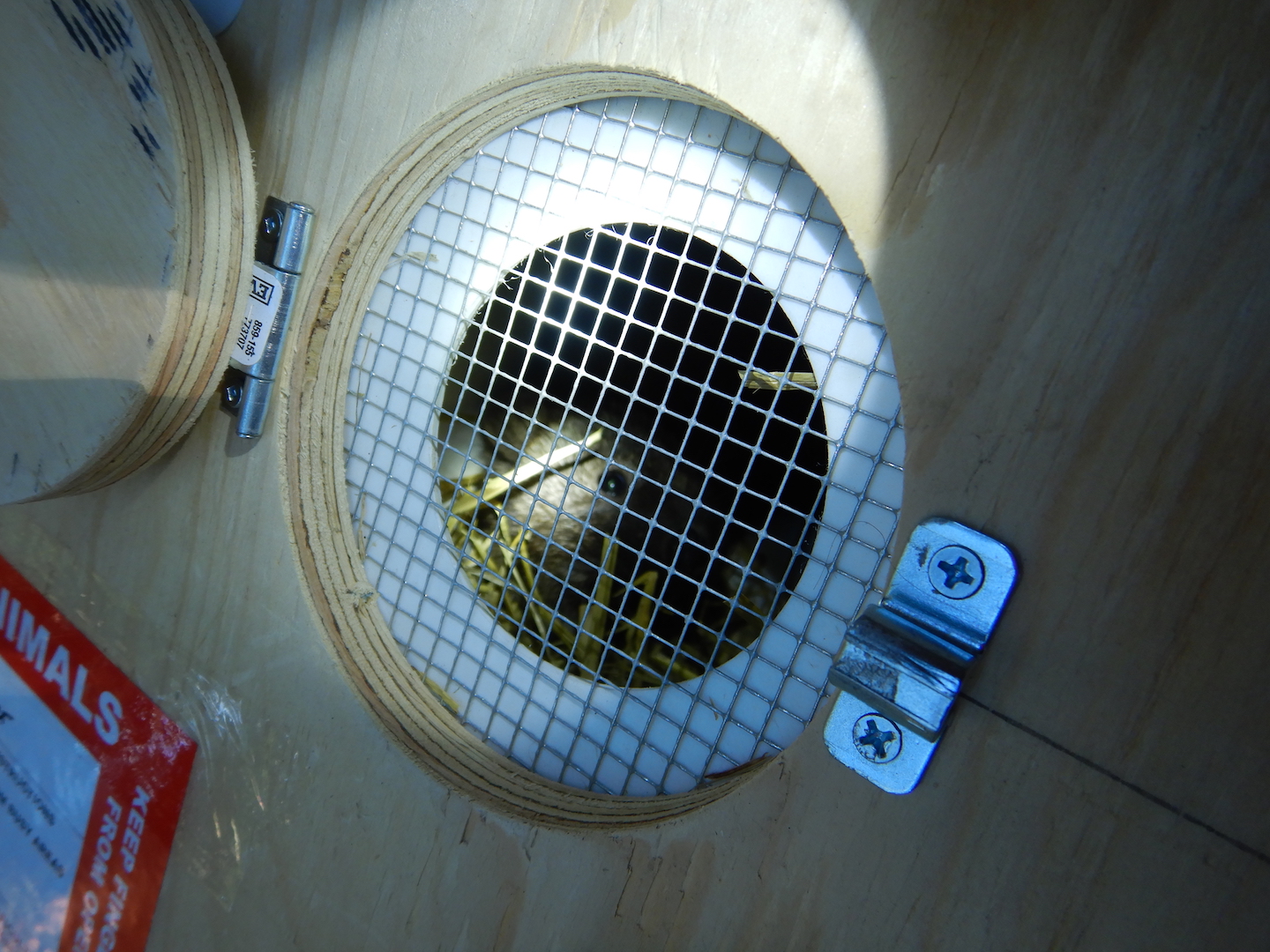
view through screened hole of fisher in a box

A fisher peeks through a window toward the outside world.

people carrying wooden crates on forested path

Our group formed a semi-circle around the crates to watch the release. Conversations quieted to a whisper or died in anticipation as the crates were opened one at a time. To coax them out, a screened vent was opened at the top and a volunteer blew a puff of air into the container. I’m unsure if this was as annoying as someone blowing air into my ear, but the trick worked. The fishers shot out like a flash and bolted into the forest.

https://www.youtube.com/watch?v=q4JarQM13Vshttps://www.youtube.com/watch?v=OIdSNFjBdvc&feature=youtu.be

Six fishers were released that day bringing the total number currently released in the area to 24. The release efforts will continue until about 80 fishers are reintroduced to the area. Biologists will track, monitor, and study the animals to assess survival rates, identify where they go after release and where they establish home ranges, the types of foods they eat, and the diseases and parasites they suffer from.

The effort has a high chance of success. Reintroductions, however, are rarely so simple. Fishers, although not well known among the general public, are relatively non-controversial animals. They don’t evoke the same emotional reactions in people as grizzly bears or wolves, for example.

More than that, however, the forested habitats along the core and margins of the North Cascades are largely intact. Land managers needn’t take extreme, expensive, time-consuming measures to restore the ecosystem to a point where it could support fishers again. It could always support them. We just didn’t allow fishers to survive here.

Because prior generations had the foresight to protect places like North Cascades National Park and Glacier Peak Wilderness, we have the opportunity to restore fishers to land they once knew as home. Situations like these are becoming increasingly uncommon. People have fundamentally altered so much of the Earth to preclude the reintroduction of many extirpated species into their historic ranges. (There’s no substantial habitat available for bison in Iowa, for example.)

view of old growth forest with large coniferous trees

Potential future fisher habitat along Stetattle Creek in North Cascades National Park.

As humanity’s footprint grows, undeveloped landscapes are increasingly valuable, not for the resources we can exploit within them (including supposedly non-consumptive uses like solitude), but as repositories of biodiversity and ecosystem health. To adapt an idea from Thoreau, future generations, I believe, will measure our legacy not by what we invented and consumed, not by our material wealth, but by what we can afford to let alone.

I’ll probably never see any of these fishers ever again. Even if the population increases to hundreds of individuals, they’ll remain reclusive neighbors. If I’m lucky, I may find a track in fresh snow or its scat on a log. But even that doesn’t matter. I’ll know they are there and I’ll know the landscape is healthier because of it. The return of the fisher represents, at least in one small way, the success of our ability to let one place—North Cascades—alone.