North America was once home to the world’s most abundant wild bird. Although passenger pigeons could be found anywhere east of the Rocky Mountains, they concentrated their abundance between the Atlantic Ocean and the Mississippi River, especially from the Great Lakes to the Mid Atlantic and east to Massachusetts. No one knows how many passenger pigeons roamed North America a mere two hundred years ago, but credible estimates suggest three to five billion—a population size that may have exceeded that of any population for any other bird species on Earth. Flocks of pigeons could be so numerous and so dense as to block the light of the sun “as by an eclipse” as John James Audubon experienced in 1813.
Passenger pigeons were also intensely social. Their roosts were communal. So many birds could alight on a tree that branches and sometimes whole trees broke under their collective weight. Their guano collected on the ground like snow. Successful reproduction hinged on a critical mass of birds finding suitable food. They were omnivores, yet fruits and seeds formed the bulk of their diet even when nesting. Masting species such as beech and oaks were preferred. A year with a good acorn crop could sustain breeding flocks that included tens of millions of individuals.
When men arrived with firearms, the pigeon’s sociability and flocking behavior proved to be their Achilles heel. Passenger pigeons lived a nomadic lifestyle—moving between areas with enough food to support their prodigious numbers—but when they settled in an area to breed, people flocked to them like the birds flocked to acorns. Hunters shot into flying flocks and as they roosted in trees, often killing and maiming dozens at a time. Nets and traps were designed to capture hundreds of birds at once. Nestlings, known as squabs, were knocked out of their nests with poles before they could fly or the trees with squabs were cut down or burned. Barrels of dead birds were shipped away and sold in city markets. They were often captured and used for target practice and shooting competitions. “Clay” pigeons in modern shooting sports are replacements for shooting live pigeons, including passenger pigeons.
The human toll was so intense that passenger pigeons went from the planet’s most numerous bird to extinct within one human lifetime.1 We’ll never experience them again. Martha, the last remaining passenger pigeon, died on September 1, 1914 at the Cincinnati Zoo.
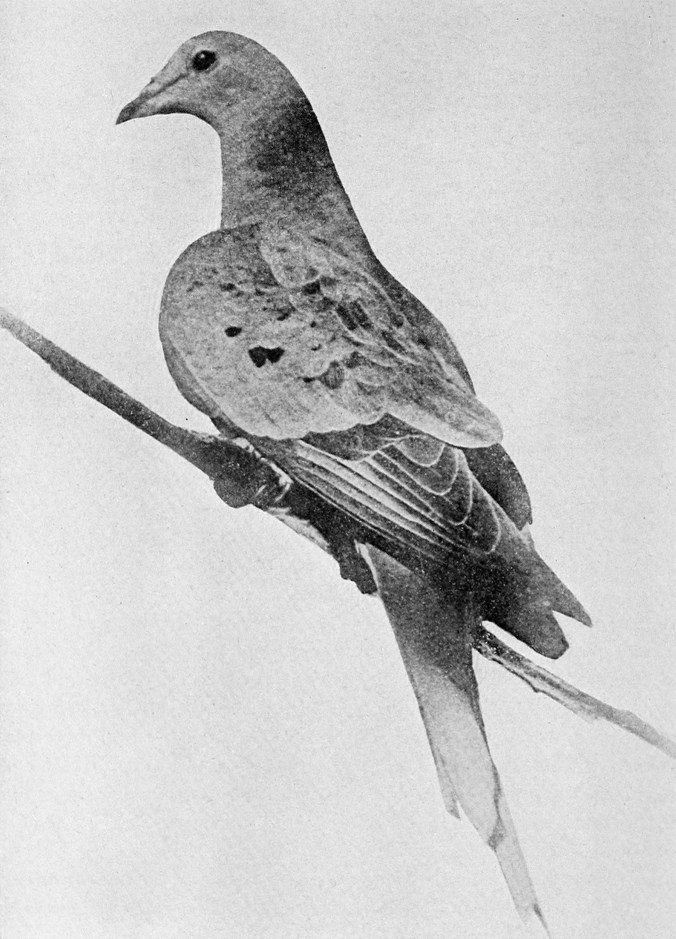
Uncontrolled, unregulated hunting was the ultimate cause of the passenger pigeon’s extinction, although their demise coincided with intense deforestation across the majority of their range. By the late 1800s, all but shreds of forest were removed from the pigeon’s range. They faced unrelenting human pressure on two fronts: direct killing and habitat loss. I wonder if passenger pigeons could have survived the slaughter if enough undisturbed forest remained for them to find refuge and raise their young until market hunting was outlawed in the U.S. and the Migratory Bird Treaty Act of 1918 provided formal protection.
All this makes a proposed regulatory change to the Endangered Species Act2 (ESA) all the more asinine. Segments of our society and culture have yet to understand the necessity of habitat in preventing extinction or realize the immorality of extinction.
Since its passage, the ESA has been the most powerful and impactful regulatory tool in preventing extinction in the United States. The ESA is not perfect, but it has helped prevent the extinction of more than 99 precent of threatened and endangered species under the act’s protection. It works well largely because the ESA includes habitat loss alongside hurting/killing of threatened or endangered individual organisms in its definition of “harm.” If, for example, an endangered plant lives in a wetland then you couldn’t excavate a ditch to drain the wetland. That would prevent the plant from surviving and reproducing. Draining the wetland alters the plant’s habitat negatively when the plant needs the wetland’s hydrology intact to survive. Current federal ESA regulations would consider such a scenario as “take” because draining the wetland would caused clear harm to the endangered plants. The ESA would prohibit altering the wetland even if no person went into the wetland to kill or damage the plants.
For wildlife and plants, habitat is equivalent to home. Protecting habitat is a logical and necessary step to prevent extinction. Often, it is the first step.
Yet the federal government proposes to redefine “harm” as it relates to the ESA so that habitat loss and destruction are not sources of harm for threatened or endangered species. The summary for the rule change states, “The existing regulatory definition of ‘harm,’ which includes habitat modification, runs contrary to the best meaning of the statutory term ‘take.’” In other words, harm to an organism’s home is not equivalent to harm to individuals. (The background and summary info then attempt to justify this point by arguing the ESA was never really meant to protect habitat, and “harm” should be limited to killing, capturing, or injuring. It cites Supreme Court cases and dissents about what “take” means. I’m not a lawyer or legal scholar so I won’t attempt to weigh an opinion on whether the cases are applicable to the ESA but, frankly, if there is any ambiguity then Congress should amend the ESA so that habitat destruction is “take” and “harm.” That’s an unrealistic dream in today’s political climate, I know.)
Limiting the ESA’s definition of harm to only killing and hurting individual organisms is a vastly unscientific and illogical decision. The consequences of the proposed change could be catastrophic for endangered species. It would allow the federal government to ignore the importance of habitat when evaluating development and other activities on threatened and endangered species. Building a dam that blocks endangered salmon from migrating would not be “harm” because the dam didn’t outright kill salmon returning to spawn; they just couldn’t spawn. Cutting down a condor’s nesting tree wouldn’t be “harm” as long the condors weren’t injured when the tree fell. Draining an endemic salamander’s stream wouldn’t be “harm” because you didn’t kill or capture any salamanders; they simply lost their home and food. Building an oil rig in a polar bear maternal denning area wouldn’t be “harm” if the mother polar bears aren’t in the dens; it wouldn’t matter if they couldn’t find denning habitat elsewhere. Building a parking lot on a sage grouse lek wouldn’t be “harm” because the grouse didn’t die during construction; they simply couldn’t court and reproduce. Polluting a river so that sea grass beds die wouldn’t be “harm;” it didn’t directly poison any manatees to death, just led to their slow starvation.
Perhaps with adequate habitat protections in place, passenger pigeons could still be part of our shared landscape. We’ll never know.
Since Martha’s death, extinction rates have accelerated due to human pressure. Market hunting may be a thing of the past in the United States at least, but habitat loss is not. A 2022 study found that habitat destruction was the main threat of extinction for 71 percent of endangered species worldwide. (Overexploitation, which is another way of stating human hunting/harvest was the main factor for 7.4 percent of endangered species.) The International Union for Conservation of Nature (IUCN) lists 28 percent of all assessed species as threatened with extinction. Humans and our livestock and pets outweigh wild vertebrates globally. Vertebrate animals populations have declined more than 70 percent worldwide since the 1970s. In North America alone, bird populations are reduced 3 billion compared to the 1970s—a stat that doesn’t include the loss of passenger pigeons. Most fish populations are overexploited and many are near collapse. We’re poised to mine the deep sea even though we have seen almost none of the life that exists there. All this has happened within my lifetime, and while people in our government argue with a straight face that habitat considerations should not be included in ESA’s regulations. The ultimate legacy of my generation and my parents’ generation may be to leave behind an ecologically impoverished planet. It is a moral failing.
I recently read Apocalypse Never, a book that, through a great deal of cherry-picked data, contends (unsuccessfully IMO) that climate change and biodiversity loss aren’t big deals. At the end of the book, the author Michael Shellenberger writes, “Scientists have long named self-interest as the reason for why humans should care about endangered species like the mountain gorilla. But if the mountain gorillas were ever to go extinct, humankind would become spiritually, not materially, poorer.”
In our short time on Earth, segments of humanity have been insulated from the material costs of extinction, largely because the nature supporting different groups of people wasn’t directly tied to the survival of any one species. When the last mammoth died, were people in Australia or Africa affected? When Steller’s sea cow vanished, did the farmer watching pigeons in Pennsylvania notice? When the last passenger pigeon died, did people in Japan or Bangladesh or Sweden mourn?
Yet extinction is an impoverishing event. We don’t know, and can’t know, how we’d value passenger pigeons today. We know that we are materially poorer because we’ve been denied the opportunity to integrate passenger pigeons into a possible sustainable economy—which, yes, could include hunting. Culturally and spiritually, we’ll never experience the joy and awe that some people must have felt as they watched pigeons blot out the sun like an eclipse. We don’t know what else they might have offered. We cannot truly understand or evaluate the possible effects that billions of pigeons had on temperate forests in eastern North America. We were denied the opportunity to know. Likewise, the extinction of mountain gorillas would affect communities in parts of Central Africa. What’s the value—materially, culturally, spiritually—of a gorilla? It is not our place to decide. It is our place to give future generations the opportunity to discover.
When sitting in a comfortable chair surrounded by material wealth it is easy to shrug your shoulders when a species winks out of existence, but allowing extinction is an immoral act. We should know better. Leopold in Sand County Almanac and Kimmerer in The Serviceberry have envisioned better futures. I’m not sure that we are wise enough to heed their advice.
It is immoral to deny future generations the wealth—however you define it—that non-human organisms provide. Moreover, humanity doesn’t own Earth or the organisms we share the planet with. Governments and corporations don’t either. Our non-human neighbors belong to themselves and the future. Morality compels that we don’t arbitrate whether a species is worthy of existence.3 We can continue to be complicit in extinction by allowing governments and corporations to sacrifice species for material wealth or we can build a sustainable future.
Nature is life. Earth is the Ark. We can be its caretakers or simply its takers.
- I recommend A Feathered River Across the Sky by Joel Greenberg you want to learn more about passenger pigeons. ↩︎
- The public comment period for the proposed regulatory change closed on May 19, before I published this post. ↩︎
- This isn’t an absolute. We can defend ourselves from organisms that cause us harm such as the Guinea worm or the protozoan that causes malaria. It is ethical to remedy the suffering certain organisms cause us. These are decisions to make on a case-by-case basis. ↩︎
 Wandering at Large