Stumps and Rock Dumps in a Changing Forest

If I knew I had only one day to live, then one of the few things I’d do is take a walk in the woods. So, everyday, I try to take a walk in the woods.

Many days I walk the same path out my back door where I maintain a rudimentary trail. I minimize the trail’s footprint by keeping it narrow and pruning plants at its edges only when necessary. Stepping stones and short boardwalks made out of scavenged lumber help keep my feet dry where the soils remain perpetually sodden. Sometimes I’ll saw through a tree fallen over the path. Then again, I might simply reroute the trail to let the tree rest in peace. After all, the trail’s purpose isn’t so much to ease the effort of travel, although that is a perk, but to allow me to move quietly. It is not a trail for a hurried hike.

Most days I don’t see any mammals larger than a red squirrel. With some luck and good timing, though, I’ve seen black bears, moose, white-tailed deer, martens, fishers, ermines, voles, mice, and hares. A lynx passes through about once a winter; its presence revealed only by tracks in the snow. I’ve documented dozens of bird species using the forest to migrate, court mates, defend territories, and breed. I’m also learning that the habitats here support orders of magnitude more insects than I initially realized.

I greatly enjoy sharing this space with wild creatures, yet I rarely go to find something specific. The daily sojourn is my basic effort to let the world show me something. While the stories of wildlife change daily, it is the trees who are my constant companions. The organisms who1 breathe life into landscape, as well as the topography where their roots gather sustenance, record an evolving forest’s history of change.
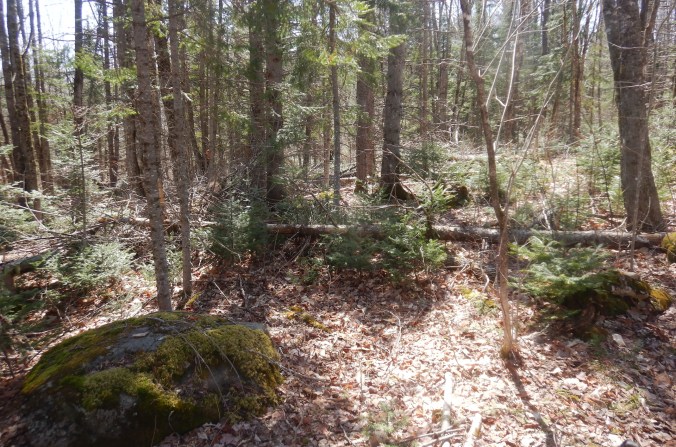
View of forest floor and lower parts of trees on sunny day. The trees are a mix of conifers and deciduous trees. There is a moss covered boulder at lower left.


East of me, Katahdin and the Traveler Range loom over what was once a largely trackless landscape. Slightly closer to my home, the Penobscot River and its tributaries offer routes south to the Gulf of Maine or north to the Allagash, Aroostook, Saint John, and eventually the Saint Lawrence or Bay of Fundy if one knows where to portage.

While forests are never static—their structure and species composition are always in flux—industrial logging and settler-style agriculture drastically altered Maine during the last 200 years. Timber crews used the landscape’s climate and characteristics to their own advantage. Winter was the season for felling trees. Spring and summer were the seasons to drive the harvest downriver to mills and market.

When Henry David Thoreau first visited Maine in 1846, Bangor had already established itself as a major lumber port. As Thoreau moved upstream on the Penobscot to the Katahdin region, he passed through the frontline of settler land clearing. Near Mattawamkeag, a town named after a major Penobscot River tributary, Thoreau observed,

“The mode of clearing and planting is to fell the trees, and burn once what will burn, then cut them up into suitable lengths, roll into heaps, and burn again; then with a hoe, plant potatoes where you can come at the ground between the stumps and charred logs; for a first crop the ashes sufficing for manure, and no hoeing being necessary the first year. In the fall, cut, roll, and burn, again, and so on, till the land is cleared; and soon it is ready for grain, and to be laid down.” (Thoreau, The Maine Woods, pg. 16-17.)

Almost no place in Maine was spared the heavy-handedness of lumberman’s axe or the farmer’s plow. Those changes soon encroached on the land I call home.

Land deeds for my home trace back to about 1890. The earliest of them cover a tract of about 160 acres (65 hectares). Lumbering almost certainly took the old growth trees prior to the 1900 allotment, but those records aren’t captured in the language of the deeds. Subsequent land sales subdivided the original parcel into many, which is partly how I find myself caretaker to about 15 acres, most of which grows trees who represent a rapid return to form for this place. I often think about this as I wander my trail or take an hour to sit under the greening canopy. Deeds record who owned the land. The documents don’t speak to how people depended on it or what they did to it, which is why I began reading into clues presented in stumps, soil, and the life that rebounds in the wake of disturbance and abandonment.


Middle spring in my nook of northern Maine is one of the best times of year to explore the forest. Yes, the ground is muddy and the vegetation has only begun to wake from dormancy, but with the year’s new leaves still tucked into swelling buds and the previous year’s leaves compacted by months of snowfall, visibility is as good as it will ever get.

At the farthest north section of my acreage, the trees are composed mostly of maples, balsam fir, white spruce, paper and yellow birch, and white and black ash. The soils there are sloppy with year-round surface water. A gentle slope sheds the water east to a small stream. Inattentive footsteps result in boots filled with muck. The trees are young, though, and a few yellow birch appear to be walking on stilts. This growth form is not unique to this location but had long confused me when I was growing up in Pennsylvania. I couldn’t compute the cause of it. Had erosion undermined its roots? Was it a genetic anomaly, a virus, or something else? The answer is simpler and reveals a chapter in the story of past human activity.

According to the U.S. Forest Service in Silvics of North America, yellow birch is a prolific seed producer, dispersing 1-5 million seeds per acre in an average year and up to 36 million(!) per acre in a good year. Yet such profusion comes at a cost. The mother tree invests little energy in an individual seed, and much luck is needed if the fragile seedling is to survive. The reproductive strategy prioritizes abundance of offspring over energetic investment in individual offspring.

Most every birch seed is doomed. When fate brings a birch seed to leaf litter, which is likely, then germination is possible but survival is unlikely. A layer of dead leaves creates a barrier that the seedling’s roots and stem cannot pierce. Many die as the litter dries in summer’s heat or are smothered by the next layer of fallen leaves in autumn.

Forests are structured to offer seedlings more than one opportunity, though. Logs and stumps shed fallen leaves. Decaying wood sponges and holds water during dry weather. Tip-up mounds at the roots of wind toppled trees expose bare soil germination sites. Humans can contribute to these processes too. From the seed’s perspective, a rotting stump left by an ax or chainsaw simply another possible place to grow; another opportunity for survival.

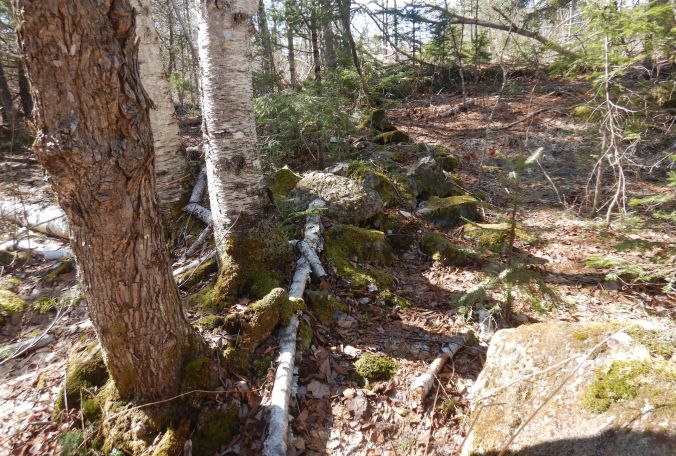
Faint wheel tracks in the soft soil and a series of foot-high, well-rotted stumps reveal that someone decided to harvest small trees here many years ago. The stumps became a platform for a few birch seedlings above the more challenging conditions on the ground. The roots remained perched as the stump decayed underneath leaving a stilted root system to be admired.
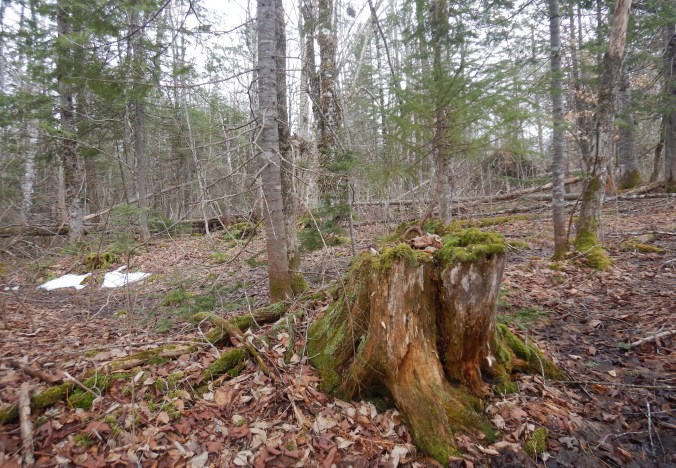
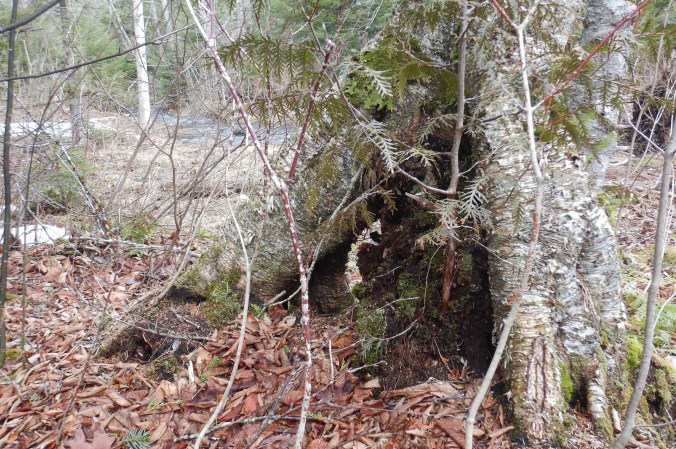
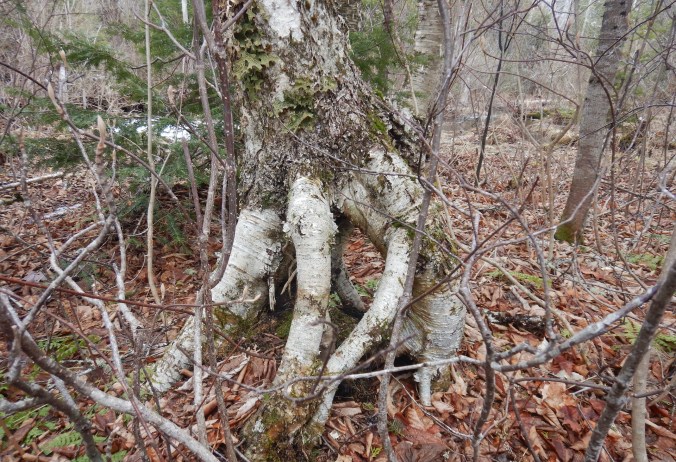
So I know that tree harvesting continued in the few decades after the first wave land clearing. A plow couldn’t have turned the soil here. The ground is too wet, but the stumps disappear as I walk south from the swampy soils even though I never leave the forest. A major difference is present in the plane of the land. Although sloping, it becomes smoother and lacks large stones and boulders on the surface.
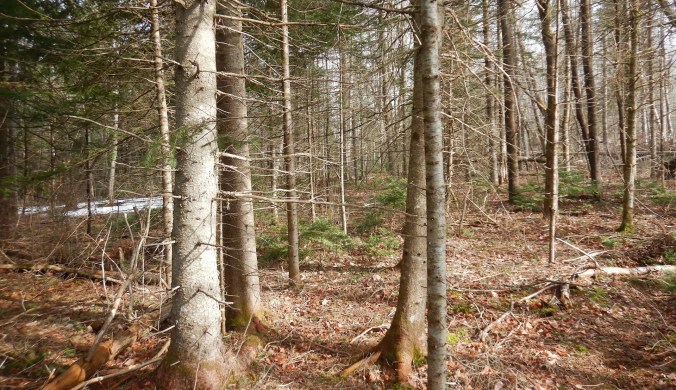
Forest view of trees, mostly fir trees growing on leaf covered ground. Most trees lack leaves on their lower branches and the ground is relatively flat without noticeable rocks.


Rocks are piled in mounds.

Trees on the left of the image grow out of a pile of moss covered rocks of different shapes and sizes.


The smoothed ground also has an abrupt edge.
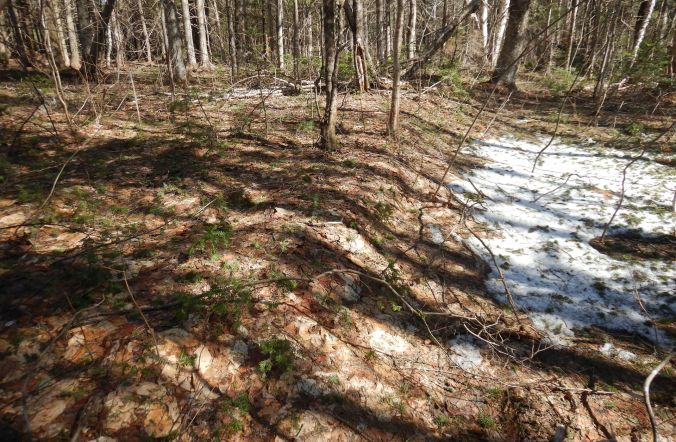
View of forest. Leaf litter is compacted and a patch of snow is visible at right. There is an abrupt drop in the soil surface at the middle of the photo.


All of Maine was glaciated during the last ice age, and nearly all soils across the state are rocky due to the erosive and depositional power of the ice sheets. But glaciers don’t pile rocks in tidy, convenient piles, nor do they typically plane the surface of the land in such a smooth manner. A different force created these characteristics.

Imagine yourself as a farmer trying to plow soil. Rocks get in the way of this backbreaking labor, so you remove them into piles or build walls with them to outline fields and pasture. The work of plowing also tends to smooth out irregularities on the soils surface over time. Gravity assists with plowing and can result in a plow terrace forming on the downhill side of a cultivated field. The evidence I see suggests that I’ve walked from forest growing where plows never broke soil into forest growing on an abandoned field.

Was a farmer cultivating potatoes or another cash crop? Small farms in the early 1900s were far from homogeneous. Few of the stones in the rock dumps are fist-sized or smaller, however, which is another clue. The work of freeze-thaw cycles and plowing would bring small stones to the surface regularly, which would then have to be removed by hand lest they get in the way of plowing or, in the case of potatoes, harvesting. In Aroostook County, northeast of my home, farmers continue to remove rocks from their fields after 100 years or more of continuous potato harvests. Maybe this section of the farm was first modified by forest clearing, large rock removal, and plowing but not for potatoes. The terrace and an abandoned machine are silent witnesses to the work of the farmer.

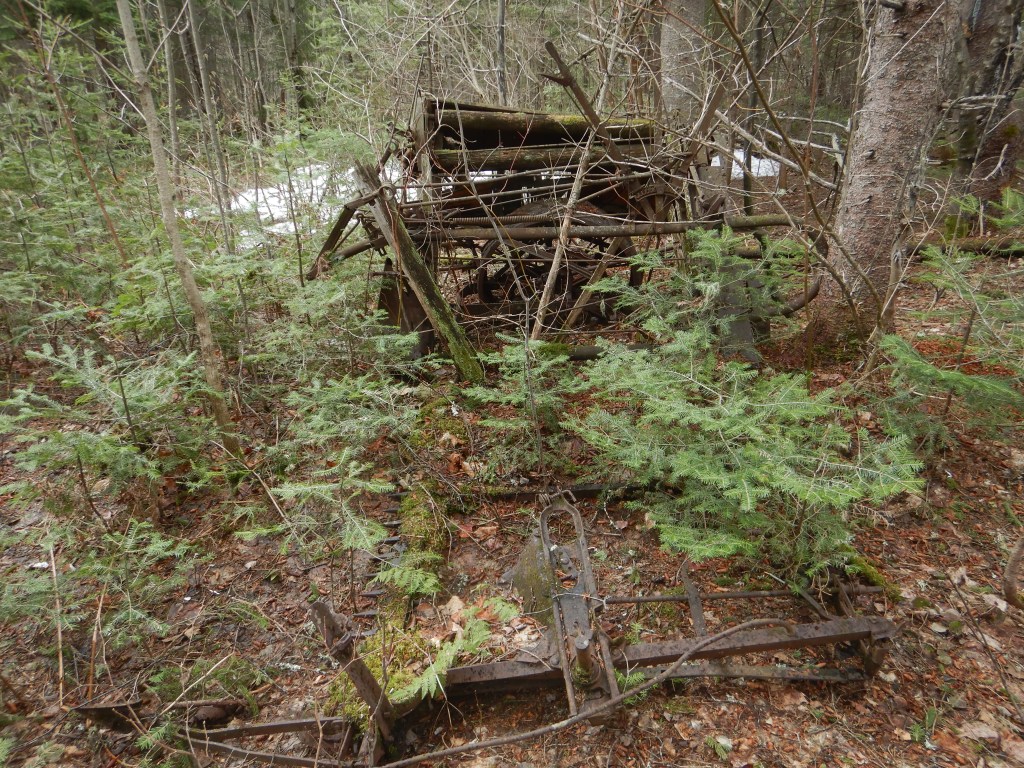
Tucked at the very edge of the field-reverted-to-forest, a century-old machine rusts under the deep shade of spruce and fir. Upon first glance, it is a confusing mess of gears and sheet metal.
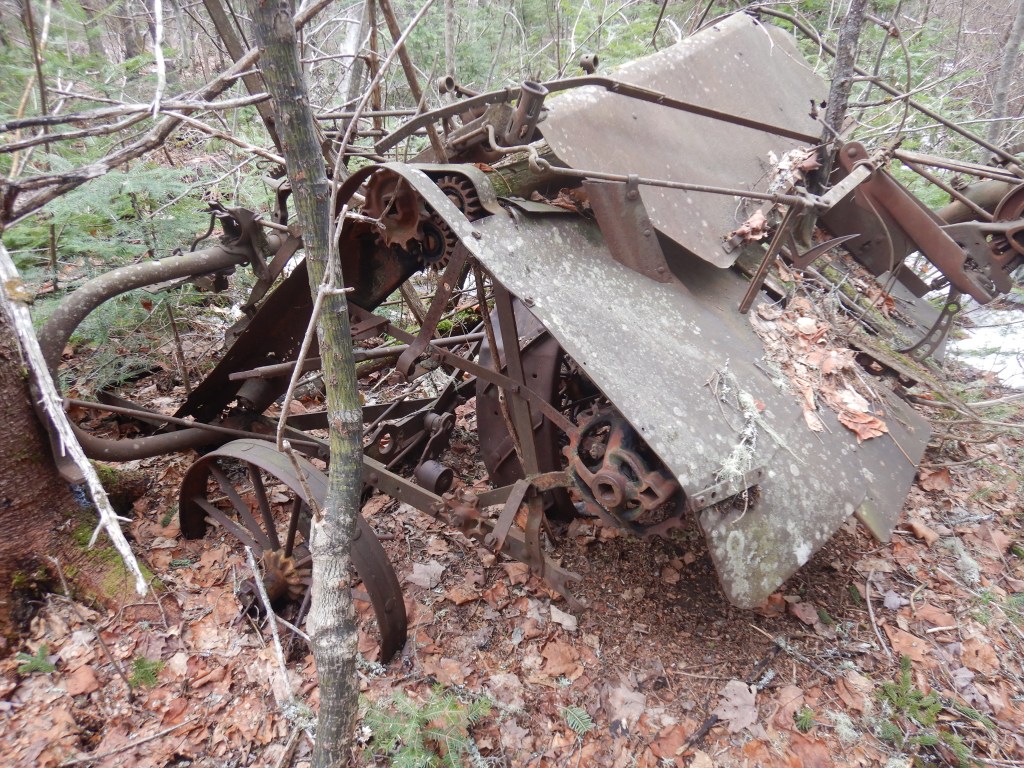
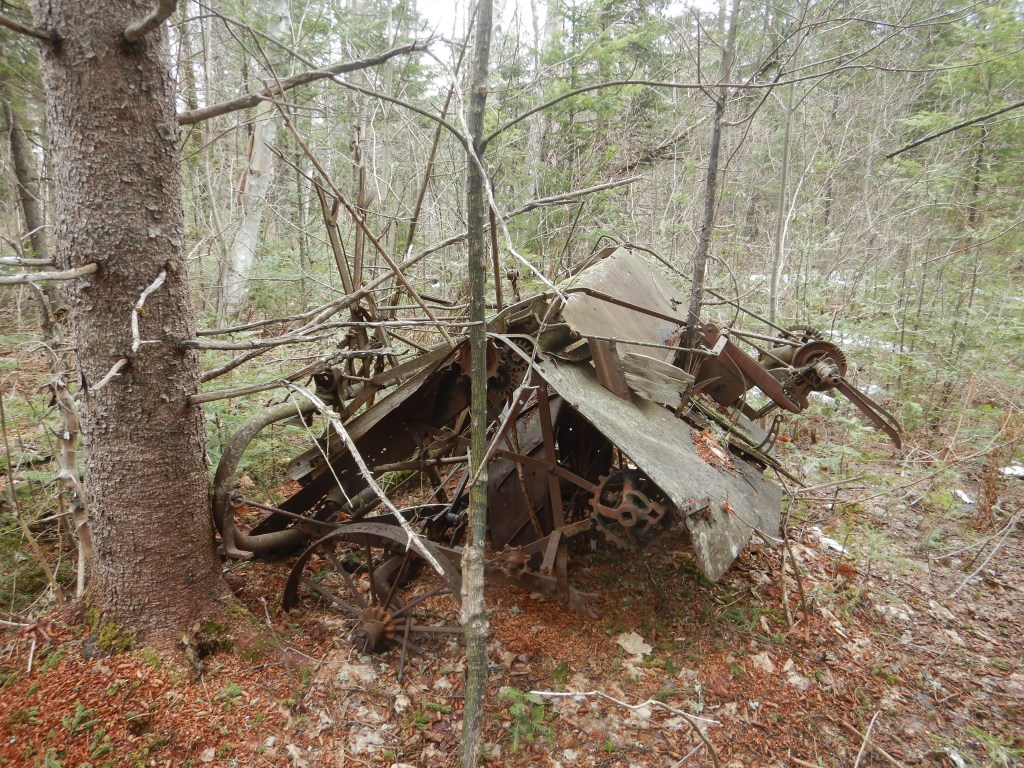
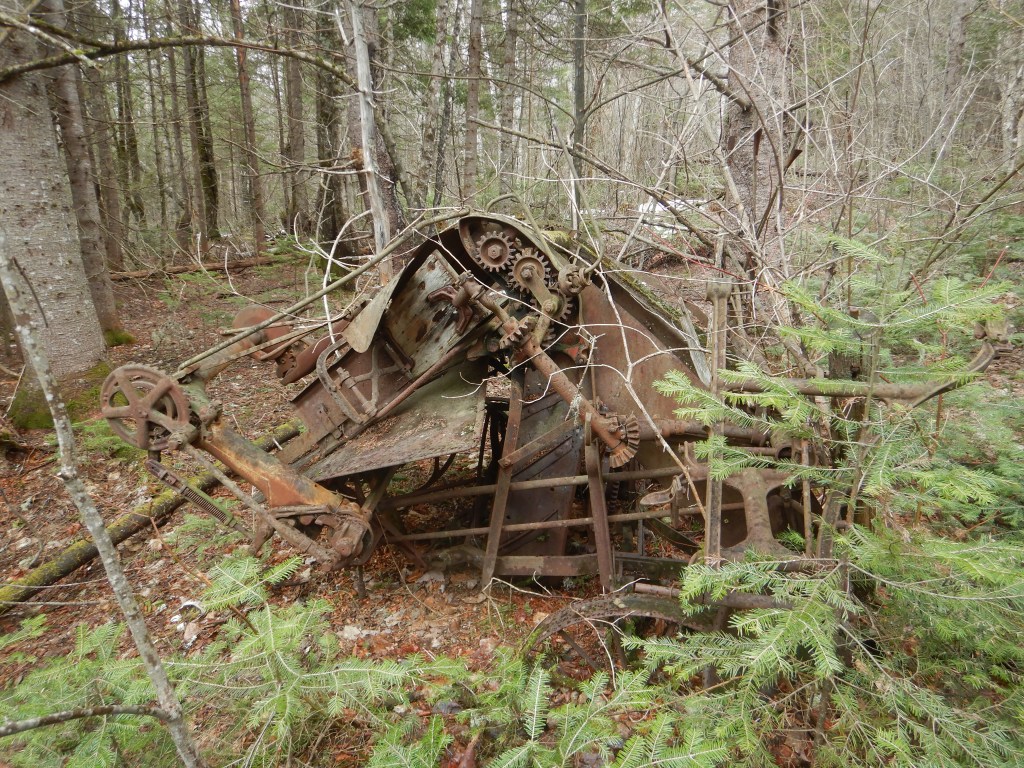
This, as far as I can tell, is a horse-drawn harvester and bailing machine. The operator sat in the rear. Horsepower turned the gears and blades. Grass was cut at the front, carried upward, then tied with twine. All automatic!
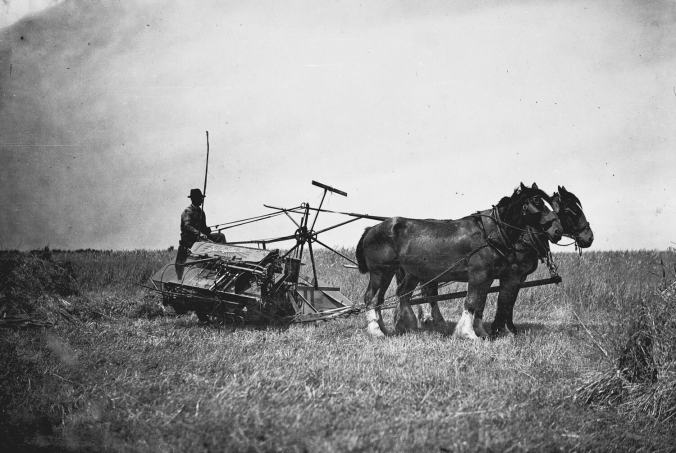
black and white photo of hay bailing machine. Two horses pull the machine to the right. A person stands on the rear of the machine. They are in an open field.
Thanks to Museums Victoria for including the photo in their public domain collection. Here and here are additional photos of these harvesters.

It must’ve been less labor to operate than using a scythe and binding your hay, grain, and straw by hand. Yet, this machine also looks amazingly hazardous—a device that leads to mangled fingers, limbs, and questions like, what happened to him? “Twas using a newfangled harvester. Told ‘im that’s a tricky device. Be careful, I said. He wasn’t. Now we call ‘im 7-Fingered Mike.”

Walking further, I move onto topography that becomes immediately lumpy where the trail dips off the plow terrace. More than a few large rocks dot the surface, so this was never a cultivated or plowed field. The trees are the expected mix of conifers and broad-leaved species for the area—white spruce, balsam fir, white ash, red maple, sugar maple, striped maple, mountain maple, big tooth aspen, and white pine. In late spring, the spring ephemeral wildflower diversity in this little patch is higher here than anywhere else on the property.
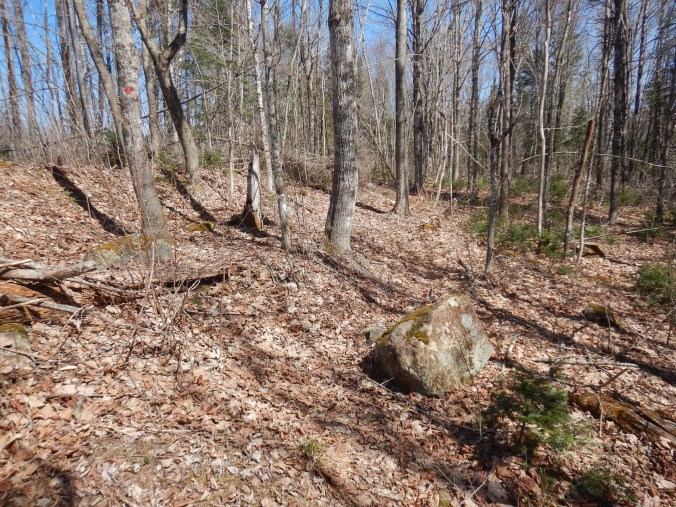
Deciduous forest on a sunny early spring day. The canopy is bare of leaves and there are no green plants sprouting from the ground.


Springtime ephemeral wildflowers aren’t a botanical grouping.2 They come from a diverse suite of taxonomic plant orders and families. Their commonality, then, is in the timing of their flowering. A full canopy of summertime foliage intercepts most direct sun. What remains is a speckling of light and shadow, a sun-dappled place which restricts photosynthesis rates and stunts plant growth. Some shade-tolerant trees such as beech, sugar maple, and hemlock, for example, can spend decades as sapling-sized plants before a canopy gap forms above them and they grow upward to fill it.

Springtime ephemerals are herbaceous. They don’t have the ability to reach the canopy, so they utilize an annual, live-fast strategy. Their leaves, stems, and flowers emerge from dormancy early in the growing season, often when the night air remains frosty and well before bud break on the tree branches above. Their flush of green leaves and vibrant blossoms are a much welcome sight after a long winter.
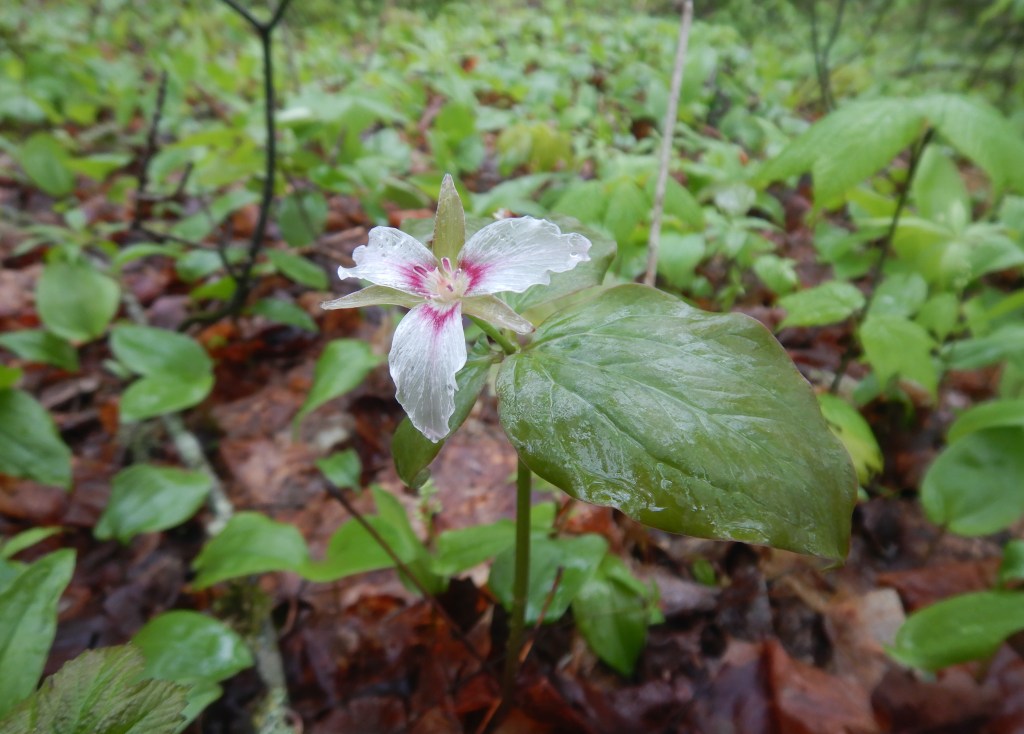
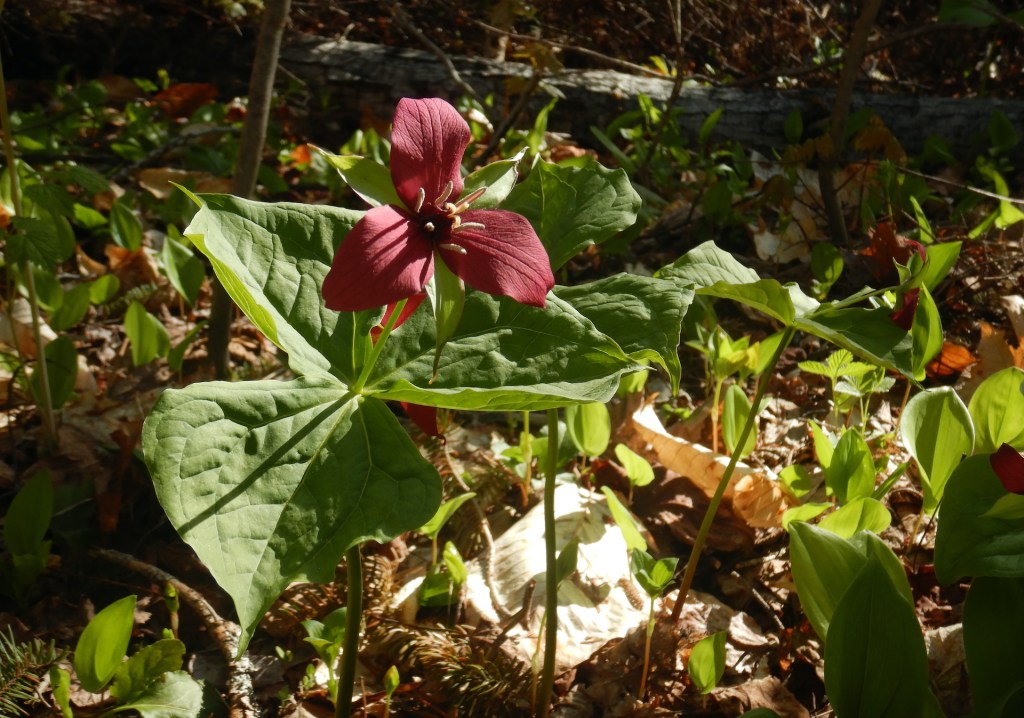
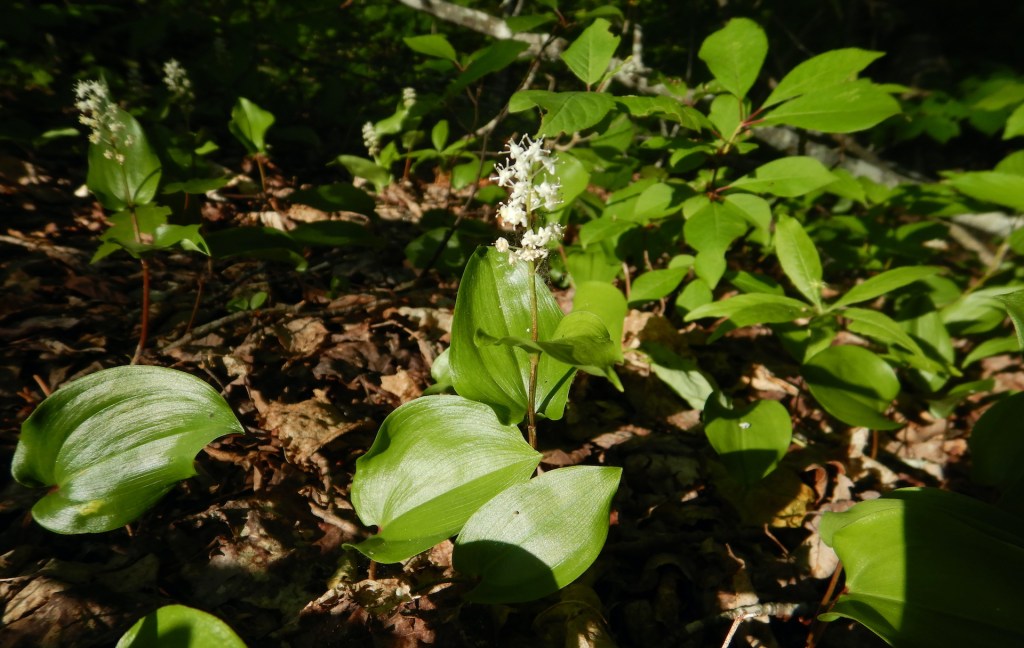
I suspect that the springtime wildflower diversity is highest off the the plow terrace, because those soils experienced less disturbance. The duff, the seedbed, and mycorrhizal associations were better preserved. The tree composition differs too from the formerly plowed areas. Balsam fir and aspens predominate upslope of the plow terrace. Their seedlings establish rapidly in open conditions as long as soil moisture is adequate. Fir and aspen grow downslope as well but alongside more maple and ash. Coupled with the well-drained nature of the east-dipping hillside, the tender May and June flowers can thrive. I tread lightly in their company.

As I continue south, the soils become wet again and the vegetation, both in species composition and structure, changes dramatically. The contrast is stark.
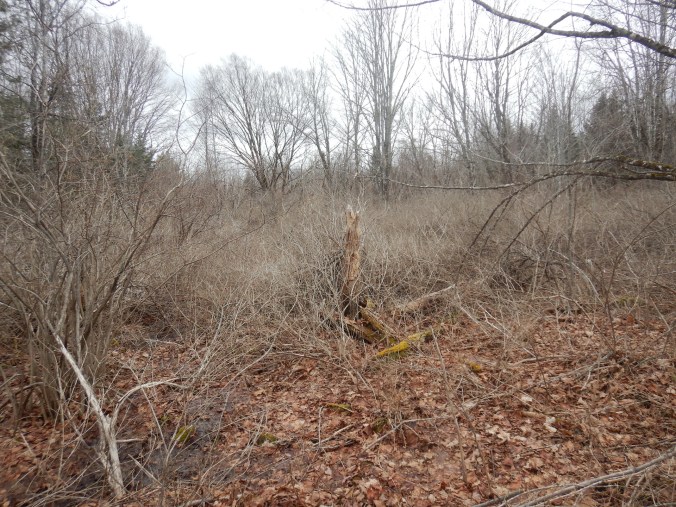
photo of shrub thicket. Dense tangle of bare, brown-gray branches fill the scene. A few scattered trees grow among the shrubs
A honeysuckle thicket.

Bush or Morrow’s honeysuckle (Lonicera morrowii) is an introduced, yet common understory shrub on the landscape surrounding my home. It grows with such vigor and at such densities that even I, someone who enjoys a good bushwhack, avoid it. Without the benefit of a trail, you’re sometimes forced to move on top of the thickest stems, which is a strategy that succeeds for a few feet before gravity wins and the brittle wood buckles under your weight. Relatively few trees rise above the honeysuckle compared to the surrounding forest. The thickets contain almost no springtime ephemerals, but they do harbor a scattering of multi-trunked apple trees. It’s hard not to wonder why this plant community grows as it does when you struggle to move through it.
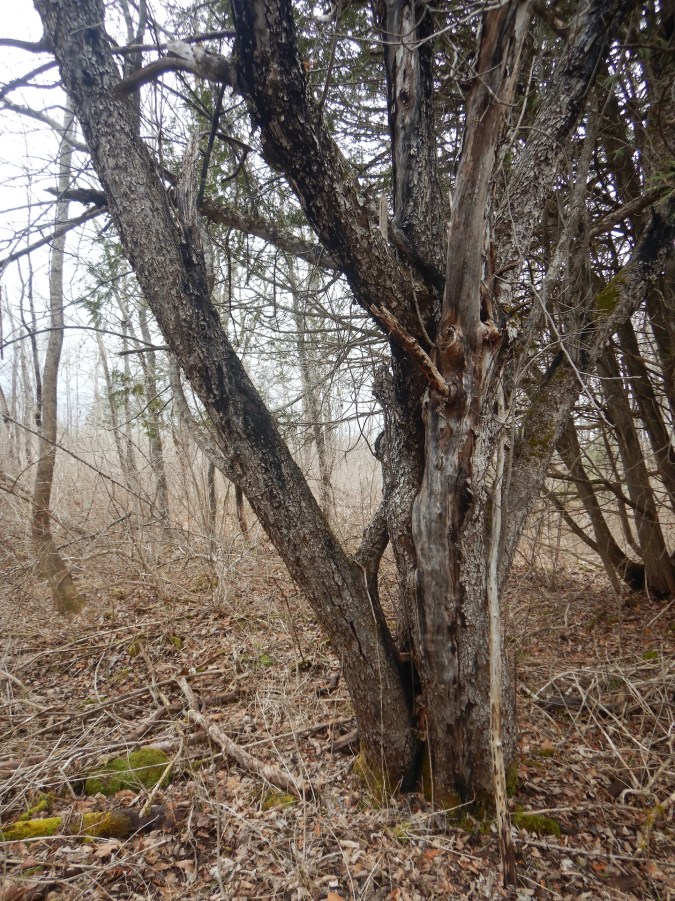
silhouette of multitrunked apple tree. Several trunks originate from the same point on the ground.
One of the several multi-trunked apple trees that grow within the honeysuckle thicket.

Both the apple trees and the honeysuckle’s density are clues in their own right. Both are introduced species in North America. Both grow best in full sunlight, and the honeysuckle establishes best in disturbed soils. Almost all the apple trees are multi-stemmed. They are different sizes, spaced irregularly, and each grows a different variety of fruit. I sample them as much as I can in September and October. The timing of ripeness and the taste of the apples vary widely on different trees. One tree has such bitter fruits that even my very omnivorous dog ignores them. These qualities suggest that the apples were not planted as part of an orchard.

One honeysuckle thicket also borders a prominent, east-west trending rock wall. Rock walls, like rock dumps, weren’t accidental constructions. They were frequently built on the edge of fields. If the field was a harvested annual crop, then the rock wall became a convenient area to dispose of bothersome stones. Walls and fences can also be used to keep things inside their boundaries.
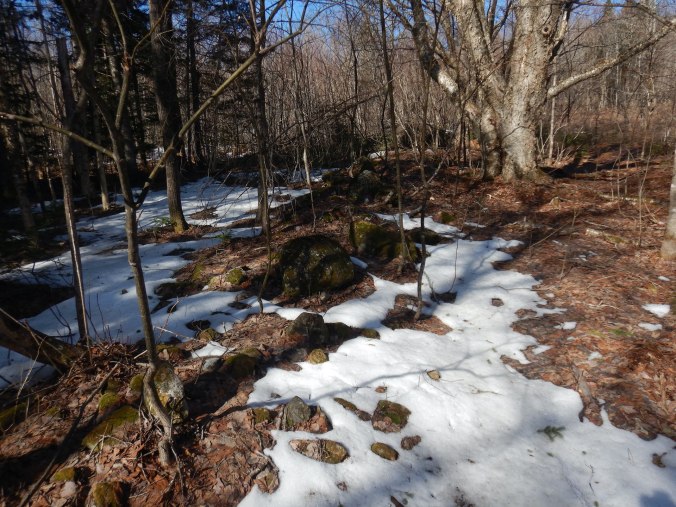
Photo of low linear line of small boulders trending through a forest from the bottom of the photo to the top. Patches of snow cover much of the ground with some open patches of dry leaves
The remnants of a low rock wall trends east-west borders the south side of the honeysuckle thicket.

A muddy overgrown two-track trail can be followed to and from the honeysuckle thickets, suggesting that vehicles traveled this way with enough regularity to leave a lasting footprint. I’ve also pulled remnants of split rail fencing out of the leaf litter along the rock wall. The posts and rails appear to be made from northern white cedar, which produces perhaps the most decay resistant wood of any forest tree in the area. Fences can serve an aesthetic need, of course, although I doubt this was the fence’s sole purpose. I suspect the farmer built it for livestock, perhaps sheep or pigs.

If the fence kept livestock in, if their hooves turned the soil, if their grazing or rooting prevented most trees from growing, if the farmer had to transport feed to fenced-in livestock, if their manure contained apple and honeysuckle seeds, and if their sudden disappearance allowed apple and honeysuckle seeds to germinate and grow without competition, then old pasture is a likely explanation for the enduring thickets.

That’s a lot of ifs, I understand, but nearby trees offer an additional set of clues that point toward pasture rather than cropland. A large yellow birch along the rock wall has a silhouette unlike those in the surrounding forest.
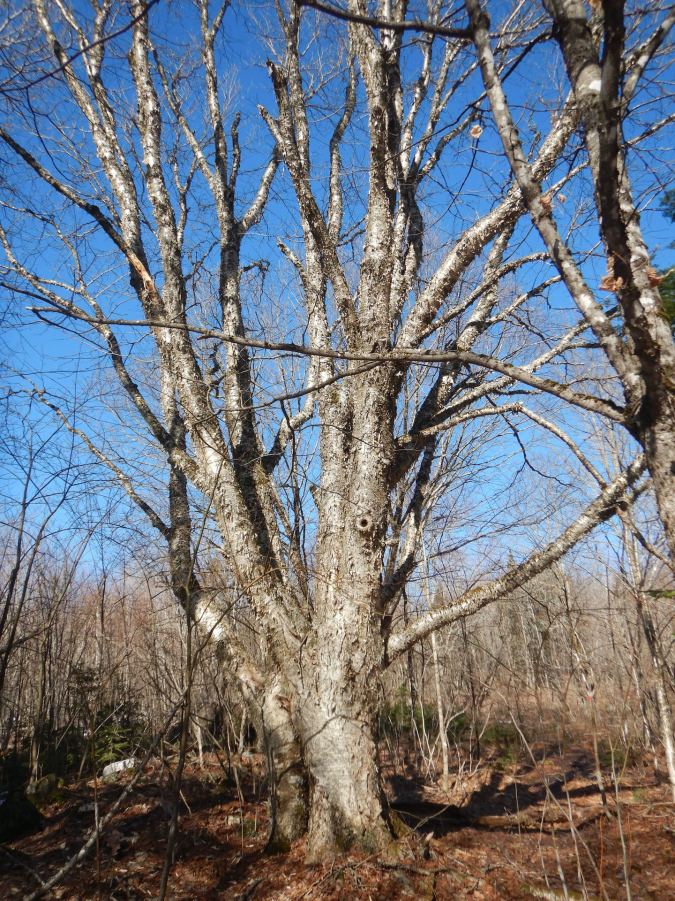
Silhouette of large yellow birch tree. The branches spread wide across the forest canopy and the tree is multi-trunked.
This yellow birch’s growth form is a product of the open, sunlit environment it used to experience.

This birch has the largest diameter trunk of any tree on the property. At chest height, its two fused trunks stretch approximately 50-60 inches (127-152 cm) wide. Its branches spread across a 30-foot (9-meter) diameter, which is far greater than the other trees nearby. In fact, no other nearby trees come close to matching this birch’s size.

Only trees who grow in open areas achieve this architecture. Trees growing among other trees are usually forced to compete for access to sunlight. For them, growing tall rather than spreading wide is the more lucrative long term strategy.3

The large yellow birch has its feet within the rock wall, and it may have sprouted not long after the wall was constructed. A white spruce with a similar open growth form occupies the honeysuckle thicket too. The farmer might’ve let the birch grow along the rock wall if the thicket area was cropland, but I doubt he would’ve tolerated the white spruce shading a large part of a plowed field or haying meadow. The trees could’ve, though, provided valuable shade and shelter for livestock and left to grow within a pasture.
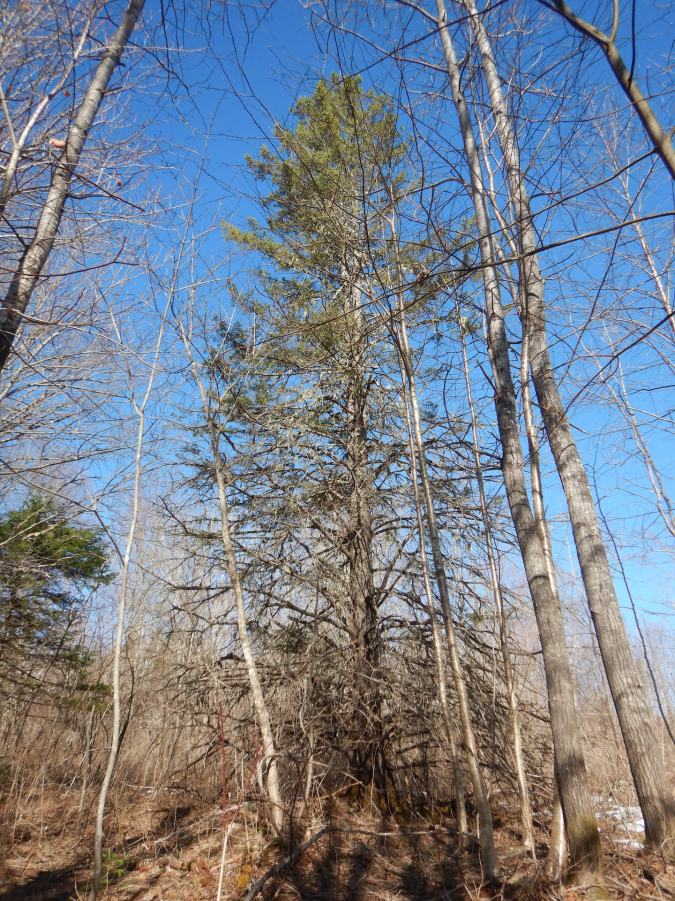
Silhouette of spruce tree. Many branches are present on the trunk from the ground to the top of the tree.
This white spruce near the rock wall has branches present from the ground up, a sign that it too once grew in an open environment where it didn’t experience competition for sunlight. Note the equally tall aspens at right. They have no branches near the ground, which indicates they sprouted after the spruce and had to compete with other plants for access to the canopy.

When were the fields and pastures last worked? When were they allowed to go fallow? None of the trees on the land are especially old, not even the aforementioned yellow birch along the wall, Wandering across the adjacent properties, which were once part of the farm, I’ve found that the forest is fairly consistent in its age and structure. The canopy is roughly the same height everywhere, and trees tend to be about the same size. The fields extended west of me to the top of a gentle hill where stone walls mark the boundaries of other former fields. But subdivisions and different landowners lead to different visions for the land and its non-human occupants. This is where the disturbance history of my parcel and the neighbors’ begin to diverge.

In summer 2020, a logging company harvested trees on the property that borders the west side of my forest. They weren’t selective, taking trees that were barely 12 inches in diameter at stump height and leaving few standing trees. There’s a wide variety of tree harvesting strategies employed in Maine, but this appeared to be one of the less sustainable approaches. That is, unless the goal was to maximize profit and create a poplar thicket in your wake.
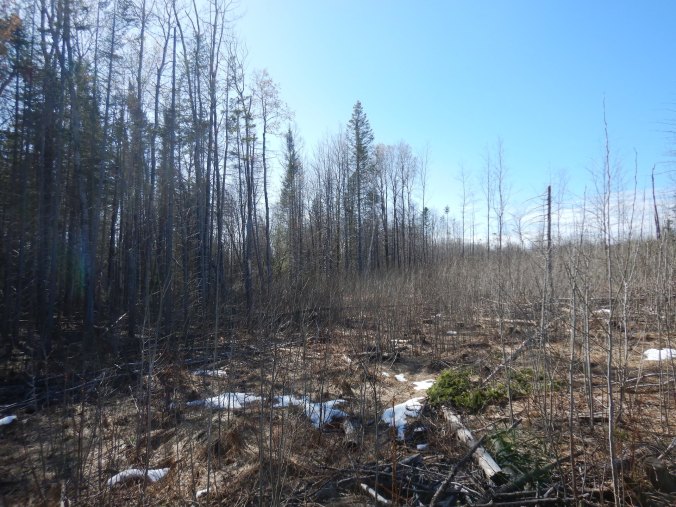
photo of intact forest at left. To the right is a recently cutover area with small saplings.


The timber harvest, despite my criticism of the methods, granted me an opportunity to investigate when trees began to reclaim the land, because the adjacent cutover acres were part of the plowed field. I counted growth rings on several stumps. All had about 50 growth rings or fewer. Many trees remain small for several years after sprouting before they gain enough height to lay down growth rings that would be visible in a stump. So, maybe a farmer last cut hay from the field 60 years ago.

Sixty years isn’t a long time for most trees. Even photosynthesizing rock stars like balsam fir and aspen, species who tend to live fast and die young, can have much longer lifespans, but the forces of time, age, and weather never cease. They’ve already begun to take their toll on the regenerating forest. A few trees topple in the wind every year, which is fine with me and, I’m sure, the forest. I use a few trees for firewood and leave most to return to the earth. Their bodies will create structure and habitat for wildlife. They’ll be colonized by insects and fungi. They’ll enrich the surrounding soil and increase its carbon and water-storing capacity. In death, they’ll be filled with more life than when they were alive.

Although the specific details differ, this farm-to-forest story is not unique. Statistics buried on page 14 of Maine’s 2025 State Wildlife Action Plan reveal how common the reversion from farm to forest has been: “By 1880, approximately 34% of Maine was cleared for farming, but that pattern reversed dramatically via reforestation during the 1900s. By 1997, only 6% of the state’s land area was in agricultural use.” The return to a largely forested landscape has been even more pronounced in other parts of the Northeast U.S. You can find it nearly anywhere you go from Pennsylvania north.

Older forest stands, which I define as those with a high proportion of trees greater than 100 years of age, remain uncommon in Northern Maine, however. The landscape is often cut over, even after the collapse of the region’s paper industry. If I’m able to care for my forest over the next few decades, then it will form one of the area’s older stands. Perhaps that will be my stamp on a forever changing plot of land.

FOR FURTHER READING:
Anyone interested in teasing out the land use history of their home or community should consult Reading the Forested Landscape: A Natural History of New England4 by Tom Wessels. This was a formative book for me when I first attempted to understand the influences and relationships that people have on ecosystems. I still have the original copy I purchased in college. The book focuses on the Northeast U.S., although many of the techniques in it could apply to other regions.

  1. Grammatically “who” was traditionally reserved for people (the esteemed naturalist, Mike, who…), while “that” was used for non-human organisms (the trees that…; the owl that…). I think the old who vs. that rule needs to die. Restricting who for humans is an othering of non-human life. It is one of the many, almost unconscious micro-aggressions we make toward other organisms. ↩︎
  2. Neither are trees, BTW; a tree is a particular growth form achieved by certain woody plants no matter if they are coniferous, deciduous, evergreen, broad-leaved, needle-leaved, produce annual growth rings, lack annual rings, or something else. ↩︎
  3. For the record, I’ve seen no evidence that trees care at all about their appearance. Possessing the adaptability to survive local conditions is far more important and explains why trees are so plastic in their growth forms. ↩︎
  4. Published by Countryman Press. Know any other good books from that publisher? ↩︎

Time and Change Along the South Branch

There’s a walk I’ve been eager to follow since reading about it in A Guide to the Geology of Baxter State Park and Katahdin. So on a warm day in early September, I found myself meandering downstream along the South Branch of Trout Brook. 

I was fortunate to be there at that time of year. Water levels were low, which made for easy walking. Water temperatures were cool, which allowed my wet feet to buffer the heat of the day. Importantly, biting insects were few, which permitted me to enjoy the scenery without taking extraordinary measures to protect exposed skin.

A hike down the South Branch is intriguing because stream erosion exposes a series of rock formations that reveal a 400 million year-old story. In it we find the violence of long extinct volcanoes as well as the marvel of the first plants to colonize land on Earth. It is a story of immense time and change.

A calm portion of a stream surrounded by deciduous trees. The stream flows from lower left to center before disappearing around a bend.
South Branch Trout Brook in Baxter State Park.

Maine in the early Devonian Period, about 400 million years ago, would be wholly unrecognizable. The landmasses that would become Maine were located south of the equator. Extensive volcanism scalded the Katahdin region. Terrestrial vertebrates weren’t yet a thing. Dinosaurs were still about 150 million years into the future. Perhaps the oceans would be the only similarity we could recognize.

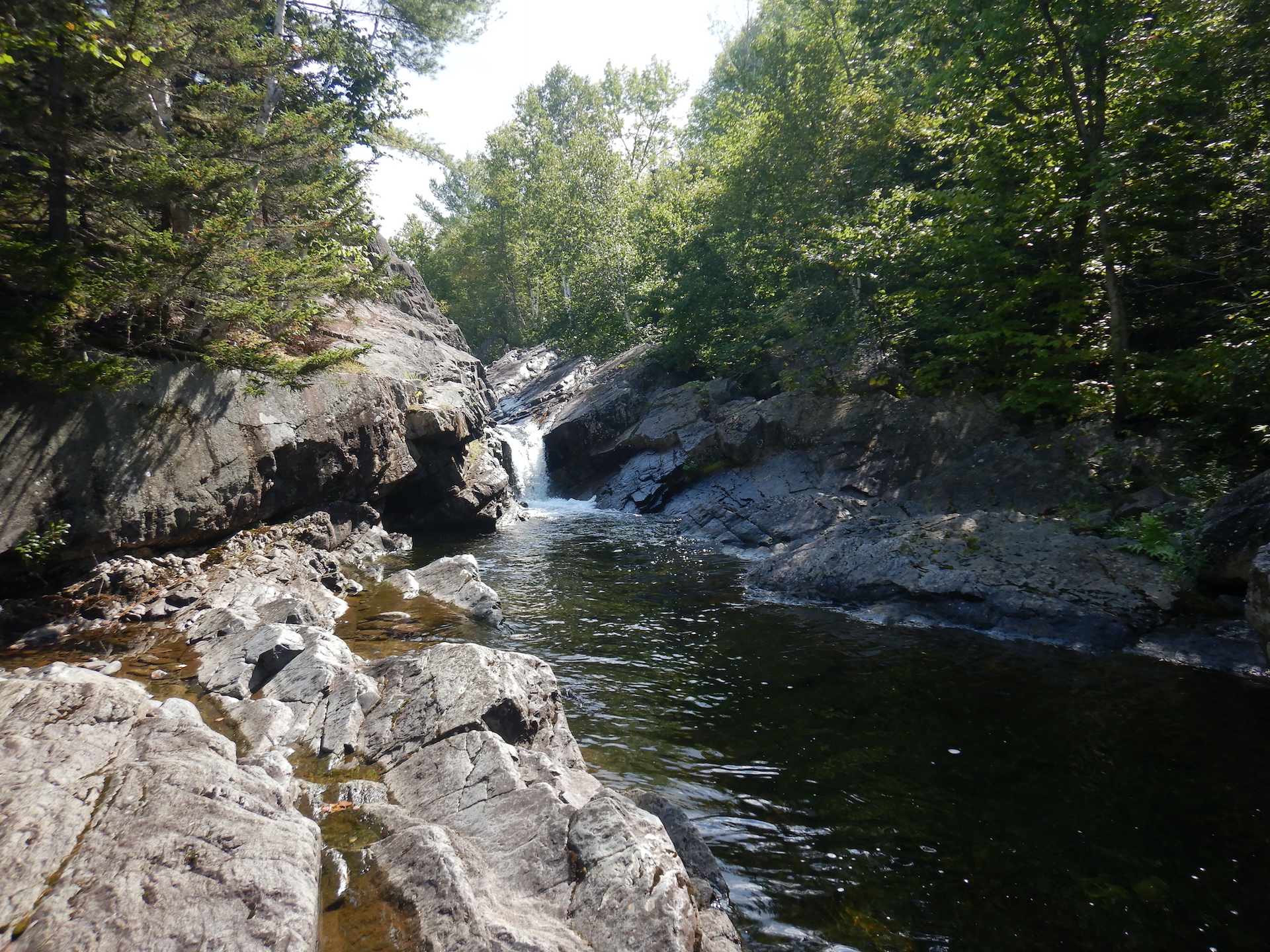
To explore this age of Earth’s past, I began at South Branch Falls which was empty of people when I arrived in mid-morning. It is an appealing swim spot with shoots and pools carved into Traveler Rhyolite, a rock formation created by ash fall and pyroclastic flows that may have filled a volcanic caldera about 407 million years ago.

A stream flows through a narrow chute carved into bedrock. The stream flows from center to bottom right. Deciduous trees and some white pines overtop the stream and trees.
South Branch Falls. The rock is composed of a type of rhyolite known as welded tuff.
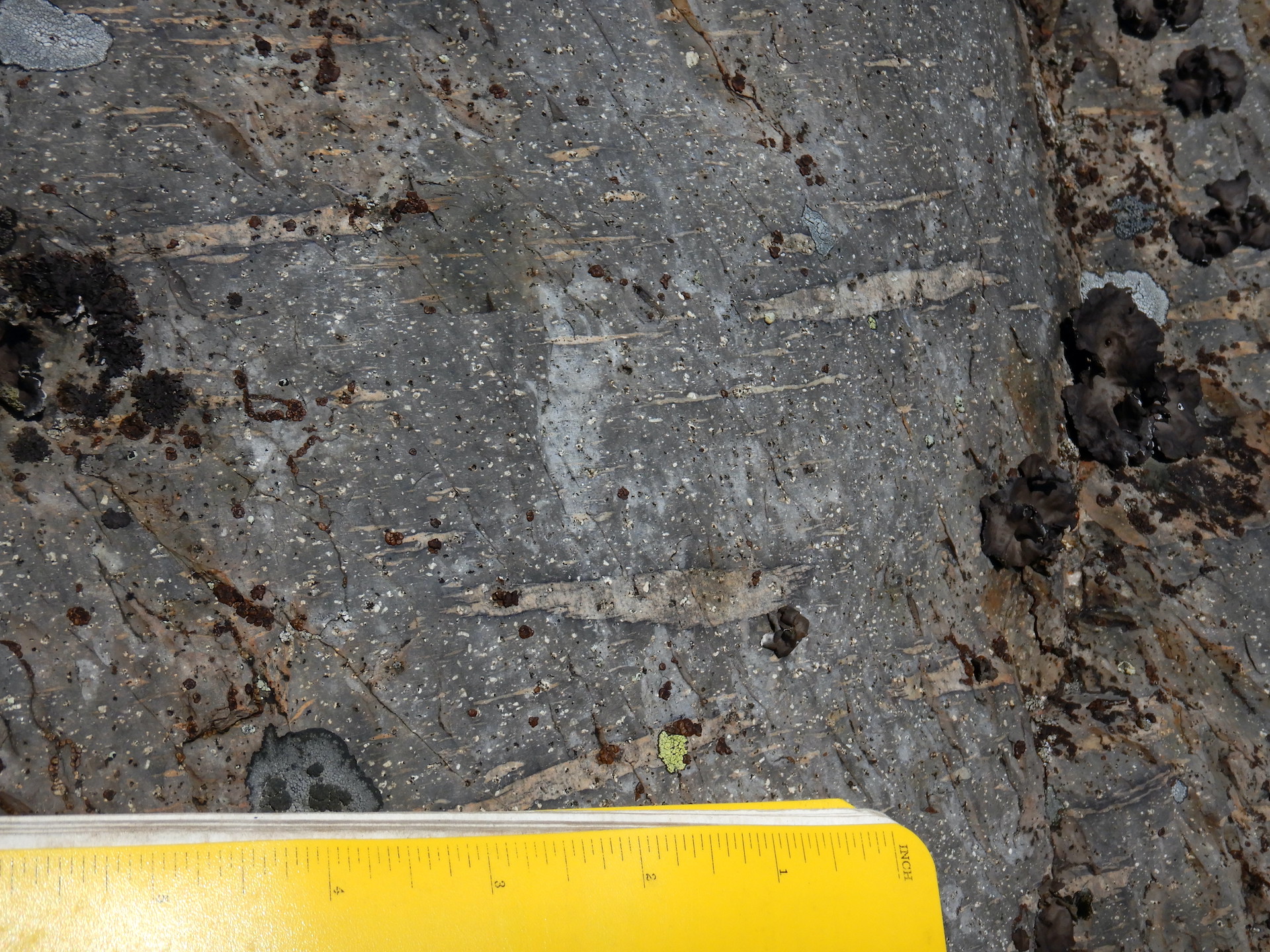
Close up photo of rock. The rock is gray and includes light gray inclusions of flattened pumice. The scale at bottom measures about 6 inches.
An example of welded tuff from Peak of the Ridges to the south of the South Branch. While this photo was taken a few miles from South Branch Falls, the rocks formed in the same manner. Ash and pumice from volcanic eruptions were heated and compressed, which deformed and stretched clasts of pumice within it. Instead of loose ash and pumice, it was welded together by heat and pressure.

In contrast, nearby Katahdin, Maine’s tallest peak, in the southern portion of Baxter State Park is composed of granites. 

View of boulder field and alpine vegetation (mostly small sedges tucked between the rocks) looking toward a taller mountain peak in the background.
Mount Katahdin as seen from the North Peaks Trail in Baxter State Park.

Despite their differences in appearance and texture, rhyolite and granite are chemical equivalents. Both are formed from silica-rich magma. The difference is a product of time and location. Rhyolite is a volcanic rock formed from viscous lava. Because of its high viscosity it tends to erupt explosively—think Plinian type eruptions such as Krakatoa in 1883. Granite, though, forms underground when silica-rich magma is given the opportunity to crystalize over millions of years. According to the aforementioned Guide to the Geology of Baxter State Park and Katahdin, mineralogical analysis confirms the relatedness of the Katahdin Granite and the Traveler Rhyolite. They both date to about the same age too, although the rhyolite must be younger since it rests on top of the granite and there’s no evidence that the granite intruded into the rhyolite. Katahdin’s granite, therefore, is the solidified core of a magma chamber that fed the eruptions resulting in the Traveler Rhyolite.

The nearest modern analog to the Traveler Rhyolite that I have seen is the pyroclastic flows of the Valley of Ten Thousand Smokes in Katmai National Park, but that was result of a single, 60-hour eruption. While Traveler Rhyolite is not a widespread rock formation currently it may have once covered a much more extensive area. It is also voluminous where it remains, perhaps accumulating to a total depth of 10,000 feet (3,000 meters) from the successive accumulations of an unknown number of eruptions. The enormity of the eruptions that created the Traveler Rhyolite is difficult to imagine. The serenity of a quiet morning at South Branch Falls fails to capture the violence of the events that created the bedrock here.

Stream flowing over a small waterfall then through a wider pool. Water flows from center at the waterfall to lower right. Bedrock surrounds the lower portion of the stream, while forest frames it from above.
South Branch Falls.

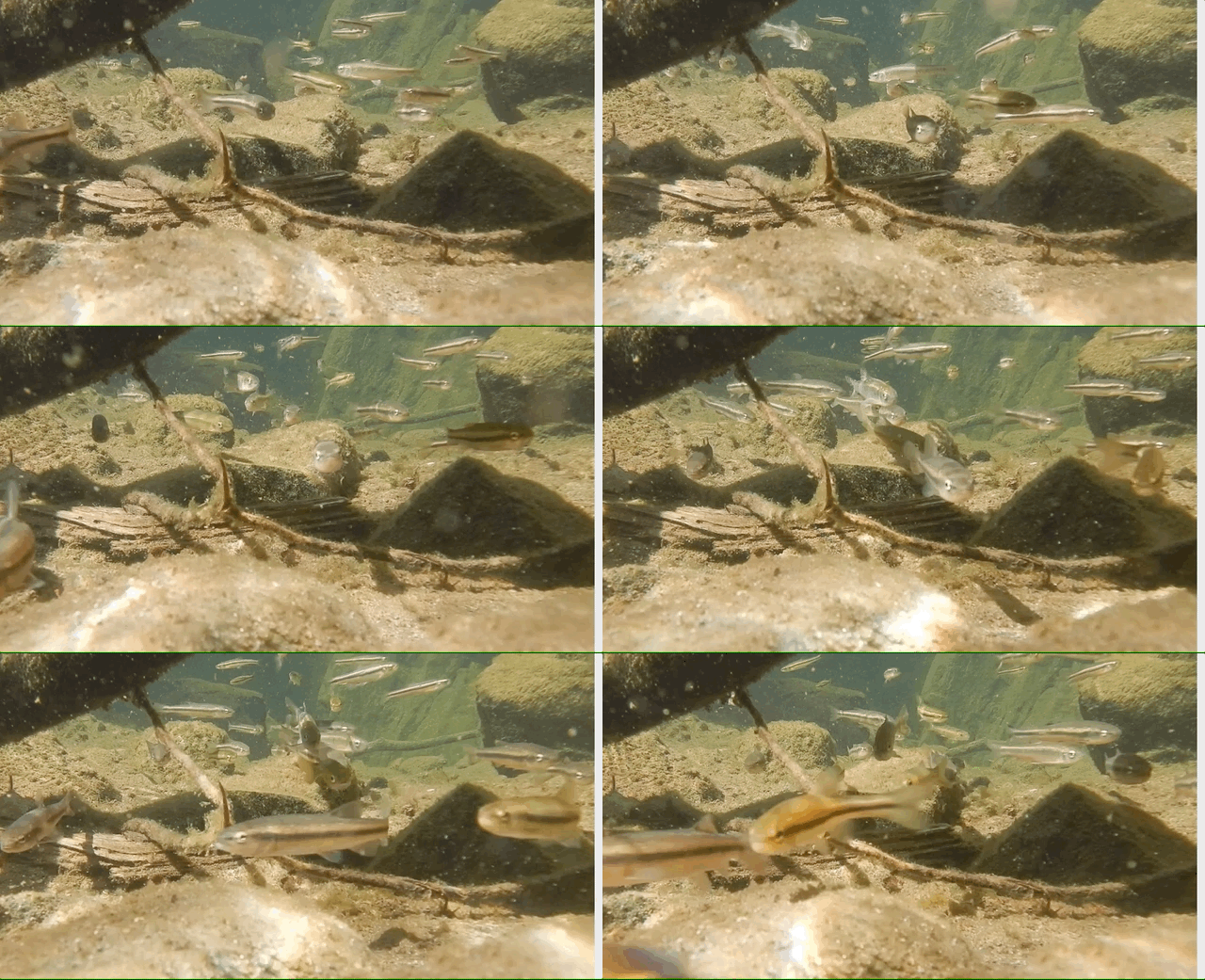
I left the falls to walk downstream before anyone arrived to wonder why I was putting my face so close to the bedrock (I’m not much of a conversationalist when out in public) but not before stopping slightly downstream to watch fish…

GIF of small fish in a stream. Most of the fish are a few centimeters long and have a dark stripe from head to tail on their side.

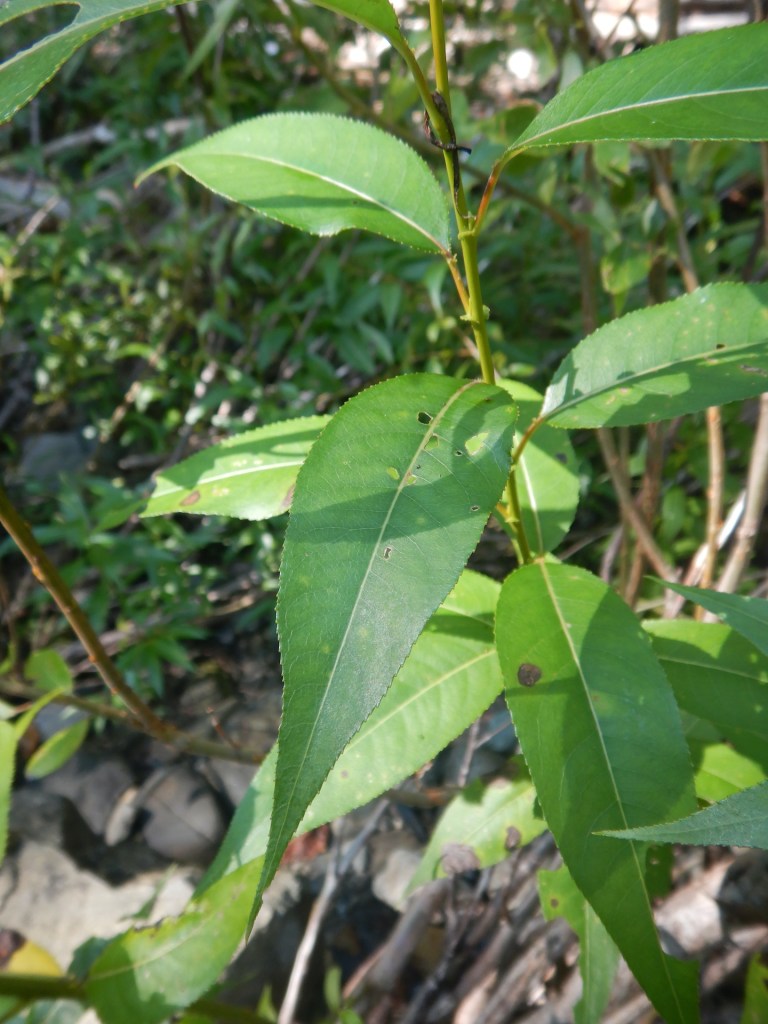
…and to identify a species of willow I had not seen before.

Close up photo of willow leaves. The leaves are arranged alternately on the stem and taper to a long, sharp point.
Summer foliage of shining willow, Salix lucida.

Much of the rock in Maine has been subject to deformation by plate tectonics and mountain building processes. Occurring between the Late Silurian and Devonian, the Acadian Orogeny saw the convergence of crustal terranes (essentially fragments of crustal plates with different geologic histories) as well as the creation of volcanic arcs and the folding metamorphism that accompanies tectonic collisions. Part of modern Maine and Atlantic Canada belongs to Avalonia, a crustal terrane that is also found in Europe from Ireland to Poland. Still more bedrock was formed under the Iapetus Ocean, an ancestral Atlantic that closed in the Paleozoic. Imagine the mess of geology which would be created by the collision of Sumatra, New Guinea, and Borneo into mainland southeast Asia by future tectonic movement. Something like that happened in the area we now call the Northeast U.S. and Atlantic Canada about 400 million years ago. The geology, as you can infer, gets complicated quickly. 

So owing to the forces formerly at work here, it is uncommon to find unaltered sedimentary rocks in this neighborhood. They are usually tilted, folded, and baked. Yet, only few hundred meters downstream of the South Branch falls the bedrock changed and we’re provided with a rare example to the contrary.

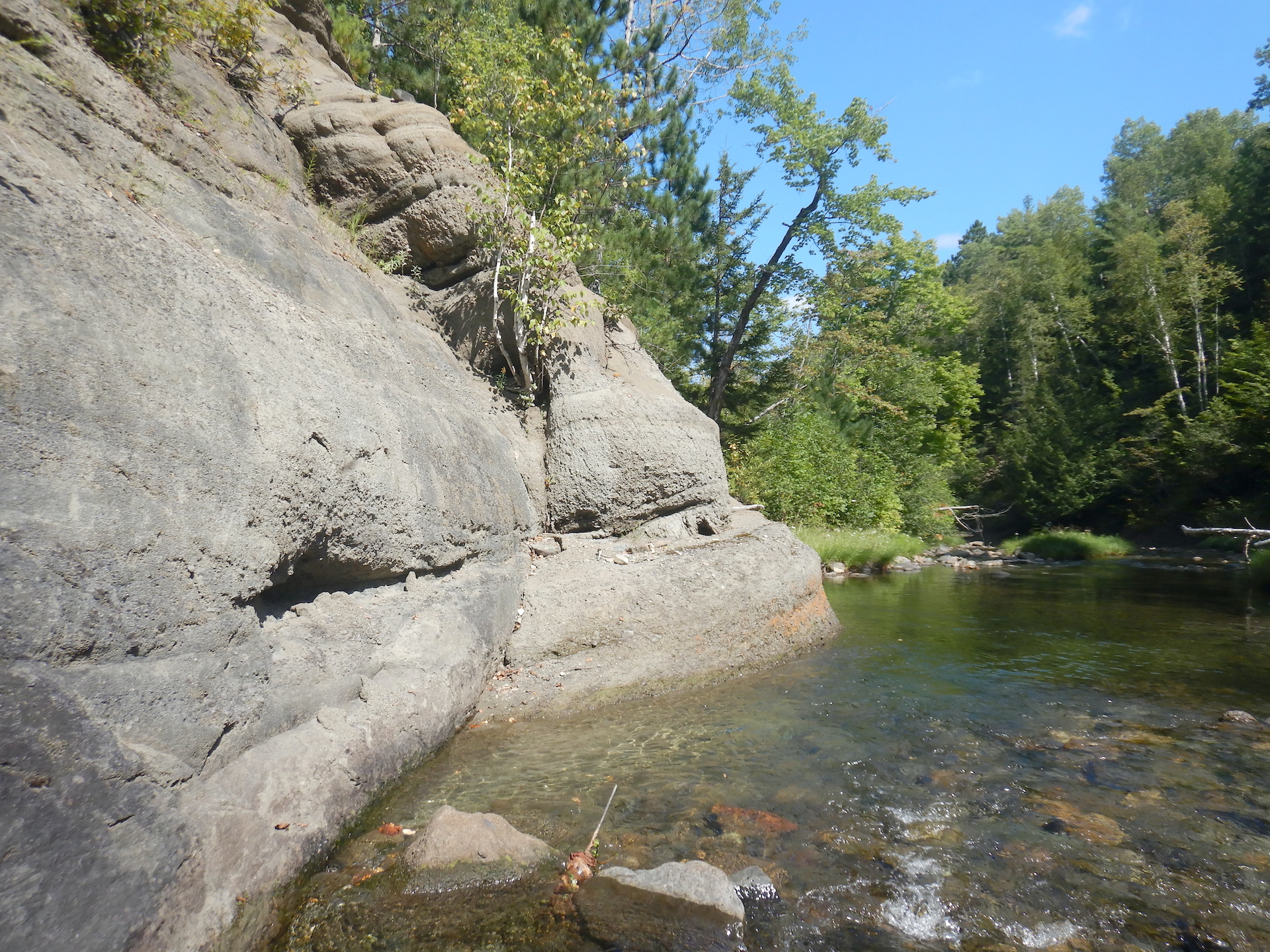
The Gifford Conglomerate is a section of the larger Trout Valley Formation, a collection of younger, Devonian-aged sedimentary rocks overtopping the Traveler Rhyolite. This is reportedly one of the few places in Maine where sedimentary rocks formed post Acadian Orogeny and haven’t been extensively altered even though they did experience some metamorphic change. With its rusty cliffs and shallow grottos, this section of stream was also particularly beautiful. 

Stream flows past a wall of rock. The rock is rusty in color and composed of cobbles that are cemented together. A series of grottos are enclosed in the rock at stream level. The water flows from bottom left to
This wall of cobbles are eroded pieces of Traveler Rhyolite in a deposit known as the Gifford Conglomerate. It was emplaced during the waning epochs of the Acadian Orogeny. It’s also not found anywhere else, which suggests this spot could have once been an alluvial fan at the base of a canyon or valley on the side of a volcano.

As I continued downstream, the conglomerate disappeared under rocks with a finer consistency. As these sediments accumulated the plants growing among them seized a revolutionary opportunity.

Steam flowing past a wall of gray rock. The rock wall is at left. The stream flows from lower right to center right.
An exposure of the Trout Valley Formation along the South Branch. Younger portions of the Trout Valley Formation do not include cobbles of rhyolite like the Gifford Conglomerate. In fact, the rock is composed of progressively finer sediments the higher one looks in the formation. Sandstones, shales, siltstones are common.

The Trout Valley Formation contains some of Earth’s oldest terrestrial plant fossils. At first, finding the fossils was a challenge. I wasn’t sure exactly where to look, but once I developed an eye for them then they popped into view.

A rock containing a branched fossil stem of a plant. The rock with the fossil is wet and sits on a rusty colored dry rock. The scale at bottom measures about 10

Forests of the late Devonian included tree-sized plants, but that was still several million years into the future. The plants found in the Trout Valley Formation had only just begun the colonization of dry land and they remained small in stature. One Psilophyton species reached a foot or two (a few decimeters) in height. Another Psilophyton had dainty 3 millimeter-wide stems. Kaulangiophyton akantha (don’t ask me how to pronounce that) had almost centimeter-wide stems with irregularly spaced spines. Pertica quadrifaria is the tallest known plant of its time. It grew to be about 10 feet (~3 meters) tall with stems about 0.6 inches (1.5 cm) in diameter. They were perhaps fragile as well. Their fossils are often highly fragmented.

An in situ rock with a plant fossil. The rock is dark gray. The fossil is branched and rusty in color. The scale at left measures about 10 centimeters.

Sidenote: I hesitated to include any mention of fossils because certain people are dicks and steal them. But I chose to include them anyway because they are frequently mentioned in the published book I used to guide me. The state park also has a publication noting some fossil locations online. Athough collecting is prohibited in Baxter State Park, there is still a risk someone will read this and steal fossils. Please don’t be that guy. Leave the fossils where they are for others to enjoy and study.

So here are 400 million year-old plant fossils comprising few to several species found in finely grained sediments. What might this tell us about the habitat they lived in? The authors of one of the first papers to formally describe the fossils, published in 1977, stated, “The number of plants found at a single site is very small, usually only one species, occasionally two or three at most. There seems to be a valid comparison with present-day marshland vegetation along the New England coast where the number of species is relatively small over much of the area with scattered peripheral patches of other species that occupy smaller niches in the landscape.” When I read that I immediately thought, “Hmm…sounds like a salt marsh.”

Salt marsh grass with dry, browning stems are bordered by channels of mud on left and right. A line of trees
A salt marsh near Charleston, South Carolina.

Salt marshes are harsh environments for plants. For most species, it is an uninhabitable space. Vegetation must be able to survive flooding by tides, oxygen-poor soils, and high salinity. But for the plants that possess the physiological adaptations to cope with the challenges, the salt marsh becomes a richly productive environment. 

On the east coast of the United States, salt marshes exist in the wetland transition zone between the sea and land. Salt marsh or smooth cordgrass (Spartina alterniflora) dominates the low marsh, the area flooded by tides each day. It grows in sand, clays, and mud. It can tolerate salinities that are double that of sea water by excluding salts from entering its roots, sequestering of sodium in its tissues, and secreting excess salt through its leaves. It counters a lack of oxygen in the soil with stems and roots connected through air pockets. No other plant in its native range copes as well with the salt, flooding, and disturbances that cordgrass experiences.

While smooth cordgrass dominates the low marsh, salt meadow hay (Spartina patens) outcompetes it in places above the average high tide line. Salicornia, a tasty edible, finds space in salt pans where conditions can be too harsh for even the Spartina grasses. When I learned to recognize the dominant plants of salt marshes while working at Assateague Island, I could use that information to note at a glance the approximate average high tide and the driest, saltiest places in the marshes. In east coast salt marshes, the few thriving species grow in habitats that differ in salinity and tide exposure. 

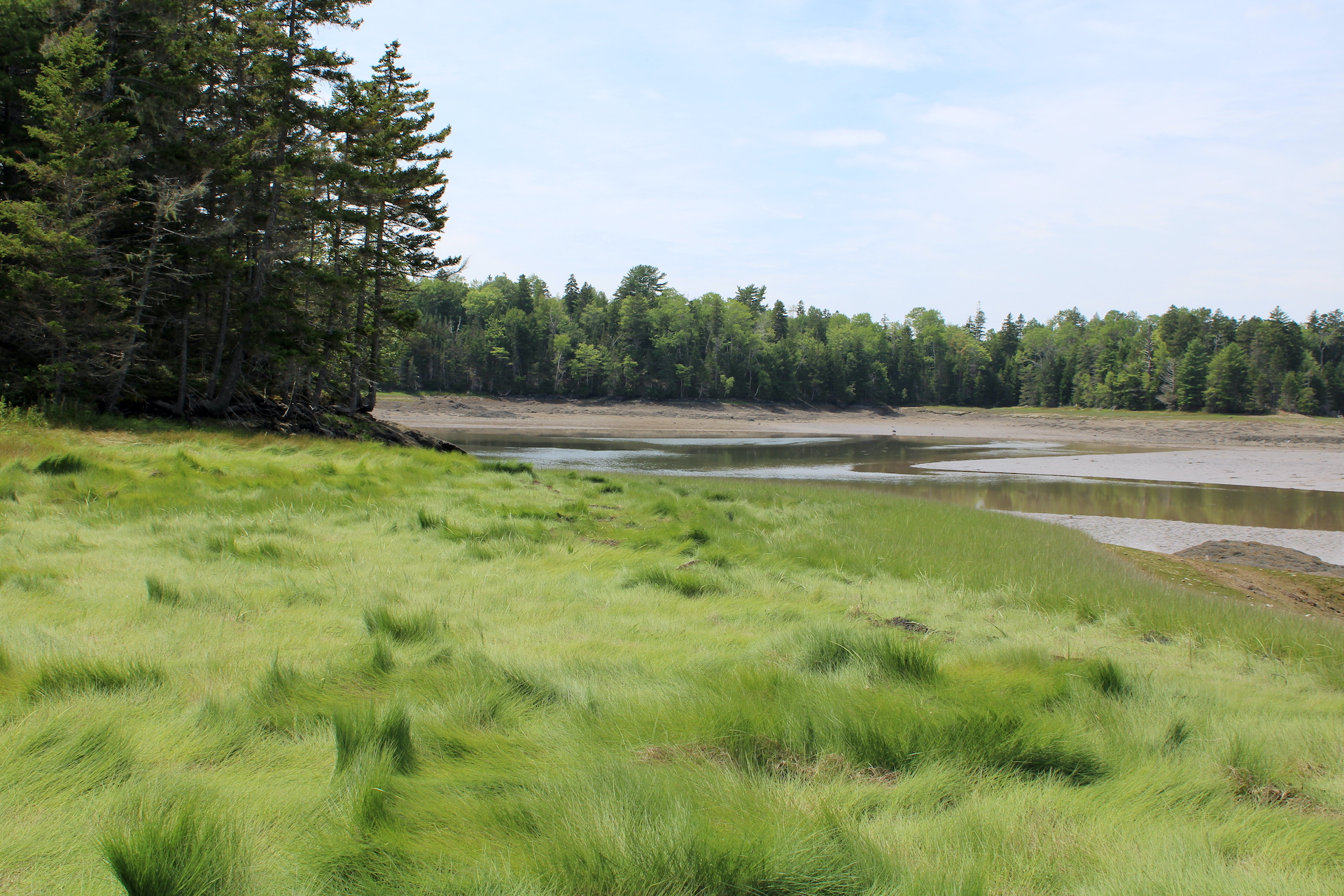
A grassy meadow in front of a mud flat. Trees form the horizon at center.
A meadow of Spartina grasses in Pembroke, Maine. The cow-licked grasses are Spartina patens (i.e. salt meadow hay) that live in the high marsh. Just to the left of the S. patens is a border of S. alterniflora (i.e. smooth cordgrass) that marks the low marsh.

Might the first plants that took to the land in the Devonian have created habitats that resembled salt marshes? I do not possess the ability, imagination, or knowledge to adequately envision those environments. But that won’t stop me from trying. There were no grasses or flowering plants or even seed-bearing plants in the Devonian so the scene was different. Even so, perhaps a series of extensive mudflats and braided streams flowed into the sea on the edge of an eroding volcano. Maybe some of the now fossilized species were best adapted for habitats closer to fresh water. Others could have preferred spaces inundated by tides. Disturbance and competition may have partitioned them into habitats perfect for some and harsh for others.

Rock containing plant fossils. The fossils are roughly parallel in the rock and trend horizontally in the photo. The rock with the fossils rests on other rocks. The scale at bottom is about 9 centimeters.

After continuing downstream where most of the Trout Valley Formation became hidden under a veneer of glacial till and not far from the South Branch’s confluence with the main stem of Trout Brook, I paused to admire a large sugar maple. 

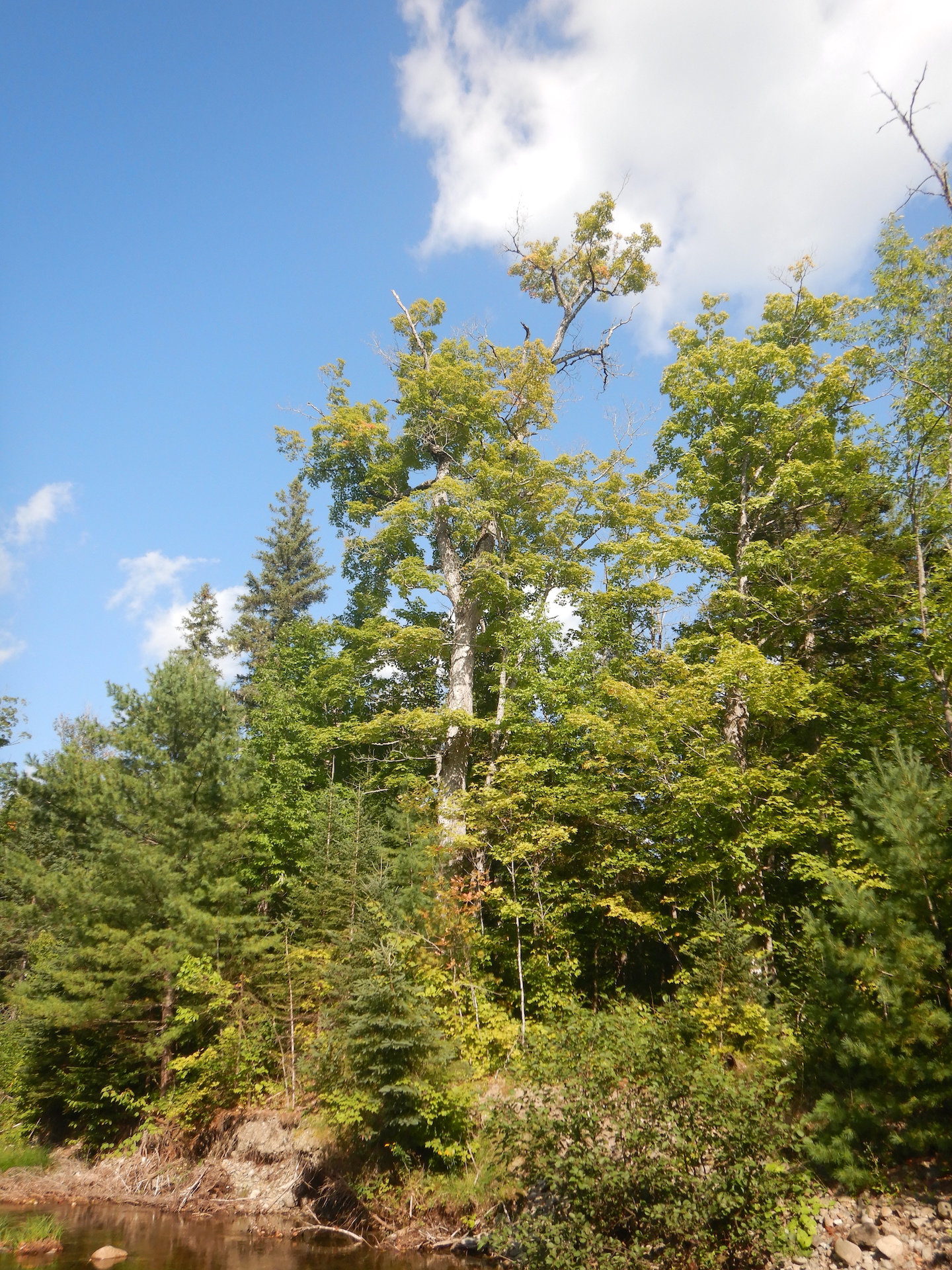
A large sugar maple stands at center of the photo. It is surrounded by other smaller statured trees in a dense forest.
A beauty of a sugar maple along the lower reaches of the South Branch.

Perhaps 75 feet tall, its broad crown of leaves included the first hints of fall color. The tree was a fine representative of its species. A world without sugar maples would be a poor one, I think, and the humble fossils I examined upstream represent a beachhead for land plants to eventually become beings as magnificent as maples. In the Devonian, terrestrial plants began to stabilize landscapes from erosion, create soils rich in nutrients, and provide food for arthropods and vertebrates. It might’ve been the first time in Earth’s history when an organism with my oxygen needs could have breathed the air and survived.

Each fossil I found was a plant that grew for months or years. It died during a specific point in time at specific place. In contrast to the collective millions of years preserved in the rocks and the hundreds of millions of years of evolution represented by the maple tree and me, each fossil represents single moments of life and death. They are, paradoxically, the past and the present and the future. 

Although this is an ancient story, I’m not sure “ancient” is an appropriate adjective for it. In my mind, the word implies a connection to human antiquity, while this story of change is a chapter of Deep Time. It is part of the arc of Earth history before humanity’s evolved ability to conceive of it. We can, though, draw a metaphoric line between the volcanoes that once blanketed the area under thousands of feet of ash to the plants which grew in tidal marshes to the forests that now bath my lunges in oxygen. I might live in a different world, but my existence remains rooted in the events preserved in these rocks.

A Turd of a Time

While every season has much to admire, I find springtime especially enthralling. Something new appears nearly every day. At first, maple sap runs heavy during March’s warm days and sub-freezing nights. Around then, a trickle of meltwater in a ditch and a bare patch of matted leaves on the edge of a snow bank promise room for other plants to break dormancy. Soon after, the first golden catkins appear on the hazelnut and gray alder. Rainy evenings bring amphibians out of hibernation. In a short time, the soon-to-flower ephemeral herbs emerge from the crust of leaves. By late April and early May, the forest canopy bursts to life again with bird song, the blossoms of red maple and quaking aspen, and finally the unfurling of leaves that will soon thoroughly shade the ground where I trod.

Each of these are little events that promise a lot more. I’m unsure if non-human animals contemplate these changes like I do. Yet, I’m certain they pay attention to them. Black bears, recently emerged from their dens, know the pattern and are eager to exploit the change of the season to their advantage. If I’m lucky, their efforts to find their first substantial meals of the year might allow me to investigate what they are up to.

A section of Katahdin Woods and Waters National Monument sits to the east of Sebois River. It’s a quiet area of the park since there are no campsites, less than a mile of developed hiking trails, and only a few maintained roads. Bicycling through it is fun and is made even more enjoyable when I afford myself the time to go slow and pay attention. It’s one of the best places in park that I’ve yet found to look for bear sign in the spring.

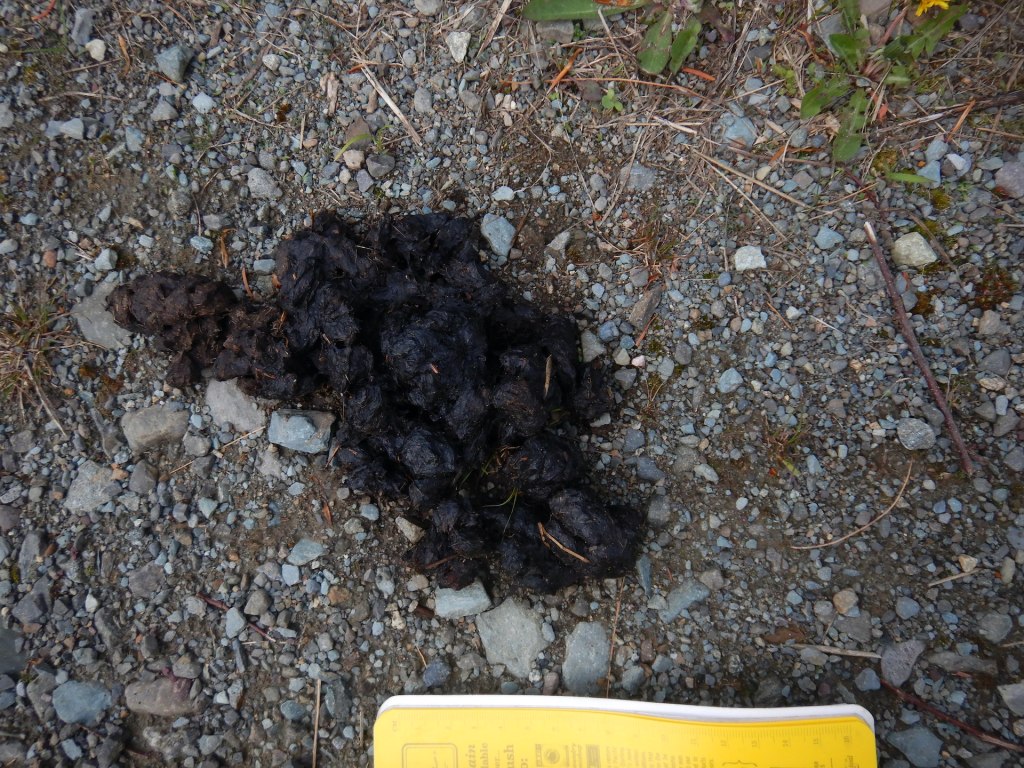
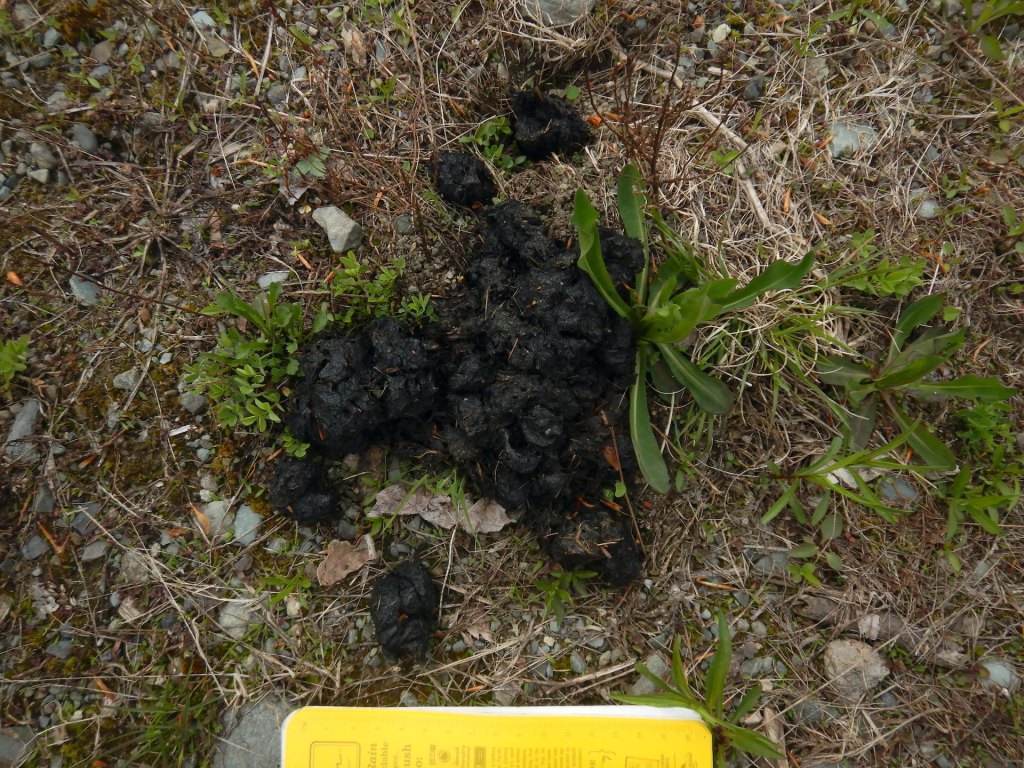
Riding the single lane spur that loops off and back to American Thread Road last weekend I came across many piles of bear scat, which I was hoping to see. Not because I particularly admire turds, but because bears are cryptic here. They are frequently hunted throughout northern Maine and consequently have a substantial fear of people. The thick forest also limits my ability to watch a bear if I happen to see one. The signs that bears leave behind—such as marking trees and scat—are like pages in a book. A single page may not reveal much but look at enough pages and you’ll get a good story

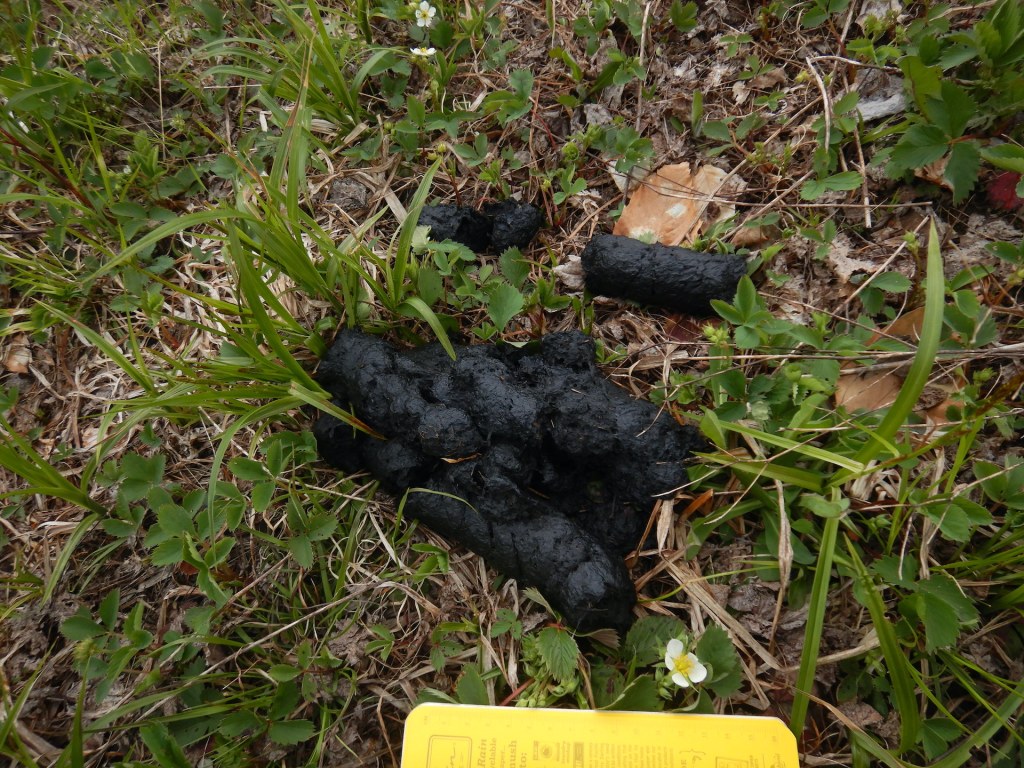
A large pile of dark colored, almost black, bear scat on gravel. The bear scat is framed by grass blades and wild strawberry leaves. The background is open forest.

In particular, scat can reveal how recently a bear was in the vicinity and what it was eating. Black bears are omnivores that are well adapted to survive on plants, and the vast majority of their annual calories come from plant foods. In north-central Maine, though, there are no calorie-rich berries to eat in the spring. Perhaps there are some leftover acorns, but oak trees are not common in the forests as this area is near the northern end of their range in the northeastern U.S. So other plant foods are a bear’s best springtime bet.

While a black bear’s digestive track remains essentially one of a carnivore, it utilizes adaptations such as an elongated gut and slightly flattened molars to extract nutrition from tough to digest plant foods. A bear also consumes plants when they are most nutritious and digestible. Newly emerged green vegetation like grass, sedge, and clover contains relatively high amounts of protein, for example. As those plants mature, protein content declines while indigestible fiber increases. Fiber helps keep the bear on a so-called regular schedule, but the bear is really after the protein. Even though hibernating bears maintain their muscle health without eating or exercise, if they’ve exhausted their fat reserves by springtime then their body is forced to tap into their lean tissue reserves. Young, tender veg helps bears stave off muscle loss and even build muscle before sugary, fat-building foods become available in mid to late summer.

All but one of the scat piles I found were filled with herbaceous plants. Although most looked older than a day–when bears eat green veg, the resulting scat quickly oxidizes when exposed to air to form a black surface crust–this was a promising sign. I knew that the lightly used roads are good travel corridors for bears and the sunlight reaching the road edges allows vegetation to green-up more quickly than the forest interior, which attracts bears to the roadsides. Perhaps I might see a bear if I pedaled slowly and remained observant.

The effort paid off near the crest of a hill when I spotted a dark mass of animal on the edge of the road. I stopped to watch.

The wind was at my back, which is a welcome push when cycling uphill but also carried my scent to the bear. Once it caught my scent, the bear only needed a couple of seconds to decide to run into the forest. Had the wind been blowing the other way, I probably could’ve watched it much longer with less chance of disturbing it unintentionally. Still, I was grateful for the moment and the small insights into its world.

Before widespread logging and, later, roadbuilding encroached on the area’s forests, grassy areas in northern Maine were likely much less common than today. Black bears always sought the first spring greens, but they had to look in other places—riverbanks, stream sides, and beaver meadows for example. They continue to go to those areas, of course, even as roadsides have opened another foraging opportunity. Roads are risky places that expose bears to people though. Bears weigh the risk along with the potential reward of a good meal.

I knew the bear I saw was eating well even as it still had a long way to go until it was fat enough to enter its winter den next fall. Its effort is a journey recorded in its scat—pages, if you will, in the Book of Turds.

Little Bog of Horrors

I find the urge to explore bogs and boggy habitats difficult to resist. Other people avoid them, which gives me space to be alone. They’re mucky, which is often a fun and challenging substrate underfoot. They contain unique species, which I find fascinating. They are full of life. And they offer surprises.

On an unseasonably warm late October day, I found myself poking around the edges of Little Messer Pond, an approximately 27-acre pond in Katahdin Woods and Waters National Monument, Maine.

Photo of pond and surrounding vegetation. Pond is at lower right. Short shrubs and sedge at lower left. Pines, spruce, and large line pond.
Little Messer Pond
Photo of pond. Trees line the pond in the middle and background. Short shrubs form the pond's border in the foreground.
Little Messer Pond

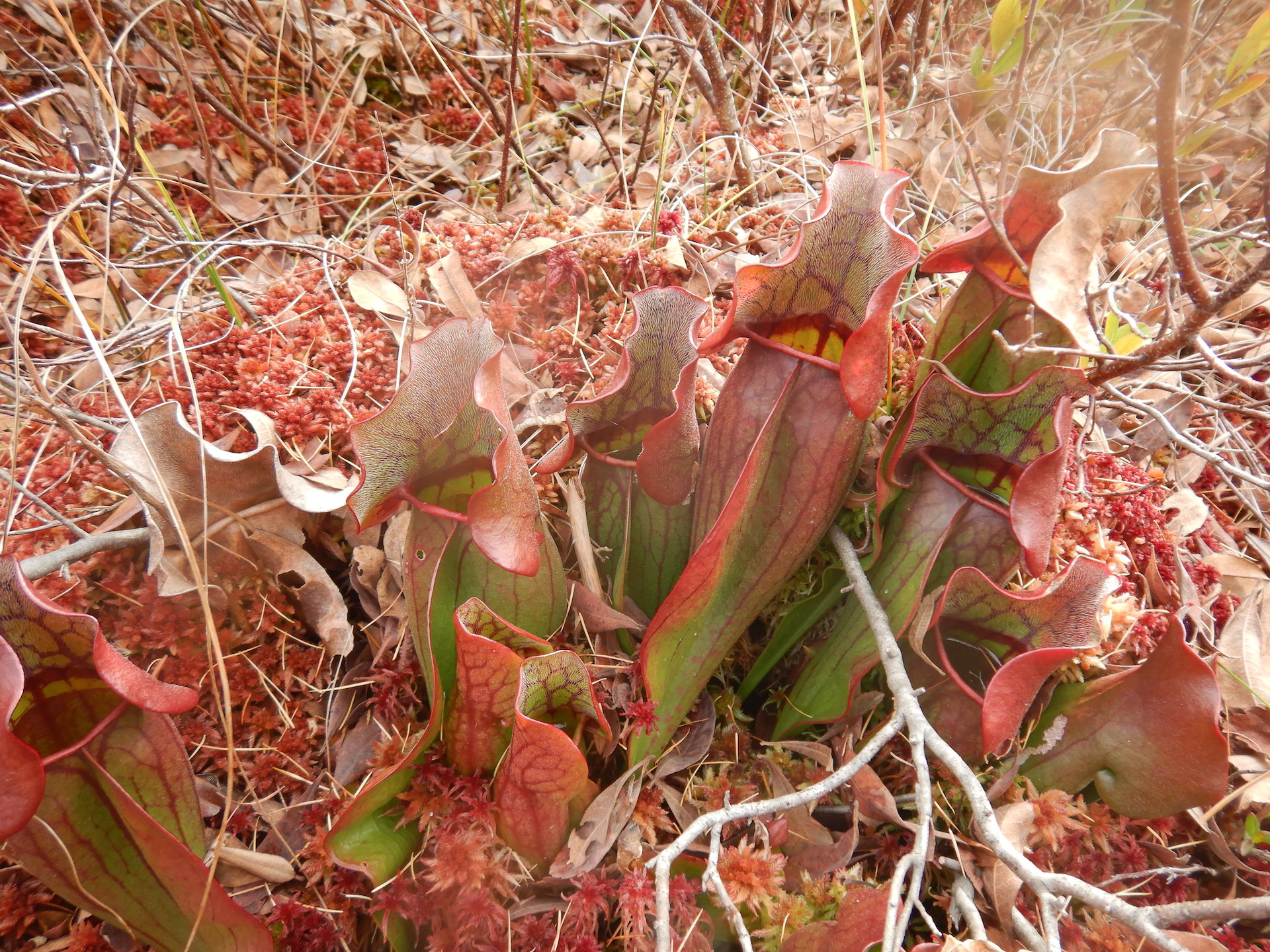
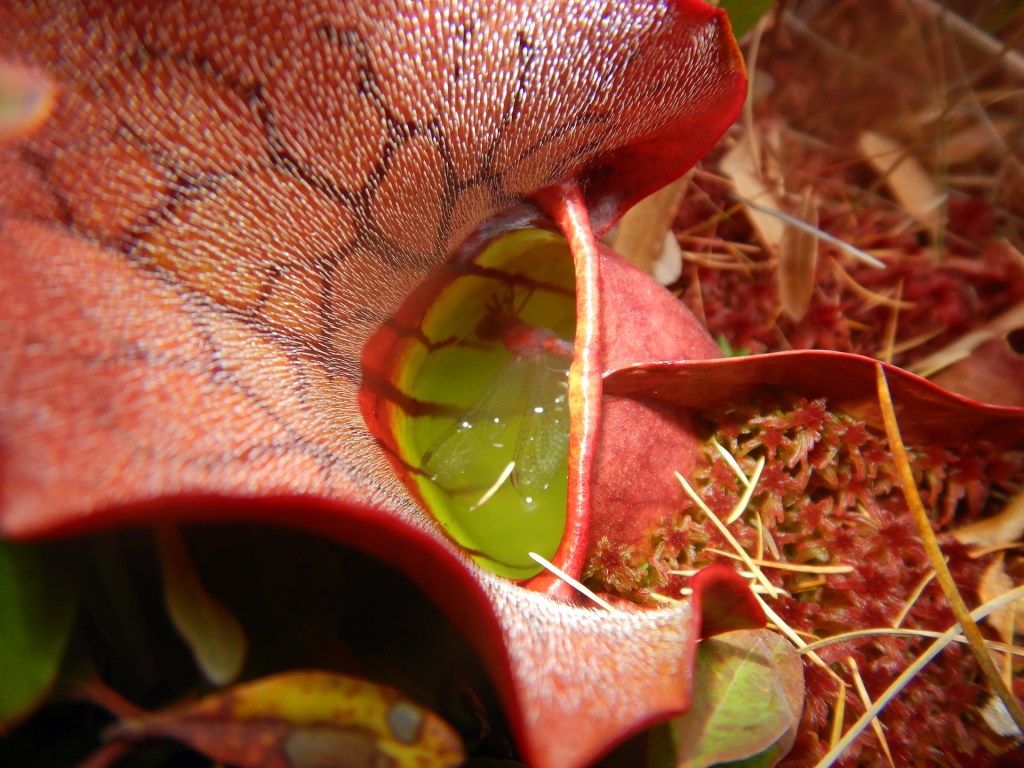
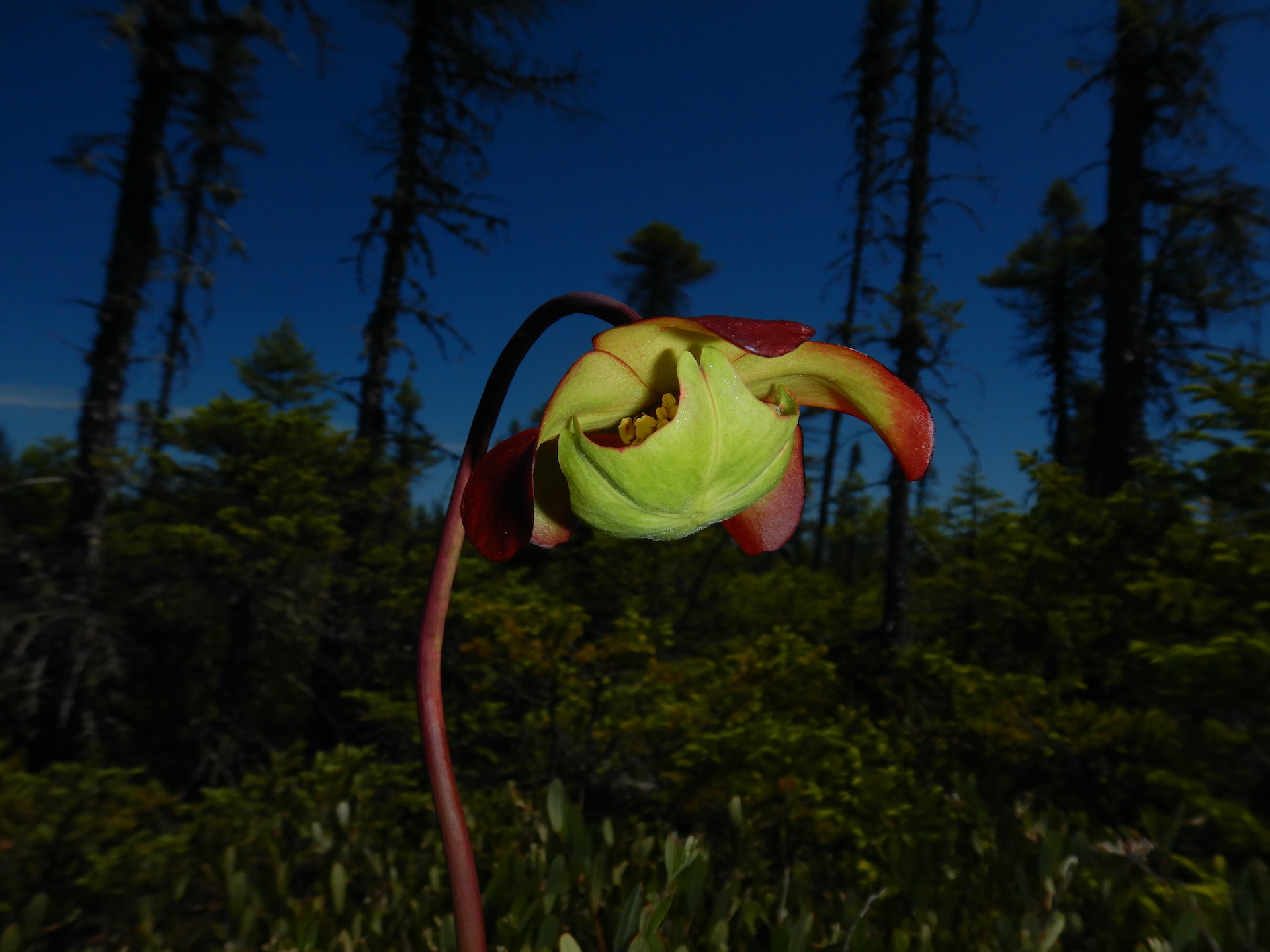
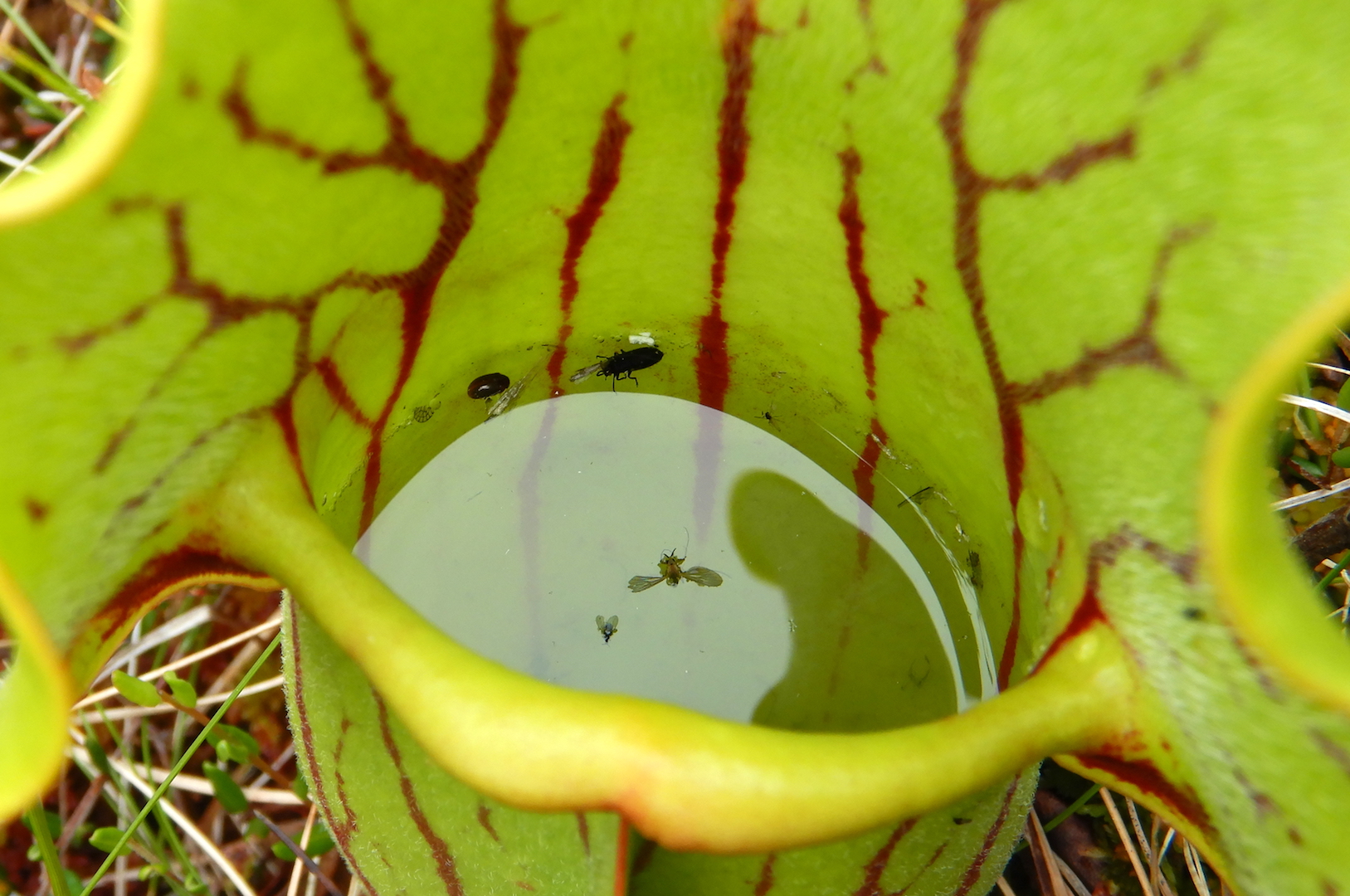
While exploring the pond’s northern flank, on a shelf of sphagnum peat that cups the pond’s shore, I found several purple pitcher plants (Sarracenia purpurea), one of the most iconic bog species in this area. The purple pitcher lives an uncommon, carnivorous lifestyle for a photosynthesizing organism. Pitcher plants supplement their growth by capturing small animal prey, typically insects. Unlike Venus fly-traps, however, which ensnare prey using a trigger-like mechanism, pitcher plants use a passive, gravity-driven process. Their leaves form bell or cone-shaped bowls that fill with rainwater. The top of the each leaf has a flaring lip lined with nectar glands to attract insects. If a hapless insect falls inside, downward pointing hairs resist its escape attempts. 

Several pitcher plants growing out of reddish-colored sphagnum moss.
Purple Pitcher Plant

Pitcher plants can’t move, so they have unsurprisingly indiscriminate tastes. To cite just one example, a study from Newfoundland documented 12 insect orders serving as prey in pitcher plants. Prey eventually drowns in the pitcher’s water where enzymes as well as inquilines (microorganisms adapted to live in the pitchers such as midge larvae, nematodes, bacteria, protozoa, and rotifers among others) break down the trapped prey, releasing nitrogen and phosphorus for the plant. Purple pitcher plants, in particular, seem to be particularly rich in inquilines, hosting at least 165 different species across its range. Pitchers are habitats of their own making and their adaptations allow them to live in nutrient poor soils where competition from tall plants in minimal.

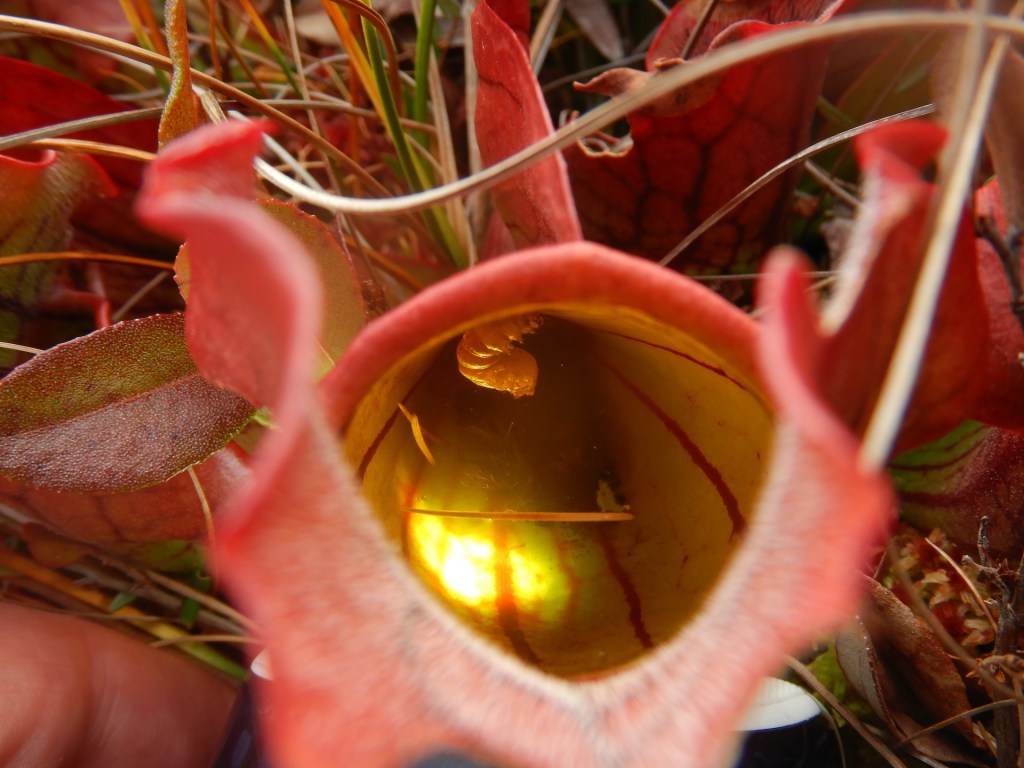
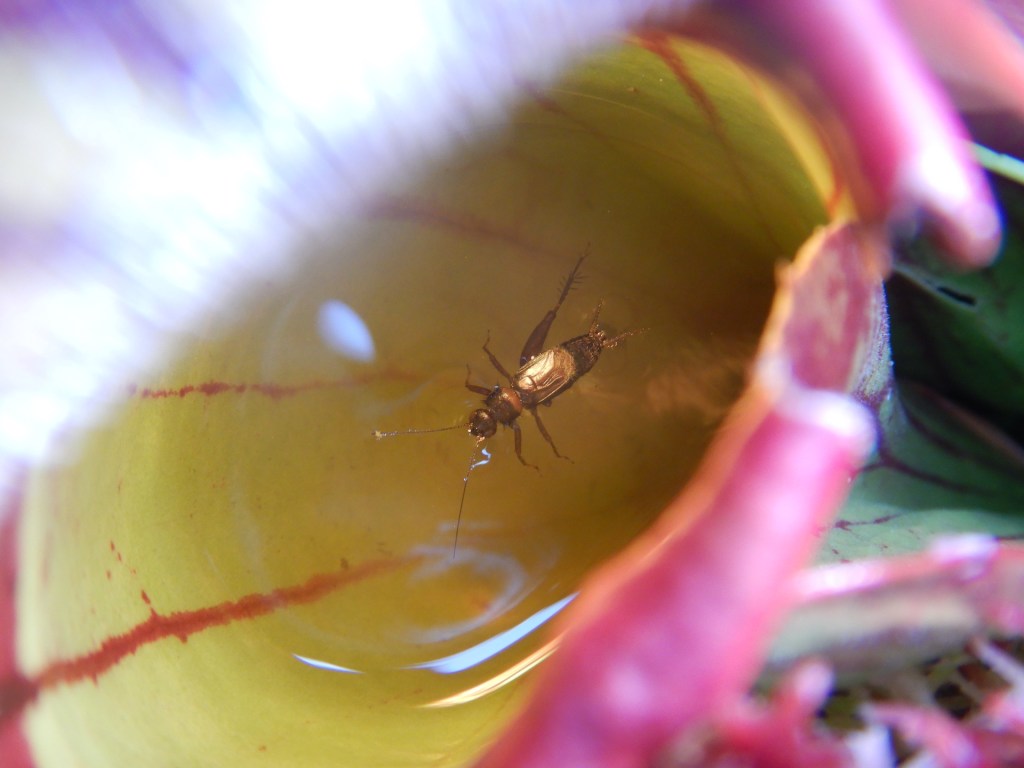
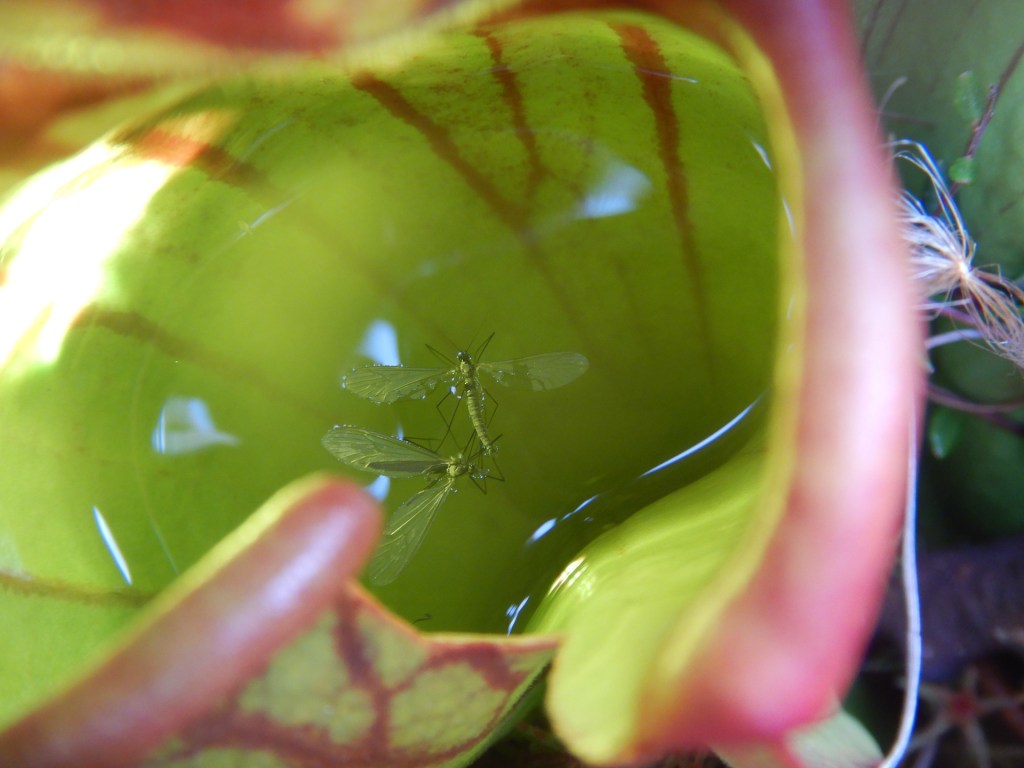
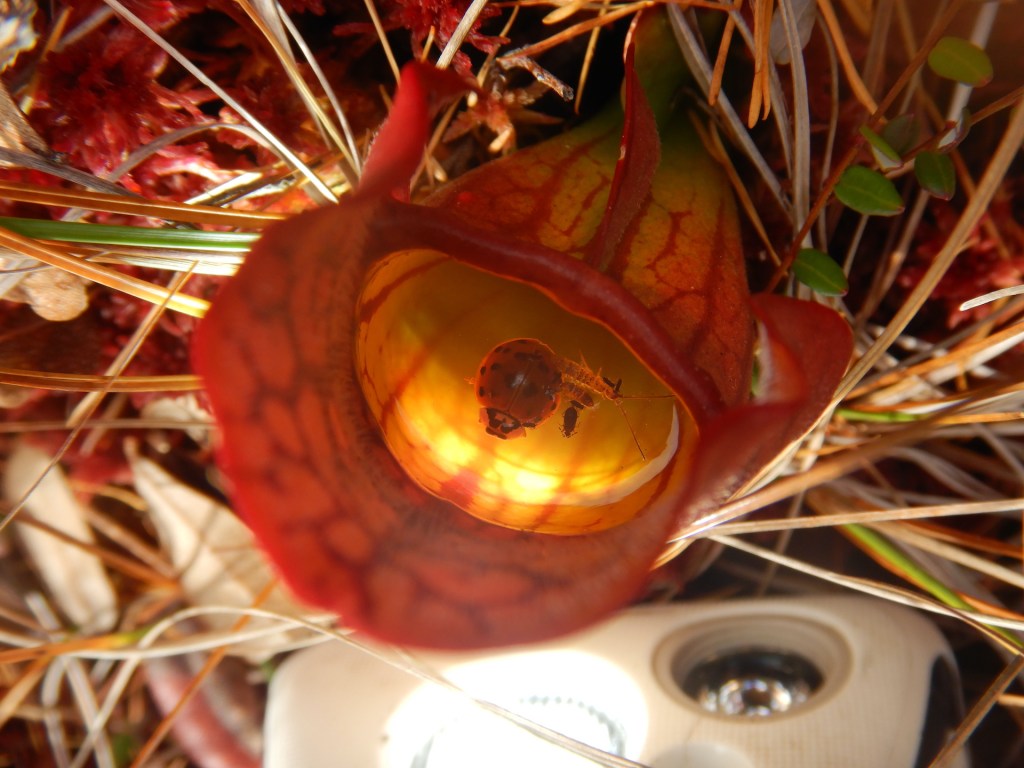
Looking at the pitchers on the edge of Little Messer, I found ants, beetles, flies, dragonflies, various bits of unidentified insects, and a sludge of the leftovers in their bowls.

They’d eat me if I were small enough. 

GIF from Little Shop of Horrors. Plant says "Feed Me!" while Seymour looks at it.

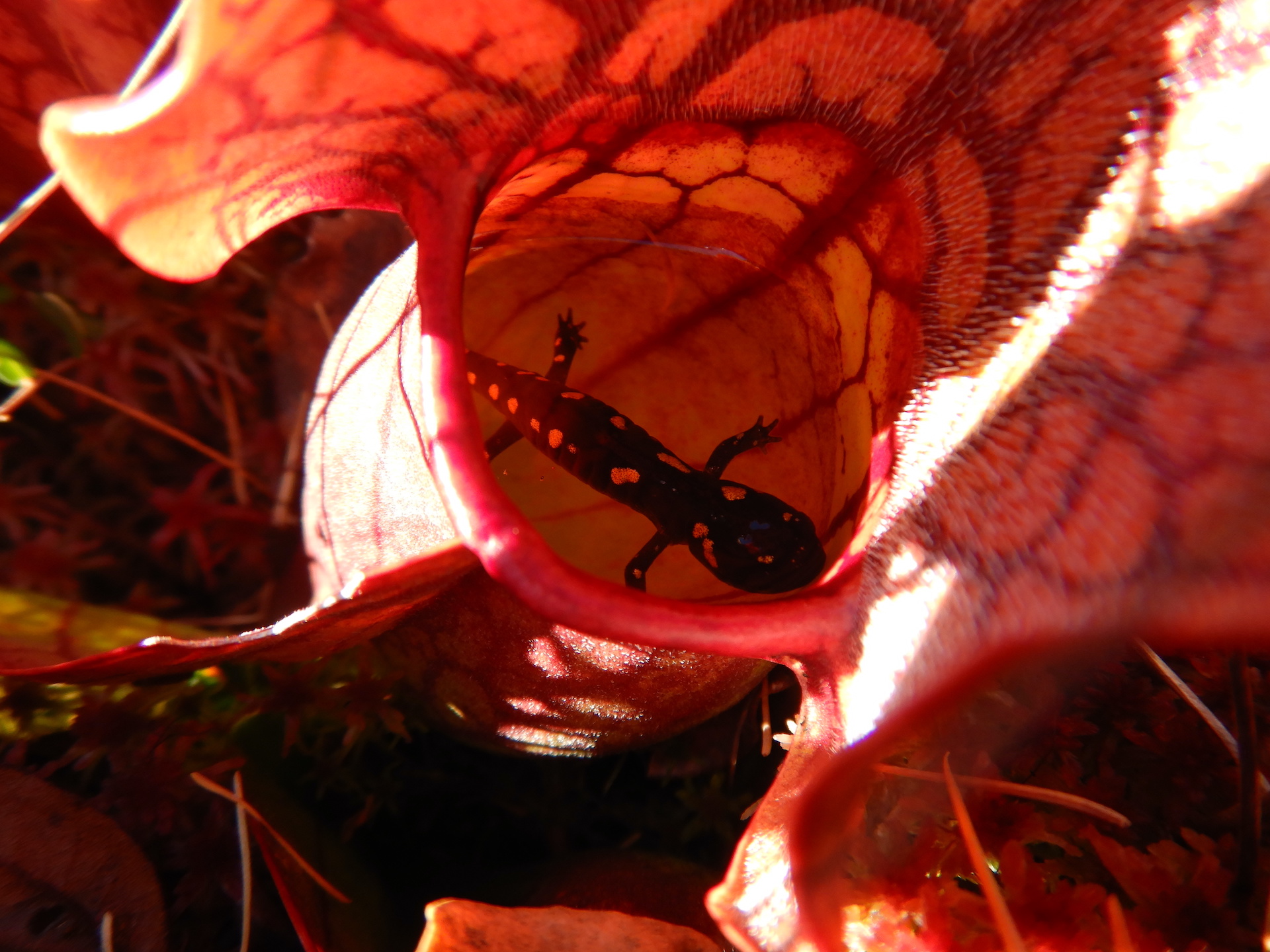
None of the prey was unusual or unexpected until I stumbled upon a curious sight—a spotted salamander inside a pitcher.

Spotted salamander floating in a pitcher plant's bowl.

I was taken aback by the sight. I had never seen something like this before, and I remember exclaiming “What the?” even though I was alone. Was this a big payday for the plant or was the salamander only a temporary resident?

Small vertebrates are exceedingly scarce as a prey item for purple pitcher plants. In the scientific literature, I couldn’t find much documentation of it. A study from Massachusetts documented red-spotted newts as a food source for pitcher plants. A more recent study from an Ontario bog found that spotted salamanders are a potentially rich prey for pitcher plants. (One of the researchers leading that study described his sighting of a salamander in a pitcher plant felt like a “WTF moment” so I guess I wasn’t alone in my surprise.) In August 2017, researchers at that study site searched the contents of 144 pitcher plants. They found, as expected, mostly insects but also several recently metamorphosed spotted salamanders. In August 2018, they investigated 58 plants and found three spotted salamanders. The physical condition of the salamanders varied. Some were in an advanced state of decay while others were lively and were able to swim to the bottom of the pitcher when disturbed.

Plenty of uncertainty surrounds pitcher plants and the importance of small vertebrate prey to them like salamanders and newts. No one has yet tested what might attract a salamander into a pitcher since a salamander has to climb up to get into one. If the salamander can escape, then pitchers could be a refuge for salamanders who have recently emerged from the water onto the land. Perhaps salamanders are attracted to the pitcher by small insects visiting to feed on the plant’s nectaries. Their apparent capture could be random too, although, dead salamanders apparently break down quickly inside pitcher plants so maybe their true rate of capture is greater than anyone realizes.

I wonder if it might happen only in places with the right combination of habitats. Purple pitcher plants typically (but not exclusively) grow in nutrient poor bogs, places that don’t always support breeding populations of spotted salamanders. Adult spotted salamanders migrate en masse during spring to vernal pools where they breed. They may also use permanent ponds for reproduction as long as those don’t contain fish, which eat salamander eggs and larval salamanders. Newts, in contrast, breed in a greater variety of wetlands including ponds and lakes that contain fish. 

At the Ontario study site, pitcher plants grow on bog islands in permanent and fish free ponds where spotted salamanders gather to breed every spring. This seems to provide a combination of habitats that increase the likelihood of pitcher plants capturing salamanders later in the year when the juvenile salamanders metamorphose and begin their terrestrial lives. Little Messer Pond, in contrast, is home to fish, snapping turtles, and presumably other salamander predators.

A salamander or newt, even a juvenile, is a significant catch for a pitcher plant. A newt of about 500 mg of dry mass contains about 5 mg of nitrogen, which is several orders of magnitude more than an ant, a pitcher’s most common prey. That’s enough nitrogen to increase the probability of the plant flowering the next summer. If the salamander I saw had indeed perished in the pitcher, maybe it’ll dignified in death by a marvelous pitcher plant flower next summer.

Pitcher plant flower. Petals are fleshy. Flower is radially symmetrical.
In my area, purple pitcher plants flowers appear in early summer.

Pitcher plants are wonderfully adapted to secure nutrients and survive in habitats that most plants cannot tolerate. If they’re lucky enough to capture something as large and nutrient rich as a salamander, then their physical structure can hinder escape. Their acidic water (often lower than pH 4 by mid summer) can weaken salamanders through electrolyte imbalance. And, the water within them might contain compounds that inebriate or paralyze small prey. 

The fate of the salamander that I found remains unknown. I returned a week later with the intention of relocating it, but I could not find it despite my best efforts. Although I can’t be sure, I think it is unlikely that I missed it since the boggy area with the pitcher plants isn’t large and the pitchers are easy to locate. If it were still alive, perhaps it fled to the bottom of the pitcher upon my approach. However, if it were still in the pitcher after seven days, then it should’ve been dead. Did it escape the trap that so many other victims of pitcher plants could not? I wish I knew the end of this story—a drama of uncertainty, survival, life, and death.

A Most Impressive Bog

Some people who know me well poke fun at my penchant for exploring mucky places. At one national park where I worked as a ranger, it took a few years of turnover among the seasonal staff before their friendly prodding about a short lecture I once gave on the differences between bogs, fens, and muskegs died away.

I suppose my fascination with wetlands began on camping trips when I was young (probably no older than eight or nine years). In those good ol’ days of the 1980s my cousins, me, and any temporary campground friends we found spent hours alone exploring a “swamp.” It was little more than a shallow, cattail-filled ditch at the end of one of the state park campground’s cul-de-sacs, but armed with dip nets, fishing nets, and plastic buckets, we pulled more than a few frogs, tadpoles, and crayfish out of it, and sometimes a leech or two off of us.

Although I couldn’t articulate it at the time, I now understand that I was drawn to that place because it seemed so alive. I’ve never outgrown the urge to slog into habitats where I feel like other life forms envelope my whole being. A trial-and-error bushwhack is a small burden to pay so that I can experience that feeling again, which is how I found myself shoving through tangles of spruce and larch last June.

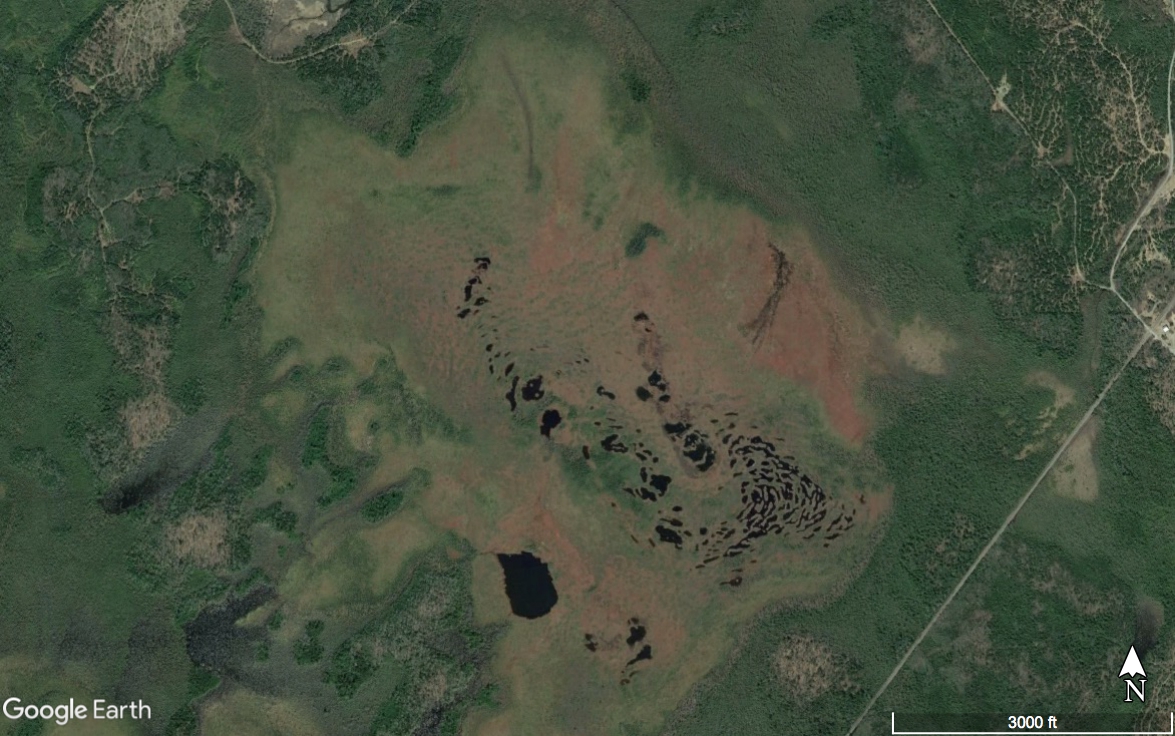
In a broad lowland a few miles south of Patten, Maine lives a most impressive bog. The difficulties I experienced getting into the bog were far surpassed by the beauty one experiences in a rarely trammeled landscape. Crystal Bog is the most spectacular bog I’ve ever seen.

Photo of peat bog with pond at center left, yellow-colored sphagnum moss at center, and red-colored sphagnum at right. Horizon is lined by sparse conifer trees.
Google Earth image of Crystal Bog area. Scale at lower right marks 3000 feet.

Getting into Crystal Bog (also known as the Thousand-Acre Bog) is not an easy task—a fact I discovered when I first explored it in 2020. No trails enter the bog proper, and the adjacent ATV trails only skirt the extensive swampy thickets that surround it. Choosing the wrong route is easy in such habitat, especially on overcast days when clouds obscure the sun and any hint of which direction might be north or south.

I don’t carry a GPS device or a smart phone, so I navigate via compass when vegetation is too thick and landmarks too obscure to provide orientation. During my attempt to access Crystal Bog in 2020 I rode my bicycle a little too far on the ATV trail that cups the north side of the wetland, started south at the wrong place, didn’t utilize my compass often enough, and bushwhacked much farther than expected or necessary. With those lessons learned, however, I felt better prepared to avoid the thickest muskeg and swampiest areas to reach the open bog more easily.

I locked Rocinante to a sturdy tree once I located a good starting point…

photo of bicycle leaning against a tree in dense vegetation

…and set off through the trees.

thick forest with ferns, shrubs, and tall trees filling the entire frame

Crystal Bog is part of a large wetland complex. On every side of it, streams meander through forested swamps and sedge-filled fens. The sphagnum peat lands at the center of this complex was my destination, though.

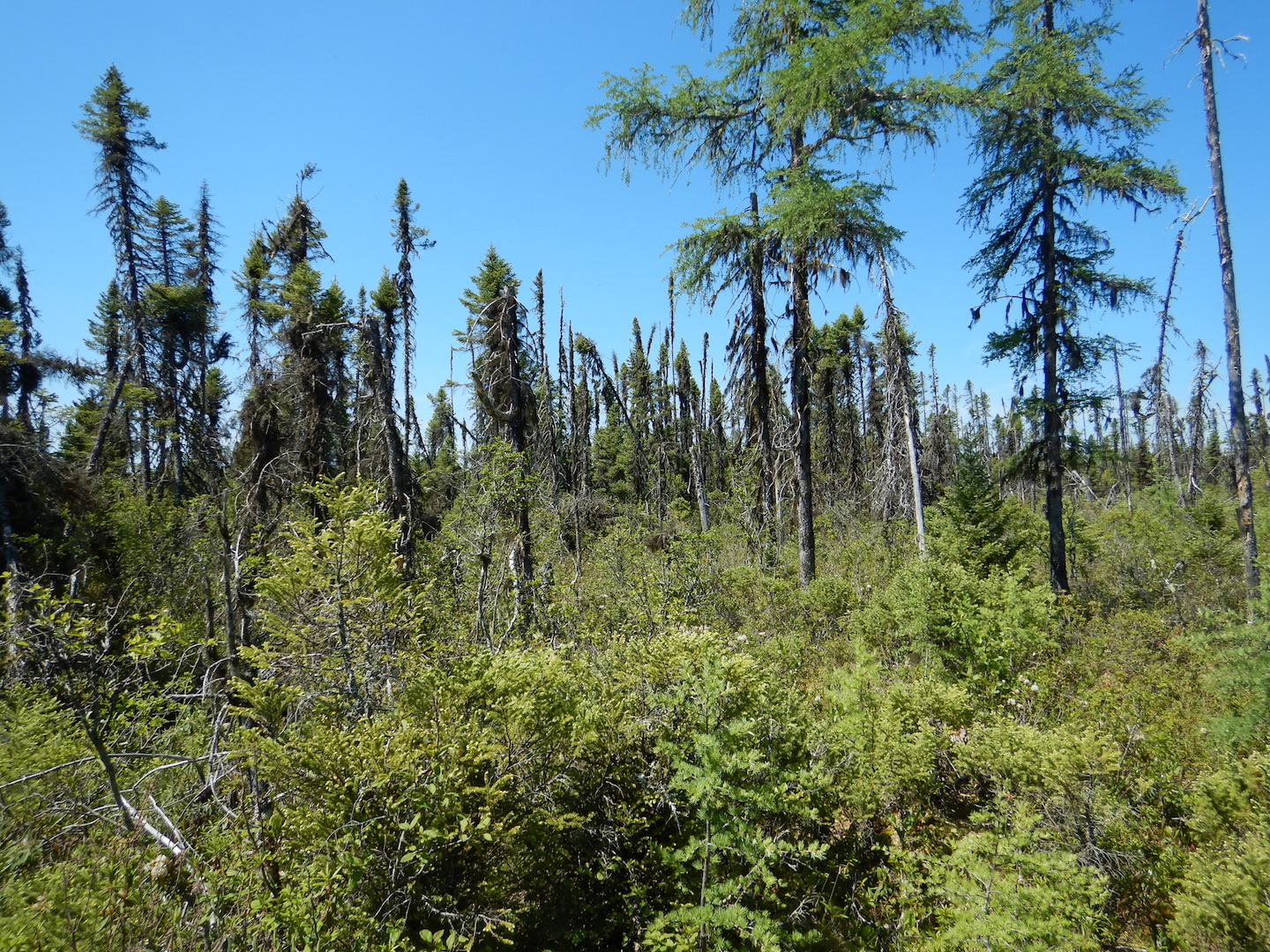
After 20 minutes of travel (a remarkably short time span compared to the two hours of bushwhacking I needed the previous year), the forest began to transition into a more open woodland. Sphagnum moss and low-growing ericaceous shrubs became common and spindly black spruce and eastern larch were the only trees.

open forest with tall conifers and thick, low shrubs in understory

Shortly after, I reached the open expanses of the bog proper.

bog with widely scattered small trees

As I moved from swamp to muskeg to sphagnum bog, I moved progressively into harsher habitats, at least from a botanical perspective.

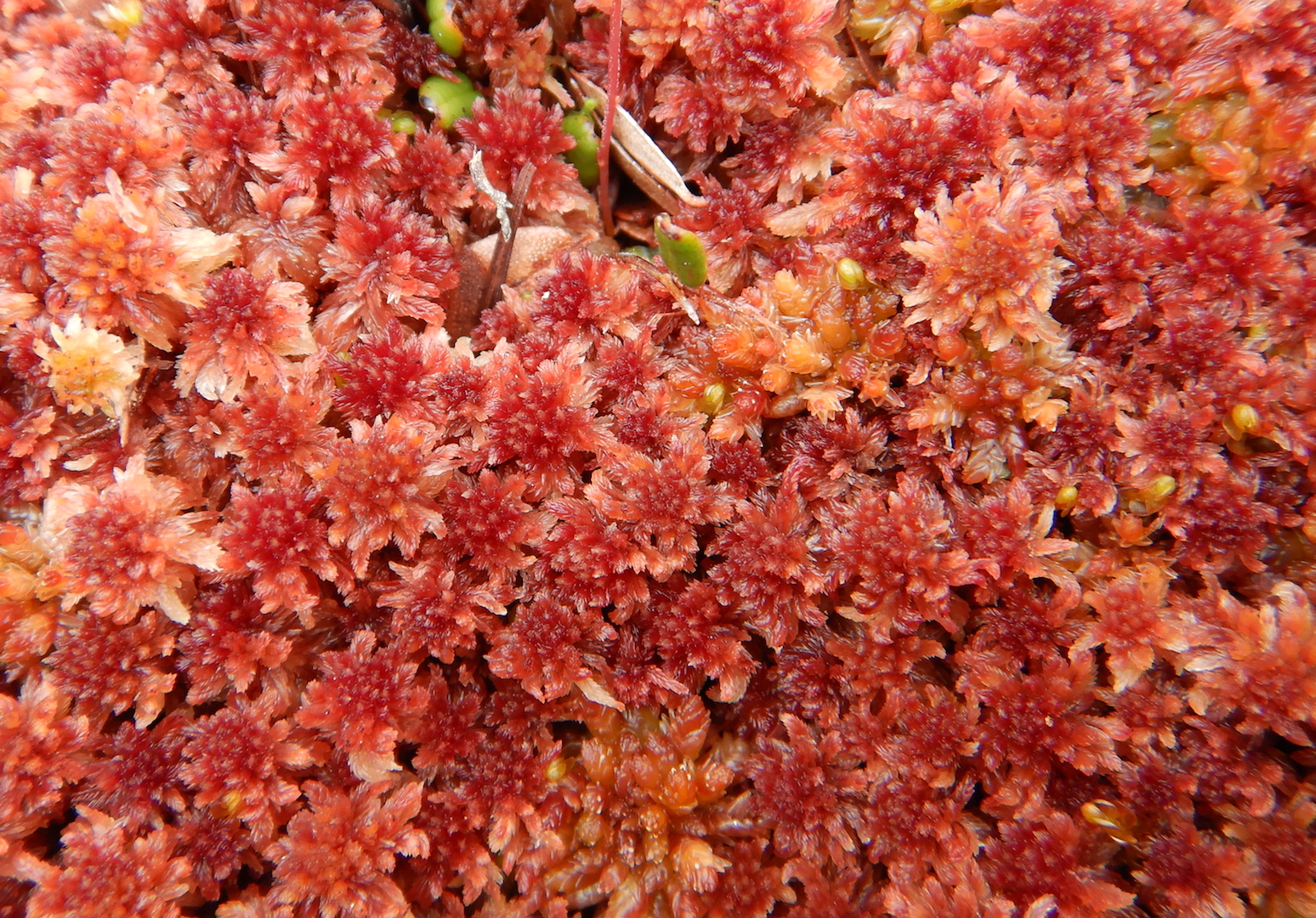
Bogs are a type of peat-land that generally get water from aerial precipitation rather than flowing surface or ground water. Sphagnum thrives here. The tannins and acids released by sphagnum lower soil pH to levels inhospitable for most plants. While a bog’s edges might be richer in minerals and productivity due to ground or surface water flow, the sphagnum-dominated areas in and around its center offer very different conditions. The pH at Orono Bog near Bangor, for example, progresses from 6.6 (a pH you find in milk) at the forested edge to 3.8 (a pH approaching that of grapefruit juice) at its sphagnum-dominated center. Since the pH scale is logarithmic, rather than linear, this difference represents almost a 1,000-fold change in acidity.

close up view of deep red sphagnum moss

Sphagnum moss

As more sphagnum grows on the surface, it buries and compacts previous generations to form peat. Decomposition is also hindered by the low oxygen conditions found in the bog’s supersaturated soils. But, sphagnum is really good at growing on top of itself. In this manner, sphagnum begets sphagnum. Under the right climatic conditions, sphagnum bogs can sustain themselves for thousands of years and peat accumulations can grow many meters thick. Peat also preserves a botanical record of the plants that lived in the bog and the pollen that settled on it, a paleontological record on present and extinct animals that died within them, and even an archeological record of the people who utilized these places.

On top of this wealth of partial decay exists a living veneer. Minute gradations in topography and drainage create micro-habitats for the plants that are adapted to the bog’s stressful conditions. The higher above the bog’s water table, the more oxygen can diffuse into the soil and the more O2 is available for plant roots that need oxygen. Relatively few plant species survive in bogs compared to nearby forests. Yet those that do are often abundant.

Larch and black spruce in bogs receive ample sunlight, have access to plenty of water, and experience little competition from other tall plants, but the peat enveloping their root systems offers little to sustain their growth. Small-statured trees in a bog may be many decades old, while growing little more than the height of an average adult person. At the Orono Bog, some 7-foot tall spruce trees were found to be about 100 years old. (FWIW a tree, I think, cares not for its appearance, only its ability to reproduce.)

island of small-statured black spruce surrounded by dwarf bog plants

These small-statured black spruce (Picea mariana) may be many decades old.

Ericaecous shrubs such as Labrador tea, bog rosemary, and laurels survive in bogs only where their shallow roots remain perched above the flooded peats and sphagnum. Yet, although bogs are classified as wetlands, summertime drought can cause drastic lowering of the water table. The thick, leathery leaves of these plants might help them retain moisture under those conditions.

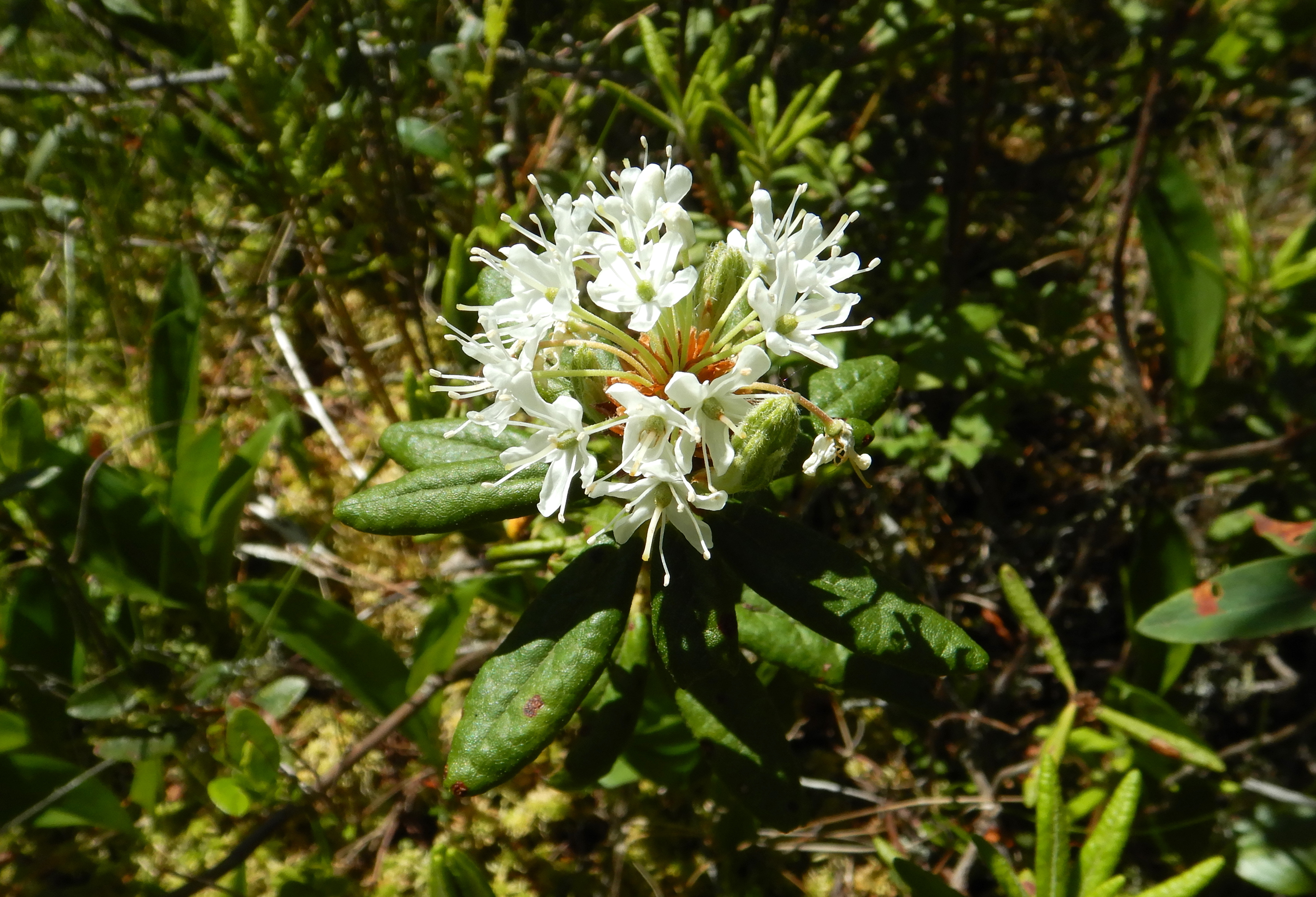
flowers of Labrador tea. Flowers are white and clustered at the top of the stem.

Labrador tea (Rhododendron groenlandicum)

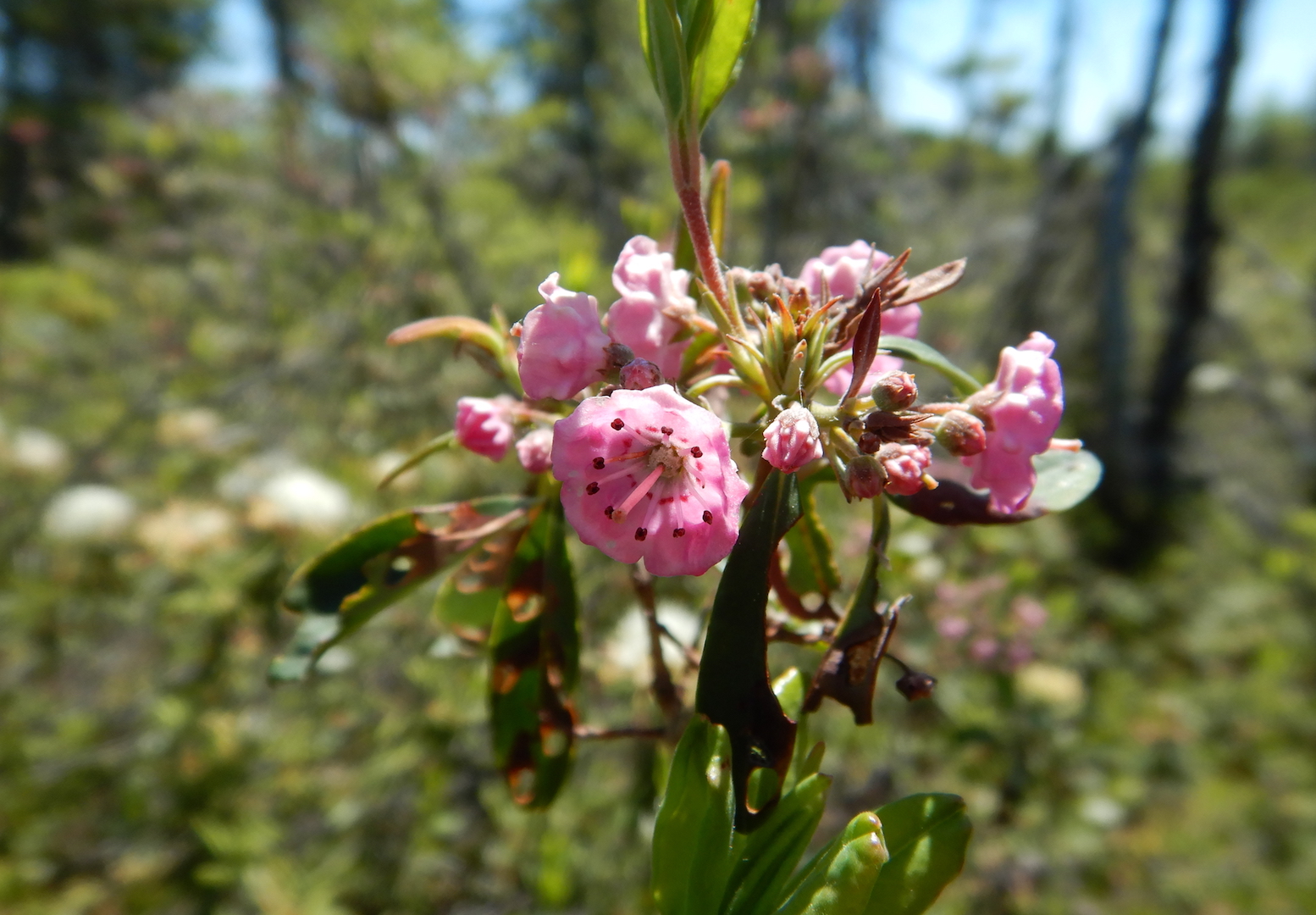
flowers of sheep laurel. Pink flowers are clustered at a node in the stem.

Sheep laurel (Kalmia angustifolia)

Orchids tap mycorrhizal fungi to overcome the lack of nutrients, a trick utilized by the ericaceous plants as well.

flower of grass pink. Flower is pink and bilateral in symmetry. The lower lobes are bright pink.

Grass pink (Calopogon tuberosus)

Other bog plants evolved means to capture nutrients from animals. Bladderworts capture prey in small sacs attached to their thread-like underwater leaves. When a tiny zooplankton contacts sensitive hairs on the outside of the bladder, it triggers the bladder to inflate. The sudden action sucks in water and the hapless prey. The plant then absorbs its nutrients.

bladderwort flower. Single yellow flower at top of thin stem.

Bladderwort (Utricularia sp.)

Sundews ensnare small insects using sticky secretions on the ends of glandular hairs on their leaves. An insect alights on the leaf and becomes stuck. The hairs and the leaf margins then slowly fold over and envelope the insect. The leaf hairs also release an anesthetic to stupefy the prey as well as enzymes to dissolve its soft tissues.

Round-leaved sundew (Drosera rotundifolia). An unlucky insect is trapped on the leaf in the right photo.

Pitcher plants use specialized leaves to create a basin of water. Insects that fall into the basin, aided by downward pointing hairs on the inside of the leaf’s rim and numbing secretions, are slowly decomposed by bacteria and possibly plant enzymes that live in the water. Specialized cells at the bottom of the pitcher absorb the insects nitrogen and other nutrients.

Pitcher plant (Sarracenia purpurea)

I paused often as I wandered through the bog to marvel at the tenacity and beauty of the life around me. I also marveled at the lack of a human presence. The ability to experience a landscape that wasn’t overtly altered by people was a special treat, even in one of the least populated U.S. states.

Maine is lushly vegetated. Forest covers a greater percentage of its land than any other state. That forest, though, is heavily manipulated by people—by a timber industry that often harvests trees before they reach age 50, by a warming climate, by tens of thousands of miles of roads, and by invasive species. But human-caused changes are not limited to the land. Off the coast, the Gulf of Maine is one of the fastest warming bodies of water in the world. There is virtually no Atlantic cod fishery because cod haven’t recovered from the devastation of overfishing in the 20th century. Ditto for Atlantic salmon, which hang on by a thread. Places where evidence of humanity’s heavy hand is absent or at least minimized are difficult to find even in parks such as Acadia, Baxter, and Katahdin Woods and Waters.

Bogs are often overlooked at best or viewed as wastelands to be “reclaimed” for agriculture or mined for peat at worst, but they rank among the worlds most important habitats, especially when we consider their ability to capture and sequester atmospheric carbon. Like old-growth forests, peat is a non-renewable resource since we humans lack the patience and self-restraint to harvest it at sustainable levels (please buy peat-free soil products for this reason).

While the area surrounding Crystal Bog is full of roads, early successional timberland, potato fields, homes, and small towns, this bog remains remarkably unmarred. It is one of the few places in modern day Maine that would be recognizable to a Wabanaki traveler from the 15th century. In the middle of Crystal Bog, it’s easy to let your mind drift to a place where the world is well. This is an illusion, I realize, but one we all must escape into every once in a while.

bog landscape. Small pond sits at upper right. Yellow and red sphagnum moss are at center and left.